Bidoun Library

Bidoun Library 1.0

The Bidoun Library had its first outing at Abu Dhabi Art (November 2009) as a collection of books, catalogs, journals, and ephemera that trace contemporary art practices as well as the evolution of the various art scenes of the Middle East. This peripatetic resource then travelled to Art Dubai (March 2010) and 98 Weeks in Beirut (April – May, 2010) before landing in the New Museum in New York (August – September, 2010).

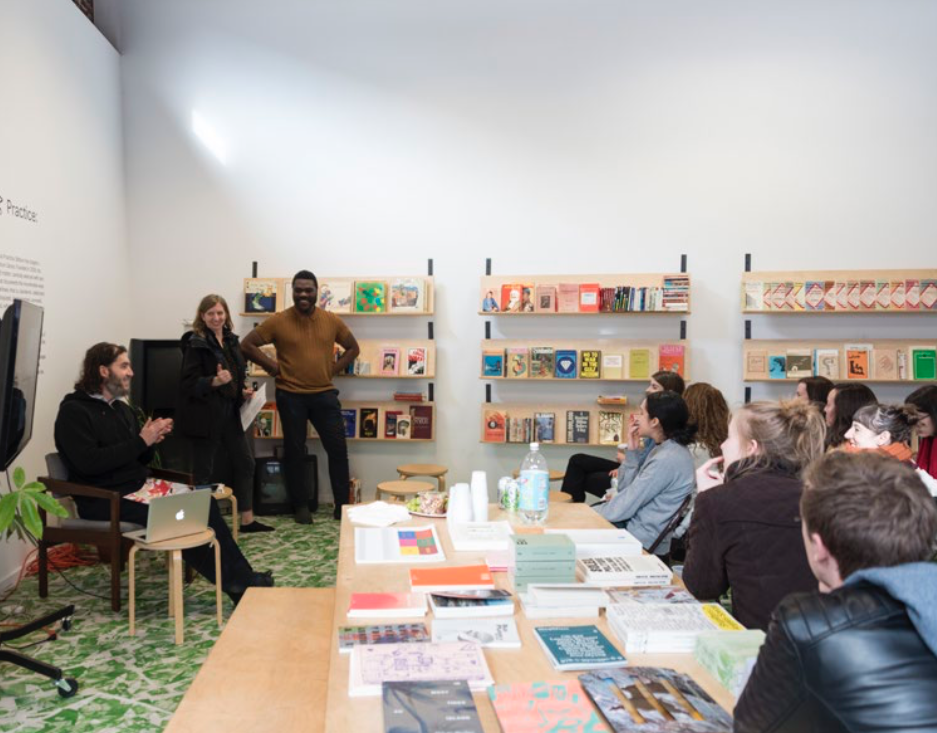
The project space allowed visitors to explore, research, and create wide-ranging connections through materials that are generally unavailable commercially. The focus was on materials created by and for artists, as well as those published by independent organizations based in the Middle East.

Besides print materials, the library includes music programs compiled by artists, including Hassan Khan and Tiffany Malakooti, presented via iPod listening posts, and screens for browsing the Middle Eastern section, curated by Bidoun, of the avant-garde sound and film archive website UbuWeb. Featured independent publishers in this first version of the library include Ashkal Alwan and the Arab Image Foundation.

Banu Cennetoğlu, a founder of the Istanbul artist-run publisher BAS, curated a section dedicated to artist’s books, while Samandal, the Lebanese artists’ collective that creates trilingual comics, presented a collection of influential comic books and magazines.

In 2009-2010, the library was presented in partnership with Abu Dhabi Art.

Downlaod the 2009 Bidoun Library catalogue here [pdf].
Downlaod the 2010 Bidoun Library catalogue here [pdf].

Bidoun Library 2.0

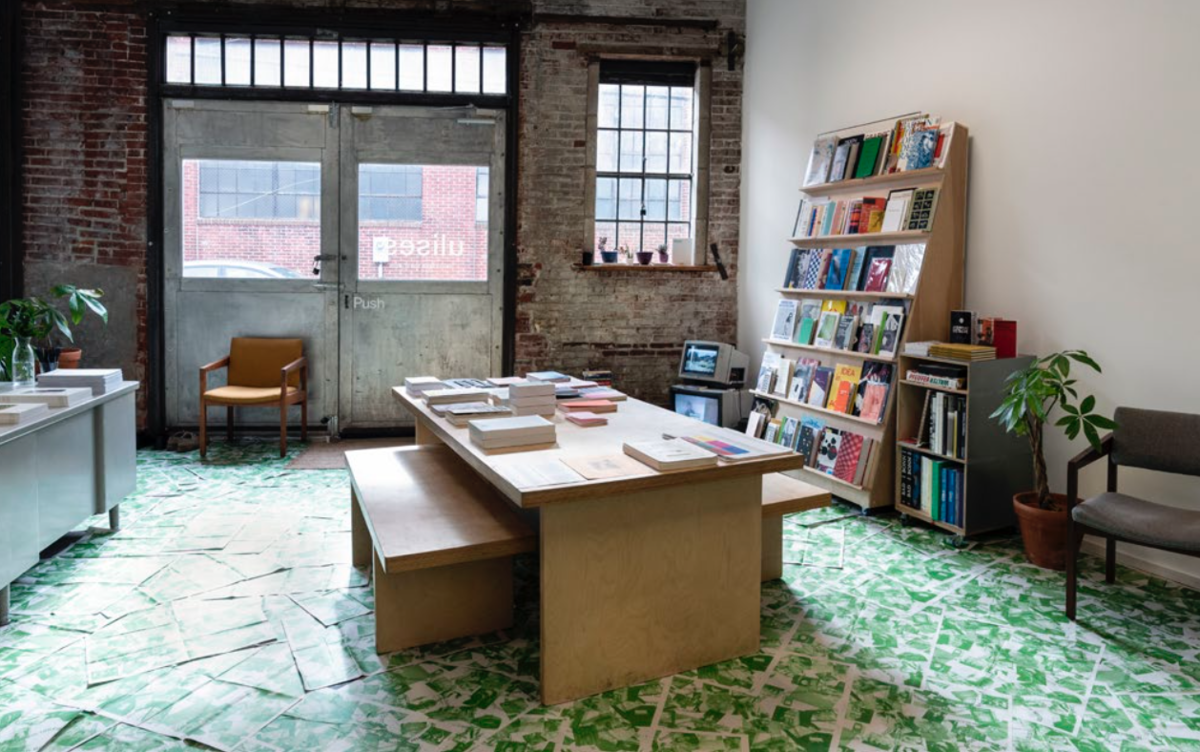
The Bidoun Library Project at the New Museum was a highly partial account of five decades of printed matter in, near, about, and around the Middle East. Arrayed along the shelves were pulp fictions and propaganda, monographs and guidebooks, and pamphlets and periodicals, on subjects ranging from the oil boom to the Dubai bust, the Cold War to the hot pant, Pan-Arabs to Black Muslims, revolutionaries to royals, and Orientalism to its opposites.

Most of the 700-odd titles on display were acquired specifically for this exhibition. The shape of the collection was dictated primarily by search terms on the World Wide Web rather than any intrinsic notion of aptness or excellence. Searching for “Arab,” “paperback,” “1970s,” and “<$3,” we acquired dozens of books about the Oil Crisis, the cruel love of the Sheikh, and the lifestyles of the nouveau riche. A similar search for “Iran” produced its own set of types and stereotypes. We did not set out to find the best books about, say, the Iranian revolution; in a sense, we looked for the worst. Or, rather, we tried to look at what was there.

The result is less a coherent group of titles or texts than an assortment of books as things, sorted roughly into four themes or units. Catalogues hang from the ceiling in front of each shelf cluster. Inside is a documentation of a selection of books from that shelf, in dialogue with excerpted texts and images from the library as a whole.

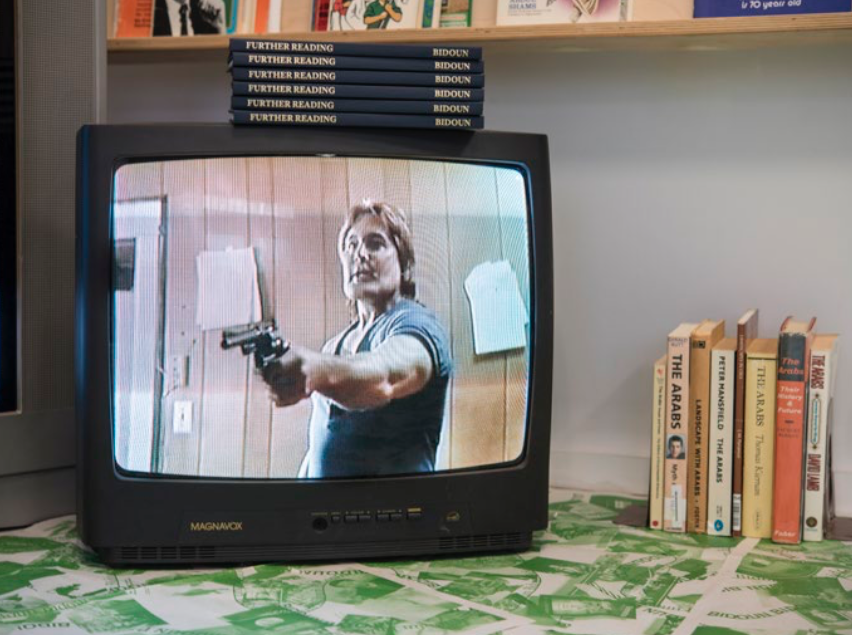
The Bidoun Library includes a program of Iranian film, video, and television culled from low-fidelity DVDs and VHS tapes that circulate among Iranians in the Diaspora. The selection includes post-revolutionary variety shows, music videos, and other totems of middlebrow—unibrow?—culture. This is an Iranian cinema unlikely to be shown at Lincoln Center.

The Bidoun Library is set to travel to the Serpentine Gallery in London Summer 2011.


| More