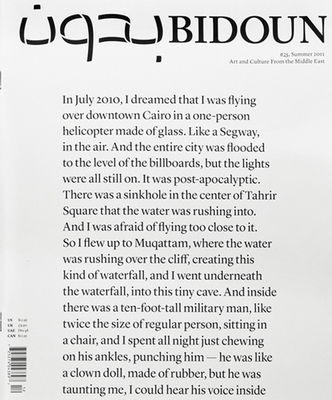
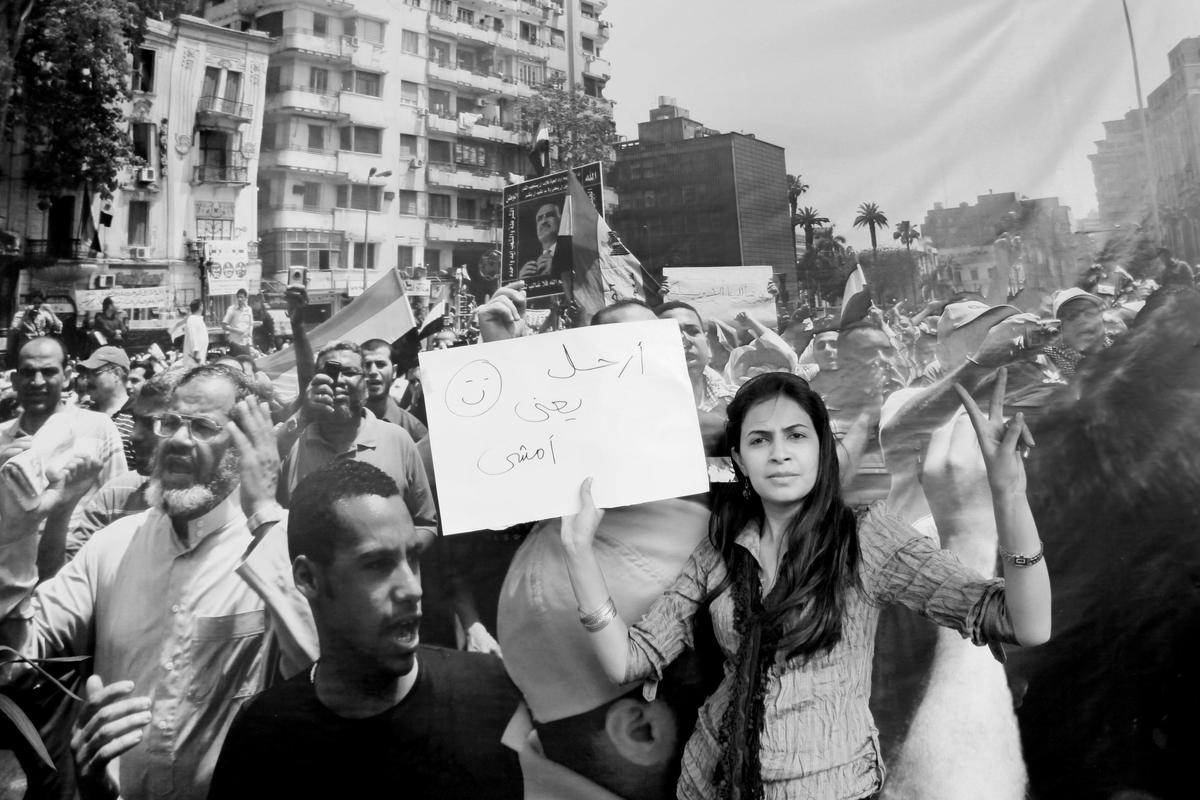
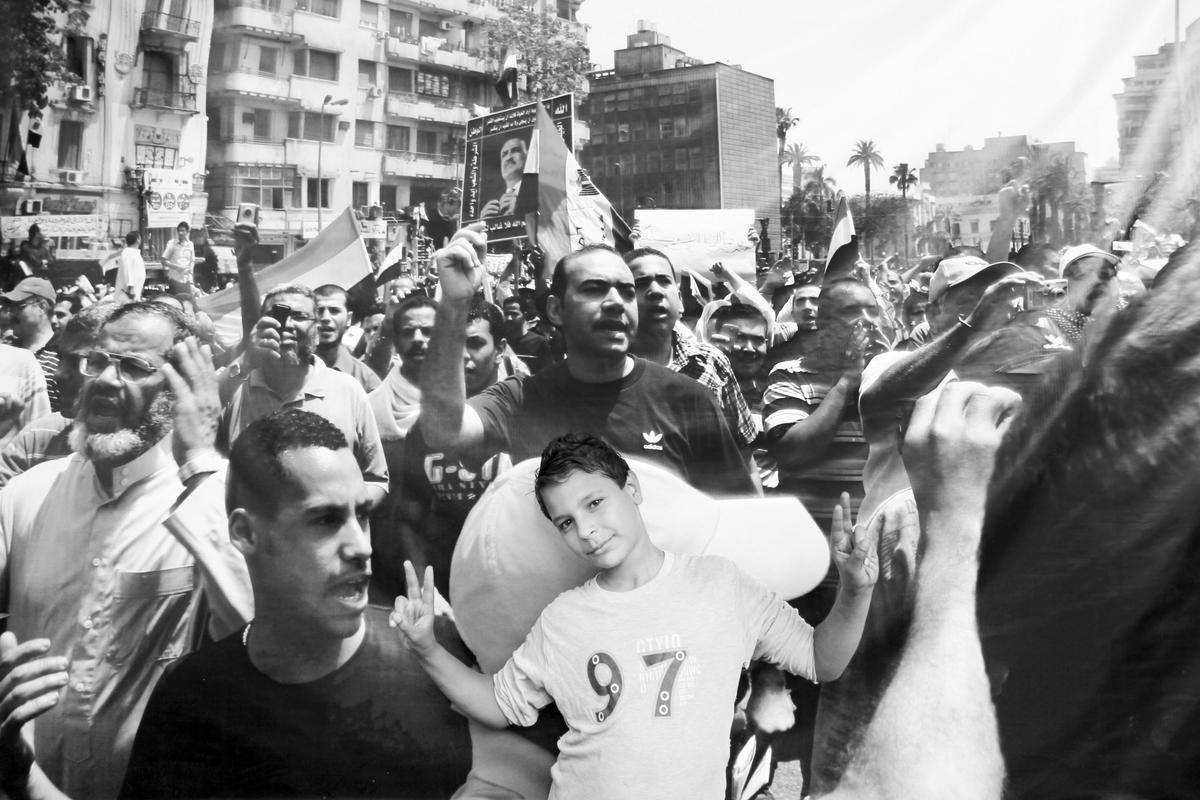
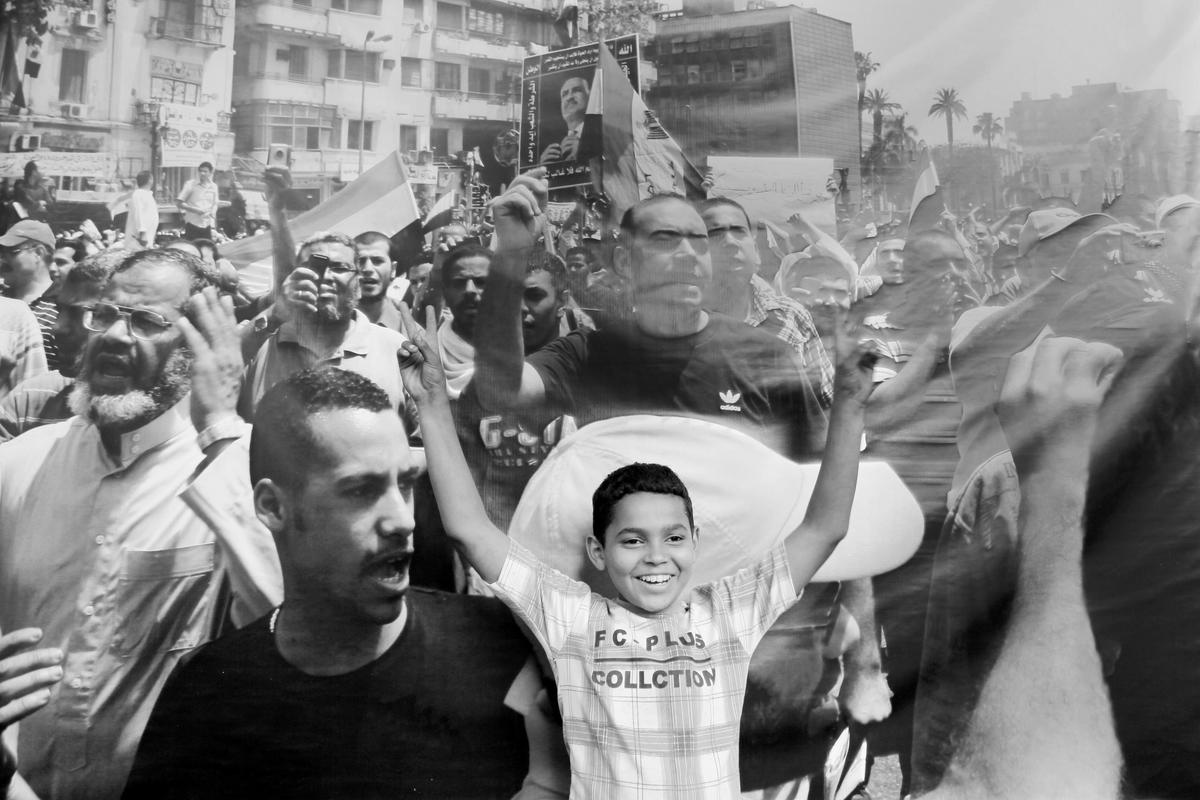
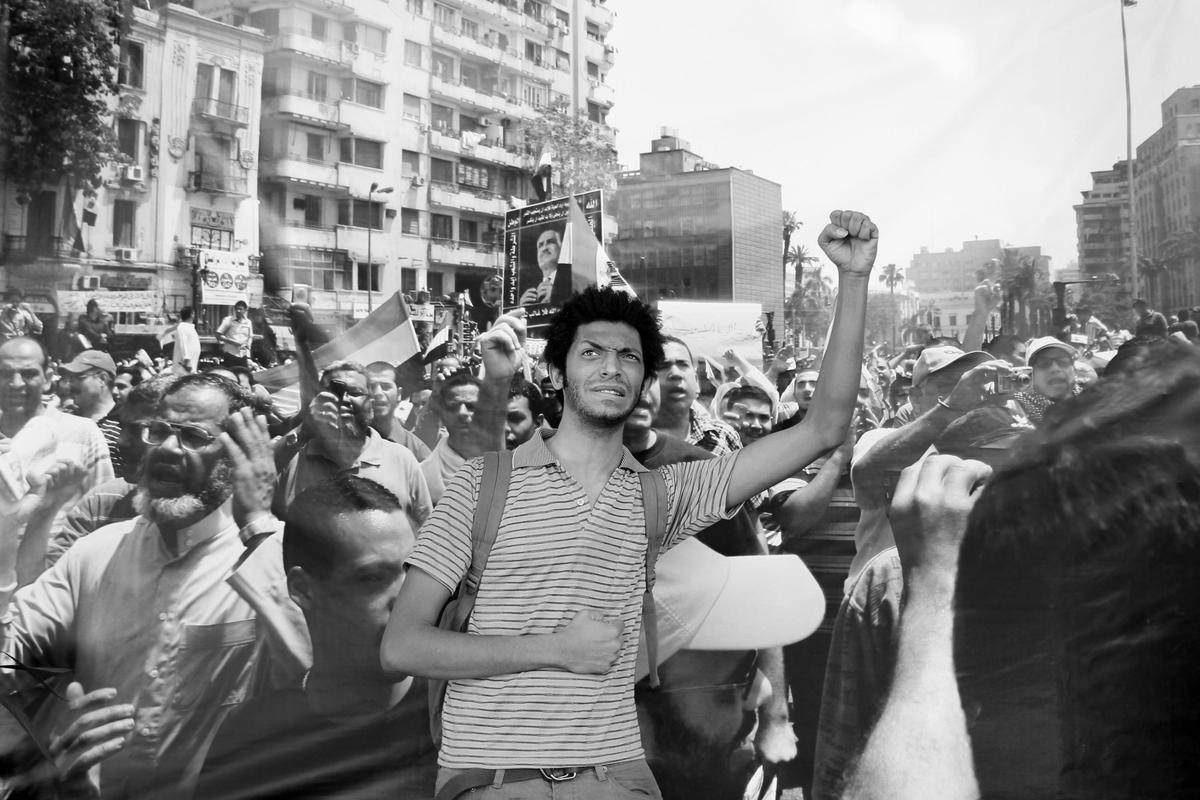
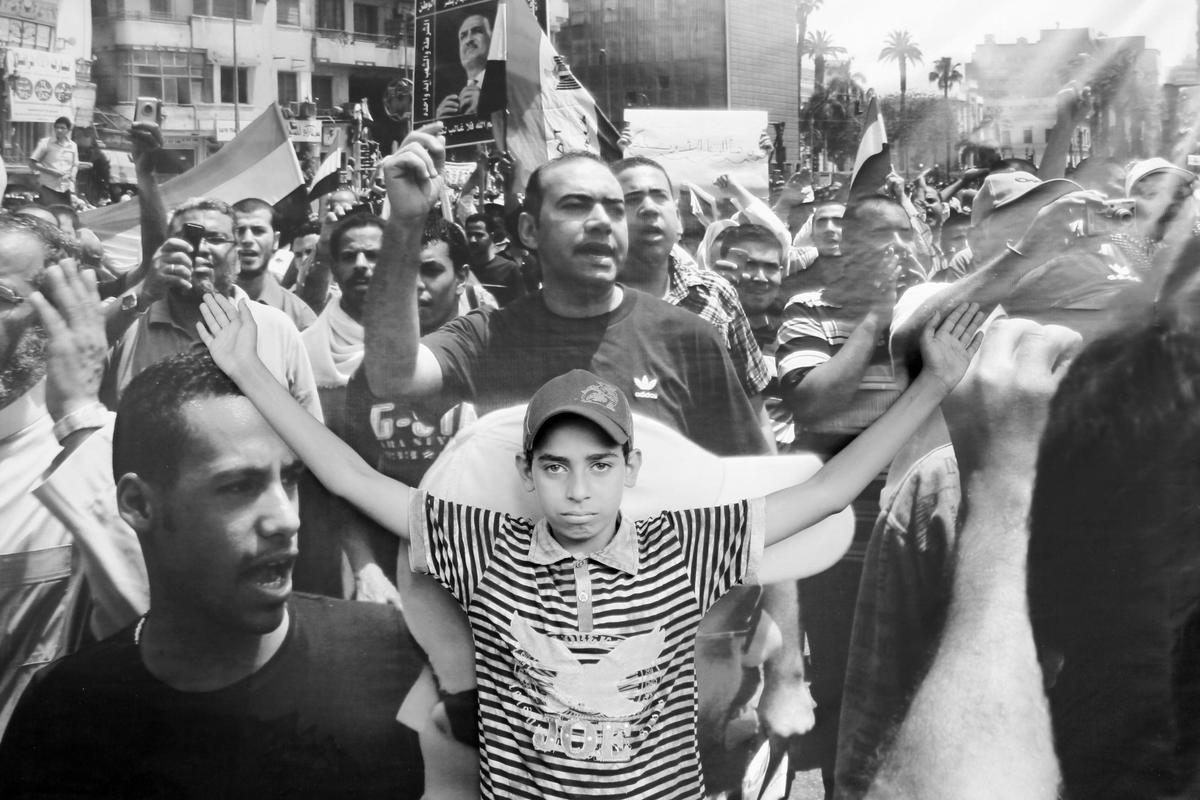
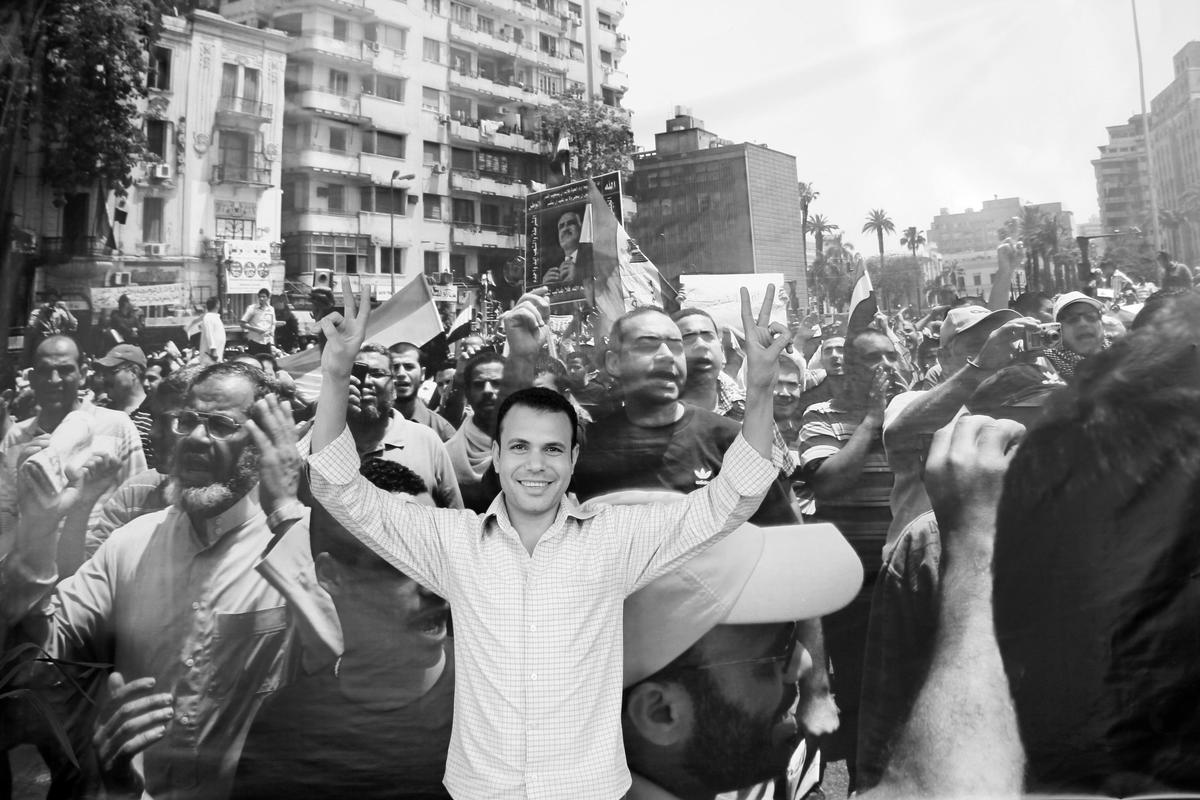
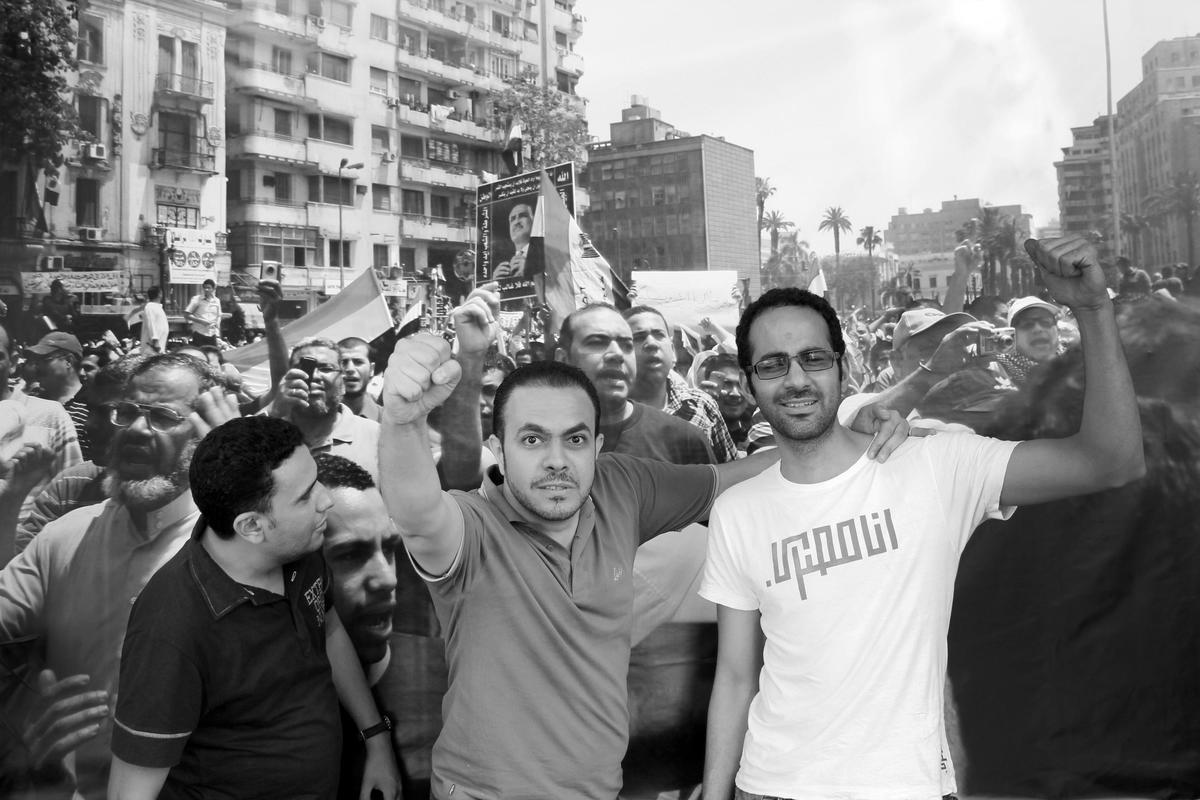
1. Dear Reader: What you are holding in your hands is in many ways a failure.
From: “SUZANNE MUBARAK” [email protected]
Date: 2 May 2011 21:34:20 GMT+01:00
To: undisclosed-recipients:;
Subject: SUZANNE MUBARAK
Reply-To: [email protected]
Dear Friend,
This mail may not be surprising to you if you have been following current events in the international media with reference to the recent protest in Egypt. I am Mrs. Suzanne Mubarak, the wife of Deposed Egyptian president Hosni Mubarak who is seriously ill where he had retreated after giving up power on February 11.
Ever since the turn out of events and even prior to the protest, I have been thrown into a state of antagonism, confusion, humiliation, frustration, and hopelessness by the present military leadership of the Egyptian Liberation Organization. I have even been subjected to physical and psychological torture. As a woman that is so traumatized, I have lost confidence with everybody in the country at the moment.
You must have heard over the media reports and the Internet on the discovery of some fund in my husband’s secret bank account and companies and the allegations of some huge sums of money deposited by my husband in my name of which I have refused to disclose or give up to the Egyptian Government. In fact the total sum allegedly discovered by the Government so far is in the tune of about $6.5 Billion Dollars. And they are not relenting on their effort to make me and my sons (Gamal & Alaa Mubarak) poor for life. As you know, the Moslem community has no regards for women, more importantly when the woman is from a Christian background, hence my desire for a foreign assistance.
I have the sum of $60millionUSD (Sixty Million United States Dollars) with a financial firm in Europe whose name I cannot disclose for now for security reasons until we open up communication. I shall be grateful if you could receive this fund into your bank account for safekeeping and any Investment opportunity. This arrangement will be known to you and I alone and all our correspondence should be strictly on email alone because our government has tapped all our lines and are monitoring all my moves. In view of the above, if you are willing to assist for our mutual benefits, you shall be compensated with 30% of the funds after the completion and transfer of fund to your possession.
Please note that this is a golden opportunity that comes once in lifetime and more so, if you are honest, I am going to entrust more funds in your care as this is one of the legacies we keep for our children. In case you don’t accept please do not let me out to the security and international media as I am giving you this information in total trust and confidence I will greatly appreciate if you accept my proposal in good faith. I am aware of the consequences of this proposal. So I ask that if you find no interest in this project that you should discard this mail.
I ask that you do not be vindictive and destructive. If my offer is of no appeal to you, delete this message and forget I ever contacted you. Do not destroy my family reputation because you do not approve of my proposal.
I dreamed that I had shrunk the prime minister down to a tiny size and put him in my eyeglass case and carried him around with me and forgot about him. Then I was with my parents and I remembered suddenly that he was in there. I was afraid he had died but when I opened the case he jumped out like Rumpelstiltskin.
2: But as a failure it might still be redeemed in that it is also a disappointment. We did not, at least, as many do, set out to fail. In the semi-circles of art-making and cultural production, this kind of exercise — failure by design — has over the years proven to be quite amicable to commodification. And also, talked about to death. Let’s worry together that it was a coy politics of defeat. In this post-revolutionary moment, such a strategy seems laughable.
A conversation with William Wells, director of The Townhouse Gallery in downtown Cairo, where Bidoun was in residency for two months. Artist Doa Aly was present as well.
William Wells: Oh. That’s brilliant.
Bidoun: [Holding a copy of the magazine] Please, take a look. We produced it really quickly.
WW: But why isn’t it upstairs in the fridge?
B: Oh — the wine. I thought you meant the Bidoun!
WW: Oh, please!
B: Let’s turn on the recorder.
WW: [Becomes serious] I think you guys have really set yourself a difficult task at this particular moment.
B: What’s different now?
WW: I took a taxi — I’ve taken a lot of taxis in the last couple of weeks — and honestly, I think that the taxi drivers’ conversations are so indicative of all the changes. Now everybody talks about bringing all information out into the open. In Syria, when newspapers want to print anonymous pieces of information, they sign it as “The Shoeshine Boy.” In Egypt, people have always used taxi drivers as some kind of clear indication of what the news in the country is. Taxi drivers always tell stories, they always complain. But they used to do it in a way that — particularly if they’re talking to a foreigner — still kind of apologizes for the mess. I was so shocked by the language that they are using now. I was in a taxi two nights ago and the driver, this young guy, went into this tirade and he just kept saying, “The dog and his wife — the bitch — are still in the hospital.” Unheard-of language in reference to the president! The freedom that they use with language, it threw me completely. And then it leads you into these conversations that you could never have had before. Because all of a sudden, people just feel this enormous sense of openness. Still, I was so shocked by the kelba [bitch]. Can you imagine?
B: Not “Mama Suzanne.”
WW: Exactly. It was kelba. It just set a whole new standard of what has changed. It’s these young taxi drivers. Being more honest and aggressive gives them a sense of pride. Even yesterday when I was in a taxi, I told the driver that if I was his father I would take his license away from him completely. Not just his language, his whole manner, his attitude.
B: You get this feeling from so many people now. They are owning the street! They’re owning the town! [Laughs]
Doa Aly: But I love that! I love that. Especially with the women, because it used to be just the baladi woman that owned the streets. And now it’s everybody. It’s all kinds of women! And if you’re going to harass me, now I can choose whether I’m going to reply, say something or not, and there is this kind of consensus between us in this way. It’s not the same, the dynamics of the streets. And that’s the other extreme thing as well: it’s going from extreme repression to extreme freedom of expression right now. [Laughs] I think, just give it some time and it’ll head somewhere—
WW: Yes, somewhere—
DA: Somewhere good. It will happen. But there is also this romantic atmosphere on the streets. It’s the flow that everyone’s talking about.
WW: Yes, like when all those do-gooders came onto the streets with their kitchen brooms and their brushes and swept away the revolution in twenty-four hours. You know what it reminded me of? Ashura — when you’re walking through the streets during Ashura, and the men are all beating themselves and the women are all watching them from behind the bars. It’s the most sexually charged ten days, because it’s all about meeting and picking people up, through eye contact. Same in Tahrir, with all those young people bending over their brooms. It was such a pickup scene! Nothing wrong about it, but you could just see everybody like, [seductively] “I like your broom.”
B: The media loved to write about the cleaning.
WW: Loved it! And the fact that people were traveling from Heliopolis to sweep the streets of Maadi! What was that all about?
B: You were saying everyone’s nicer on the street.
WW: Everyone’s what?
B: There’s this acknowledgement of this thing that we were in together, and happy in, together. You smile and people smile back…
WW: Say you leave here at seven o’clock and you walk to Talaat Harb. Since now there are no police to remove the guys who sell things on the street, you’ll see fifty or sixty more people selling their t-shirts than you would have two months ago. The beauty of it is how the competition to get your attention manifests itself. I walk out to get a taxi, I’m standing in front of a stall, and the guy starts screaming, “Look at that! We’re attracting the foreigners! The foreigner is standing in front of our stall! Get ‘em!” He uses me as a ploy. And then he uses a woman across the street, who is wearing a particularly ugly color. “You can tell where she got her clothes — they’re not from our stall!” They’re very spontaneously grabbing members from the public and creating these performances, which is brilliant. And they’re not being documented. There’s no acknowledgment. And people’s faces! They’re like, “What’s going on here?”
B: What was it like at the Townhouse during the revolution? Were people using the space?
WW: There were so many people producing art. A group came to us calling themselves “The Artists of the Revolution” and asked us for a space to work. They were young people who had met each other in the square, living in the square, sleeping in the square, who were all creating artwork on a daily basis. They varied in number, from fifty to a hundred. And they had all become so close, they were like brothers and sisters of the revolution. All these people from completely different backgrounds — nothing to do with the arts — discovered their artistic talent, and the relation that they had to each other, in the square.
So we gave them the factory space and they went in and started producing. But of course having been removed from the square, they didn’t have the vitality, the energy, the purpose they’d found in the square. All of sudden everything changed. Their work became really banal, really obvious, embarrassing. But they carried on their discussions and they were the nicest people, I mean, honest to God, I let them use the space just because they were so nice. But then the time came when we needed the space back. We called up the guy who had organized it and said, “Can you please come in today to take the work away? Tomorrow is the last day you can have the space.” So the guy came with his friends and they took everything out. So polite. The next day, another group of people shows up and says, “We’ve come to collect all the work.” And we said, “But your friends already took the work.” “Friends!” they say. “They’re not our friends. They’re traitors, they’re traitors to the revolution.” And all of a sudden the other guys walked in, and the two sides just confronted each other! It was like splintering Trotskyite organizations. It turns out they had discovered they had nothing in common — totally different values. They had created two separate movements. The artists who thought they were the true artists of the revolution were having an exhibition at the Atelier, and they were collecting all of the work. They blamed this other group for stealing the work.
B: Could you distinguish what their differences were?
WW: Not really but… the tension. The people who claimed the revolution and were having the exhibition at the Atelier were maybe from more of a middle-class background. They had an arrogance toward the arts, an arrogance that the other group didn’t have. So it could have collapsed in the end because of social class.
B: All these exhibitions about the revolution start to feel like a way of flaunting your cultural credentials or your revolutionary cred. I mean, if you’re an Egyptian, everyone’s constantly saying, congratulations. How was it? Are you okay? Tell us about it. And you know the vast majority of the population stayed home.
WW: The first week after the revolution, a friend went to the very first meeting of the syndicate and as soon as everyone sat down, someone said, “I don’t want to hear from anybody who didn’t sleep in the square for two weeks. You don’t have a right to speak.” There was this hierarchy: the true people were those who actually slept in the square. There might’ve been people that came out during the day, or who brought food to people in the evenings, and then it trickled down to the tourists, the people just getting a coffee at Cilantro. Then you had the people standing on Pierre’s balcony overlooking the square, with the revolution below them. I think there is a big difference between experiencing the revolution from the balcony and being in the square. You know? It’s better just to say it — it was a couch revolution for the majority of people. They stayed home and watched it on TV.
Walking from my house to the square on the morning of January 29, I went down this side street that was filled with burnt-out vehicles. Every kind of vehicle you could have imagined, including police cars, seemed to have been deposited there for some reason. And the street was totally empty, so whenever I’d go back and forth from my house during the revolution, I’d use that street. Then Mubarak leaves on February 11, it’s three o’clock in the afternoon, and as I’m walking back to my house, the street is packed. Every Egyptian was experiencing the revolution for the first time in that tiny little street. Every child, family, group of teenagers, was sitting on a burnt car. All of a sudden. It was clear that, during the revolution, none of them had been downtown.
B: People love to party.
WW: Yeah! Oh my God, it was incredible.
B: It was like a reconciliation for everybody who was holding out to see what would happen…
WW: Exactly. There was an article in one of the papers that came out a week after Mubarak fell: an entire page of confessions from people who didn’t go out into the streets. It’s like, all these young people crying, “I’ll never be able to tell my children what I did!” It’s a whole page of teens who sat at home watching TV and admitting it. I just read it and thought, “Oh, this is absolutely awful.”
B: What was your relationship to the Square? Did you go?
WW: Yeah, I went. But I didn’t sleep in the square. I couldn’t stay in the square for all sorts of reasons. Particularly, I didn’t feel comfortable at all. I would go, but I never felt that sense of jubilation because you’re a foreigner. No matter what you say or what you do, you’re a foreigner. It’s not your revolution. You can’t say anything. You have absolutely no right to even get into a discussion with somebody. Everyone’s so welcoming to you, like it’s your first day in Egypt. You are a complete stranger embraced by people who are apologizing for searching you before you enter the square. You are a stranger and a spectator in a revolution that you actually felt you had a right to be part of. And I thought, I’m really uncomfortable about that. Every single day, being welcomed to Egypt! I felt like saying, “I’ve been here longer than you’ve been alive!” to some of those kids. I was here under Sadat, for God’s sake.
B: People were accusing others of taking foreign money and being spies…
WW: One Friday afternoon, we were standing on the balcony of the Townhouse and there was a battle going on in the street. They were dragging this foreigner — it was terrible. This kid kept screaming out, “I’m not a journalist! I’m not Israeli! I’m not!” Who knows who he was? There was this anti-foreign feeling. And you felt it. You didn’t belong. No matter what you said or did, you did not belong.
On the day of the referendum vote, everyone was sitting downstairs at the coffee shop at eight o’clock in the morning, when the polls opened up. I’m sitting with everybody and it’s really clear that I am not supposed to be there. It was the first time in my life where I actually thought, “Okay, time to go.” Time to actually leave this space. Townhouse had created this momentum of various things but clearly, in the end… People I knew really well would come over and stand and talk to me, but then say, “Okay, we’re going to go sit over there.”
B: It just gives you a sense of how quickly things can shift here.
WW: Yes, people were so quick to turn. That was a shock to me. This past Sunday night there was a fight at an exhibition opening here. It’s interesting because it was so symptomatic of ten years ago. That fight was a common thing you would have experienced a decade ago on this street. We had this blind faith that it couldn’t happen again here. So for it to erupt, I realized that maybe everything was just under the surface the whole time. It was there all along: all these people and their relationships with each other got clouded over by this feeling that things had changed over the last decade. But in reality, the violence was still there. The neighbors still wanted to kill each other. That was a surprise to me.
B: Was factionalism apparent in the street during the days of the revolution?
WW: The street was completely divided between the pro-Mubarak and the protestors. It was split right down the middle. Also, the circumstances of the revolution meant that there was no money coming into this district. So people were starting to think, Wait a minute, things were stable before. We had a community. We were poor, but at least we had money coming in, and all of a sudden, now there is nothing. And the reason there is nothing coming in is because of the people who work in this building, people who attend things in this building, who are going down to the square.
B: This building?
WW: This building, the Townhouse. People that I knew really well, and I had worked with for years. When the violence on the street started escalating and I needed a way to leave the building safely, they didn’t want to help me get out. They just stood there. Four days ago, I ran into someone I wanted to thank for walking me through the street during the worst of the fighting, but he just looked at me with so much hatred. Just like, he’s not ready to talk to me. The people at the garage were still not ready to talk to me.
Because the street was divided. Mina was getting calls from these people from the street saying, “Where are you? We’re sick of protecting the gallery.” There were huge, huge fights in the street. I mean, Mina was getting calls at two in the morning saying, “There are people here and they’re after the Townhouse. It’s got to be the Brotherhood.” And “We’re not protecting you anymore, we’re not doing all this. You’ve got to come back.” Of course, it had to be fictitious — the last thing the Muslim Brotherhood would do is attack the Townhouse.
B: Is the street back to normal these days?
WW: Not after the fight last Sunday, from what I can gather. I think people are just extremely worried about the whole Christian-Muslim thing, and there are a lot of Christians downstairs. Have you noticed how, when the police moved off the street, you get a real sense of the vacuum that is left? At every level. Even though people talk about organizing themselves, like with the neighborhood watches, people participated in them for very different reasons. In a lot of places where there were street watches there was still a lot of violence. People have been taking on the role of the police, in every district. But then I walked into a supermarket — and everybody in the supermarket was smoking a joint. [Laughs]
B: What supermarket?
WW: Just near where I live. Then I walked across the street to get a bottle of wine and they wouldn’t serve me because they were too busy rolling joints and passing them around. And then you realize, well, I don’t have a problem with this, but I am getting stoned waiting in this store! I mentioned it to someone on my street and he goes, “Walk to the next street over: they’ve got a table set up where they’re selling hash, publicly.” So all of this just surfaced. Because, you know, the Minister of the Interior put a ban on all drugs six months ago, last May, and he said, “If anybody smokes a joint, it’s under my control.” People are even saying had he not done that, there probably wouldn’t have been a revolution because these kids would have kept quiet — they would’ve been stoned. But so many social behaviors are taking on different aspects in local middle-class communities. Things were just turned upside down. A supermarket where everybody is smoking hash! It could’ve been in Amsterdam.
B: Has this made you think about how the Townhouse will function moving forward?
WW: I don’t think so… [Laughs]
B: What about in resolving the tensions on the street?
WW: Maybe in terms of my own decisions, personally. [Laughs] But in terms of the Townhouse, I think that as soon as we opened our doors this became a place for political discussion, almost immediately.
And there’s this really… How shall I say, there’s this fact that the young people are so demanding. One group of activists marched in, saying, “We need to take the library for two hours. We’re a human rights group monitoring the referendum.” And five hours later they’re still in there, with no thought to ask if it is okay. There were political parties forming in the Townhouse within the first week. Or Bidoun showing up. [Laughs]. There’s this assumption that the space is theirs.
3: In this post-revolutionary moment, reasonable people start sounding like Leninists.
Magdi Mostafa is an artist who works with sound and visuals. He represented his friend, the late artist Ahmed Basiony, at this year’s Venice Biennale. Basiony, who was thirty-two, was killed on January 28 in Tahrir Square.
Bidoun: [Points to Bidoun 24, Sports] So the cover of this issue was an accident. It was the end of January and we were looking for an image of a Tunisian weightlifter, and we couldn’t find one. So we were like, “there’s a protest in Egypt. Maybe an Egyptian?”
Magdi Mostafa: It was all about being an accident, trust me. I thought I was just meeting some friends downtown. “Let’s meet in Tahrir, okay?” But I wasn’t expecting anything — I was making fun of it until the last moment. I was a little bit hopeless because of what happened before. But I thought, let’s go and see. There’s nothing to lose. The presence of so many people was a surprise to everyone.
B: So you were there on the 25th, for the police day protest?
MM: We started on the 25th. There was no plan to come back the next day, actually. We just wanted to do something for one day, to say, “We are here!” If they had just let us go home, things might have been different. The violence… caused a lot of rage in people. We were angry. It’s like we were looking for excuses every day to come back — and they kept giving us an excuse. So we came back the next day, and the day after that. That wasn’t planned either — thanks!
B: So you didn’t know it was a revolution right away?
MM: For me, on Friday the 28th, it was a revolution. Before Friday, it was protests. But Friday, you had all these categories of people together, and people coming from far away. They came from Giza, from Cairo, from Shobra — from everywhere. And they came through the streets. The movement in the streets gave people a true image of what was happening, very far away from what they had seen on state television. You’d just open your balcony and see people moving like water toward Tahrir. And we were calling to people to leave their houses. “Stop being negative and come join us!” So there was just a massive amount of people. All kinds of people, not just educated or civilized or young. A lot of women, a lot of older people. Everything. This togetherness, and the voices, and the power of having the right. That was something. It didn’t belong to certain people anymore. It was everyone.
B: And you had to fight your way into Tahrir, right?
MM: That day Tahrir Square was completely closed by security. And from Friday prayers until six thirty, we were trying to get into the square. And then after we finally did succeed in pushing the security back and opening the square for people to get in, there were still back-and-forth attacks. The police wanted to have the square again, and we were pushing them back. And we wanted to reach the Parliament building itself.
B: When the story gets told, people remember what happened as this peaceful protest, of people giving their dreams and giving their spirit, or maybe even of police brutality, like on the day of the camels. But people actually beat the police.
MM: For me, it was truly a war. There was a factory of people taking out the pavement. There were people breaking the pavement into small pieces. Another group bringing these rocks to the front lines, holding them in their clothes or their bags. Everyone had bags full of rocks and we’d throw the rocks to the people at the front. And with a big number of people at the front, mostly young men, it was a strong attack. Like a cloud of rocks.
People improvised. Copied each other. If you did something, and you did it well — if it worked — you’d find everybody doing the same thing. That’s one of the things that made the protests successful. People distributed information about how to face the police — what to bring with you, what to wear. Things were shared online beforehand, shared on Facebook and stuff like that. Bring vinegar to deal with tear gas. Wear bike helmets. What kind of shoes to wear. The Egyptians really proved that they have the skills to fight a war that day. There is this image in my mind, this sound. There was a group of people hitting the street signs, the big ones, with rocks, stone on iron, and it made a terrible sound, like an F-22 flying overhead. If you were the police, and you saw the smoke from the burning cars, and then this huge sound — it could make you believe there were two million people coming at you. It was really amazing.
B: Why rocks? A rock won’t necessarily knock a policeman out, for example. How does it work?
MM: The goal is to push them back. If you imagine that you have a wave of rocks coming at you, like a wave of water, you step back. So we were creating a wave of rocks… and we move forward. And they push us back with tear gas and rubber bullets. But we were also talking to them, trying to reach the human inside the uniform. The police are just doing a job — they don’t believe in what they do. And I believe that it worked for some of them. You know, if he catches you, he doesn’t hit you. He drops his weapon or something. Maybe his superior is more violent, but the policeman himself is not that violent. They know why we’re there, they’re the same age as us. They’re not living on a different planet.
B: The relationship between violence and nonviolence is so complicated. People have guns here. And you know, if you’re going to throw a rock, wouldn’t it be more effective to shoot a gun? But then it’s not actually more effective. The rock is not just a rock. It has a softness as well as a hardness. And the same with the police. They’re holding their positions, or fighting with gas, even though they could just shoot people.
MM: They did! They did! I’m telling you, after a certain point, they just started shooting people. There was an end of the chapter, when they realized that the target was the police itself. Then they went crazy. “You are very greedy. We left the square for you and now you’re attacking us and you want to take the parliament. What else?” They didn’t realize it was a revolution; they thought it was just a protest. And we were pushing them back, back, back.
B: And then what happened? Or why did it happen? When the police started shooting… Why did they lose control? Were there just too many casualties or something?
MM: I think… there was an accident. We had taken some of the police cars, the big vehicles with the box. A lot of people were taking them and burning them. But then somebody thought about using them against the police, to trick them. We found people who were really good drivers, and then we packed two of these vehicles with protestors and just massive amounts of rocks. And the trucks drove very slowly to the police lines, pretending to be police, and people in the square played along, pretending to throw rocks at them. And the police were preparing to let them pass. And then suddenly, the drivers accelerated very, very fast and destroyed three police cars, and people jumped out of the boxes and started to attack the security and the police. So this pushed them back like fifty meters, because it was a huge surprise. Some of them fell and were injured. And at that moment they just opened fire on everyone. It was a decision. Some of the snipers on the roofs started to use true bullets, shooting at the cars and the vehicles. A guy died right next to me. So they lifted the ban on using true bullets, and I’m not sure whether they put it back later that day or not, because after that I had to leave because of my injuries.
B: What happened to you?
MM: I had been in the box of one of those vehicles. I’d gone in part because I had a motorbike helmet. You know — if you have something to protect you, you better be in the front, because other guys have nothing. And I took a rubber bullet from one of the snipers. I was bleeding from my head.
B: It went through your helmet?
MM: I didn’t close it, so it came here. [Gestures] This man and his daughter saw me. I was not sure what had happened, and they weren’t sure, either. So they said, “Okay, we have to take you now because we’re not sure how deep that wound is.” And they took me to my home. I didn’t trust any hospital at the time — the security forces were taking people even out of ambulances.
B: A lot of people were killed that day, including your friend Ahmed Basiony. Would you mind telling us what happened?
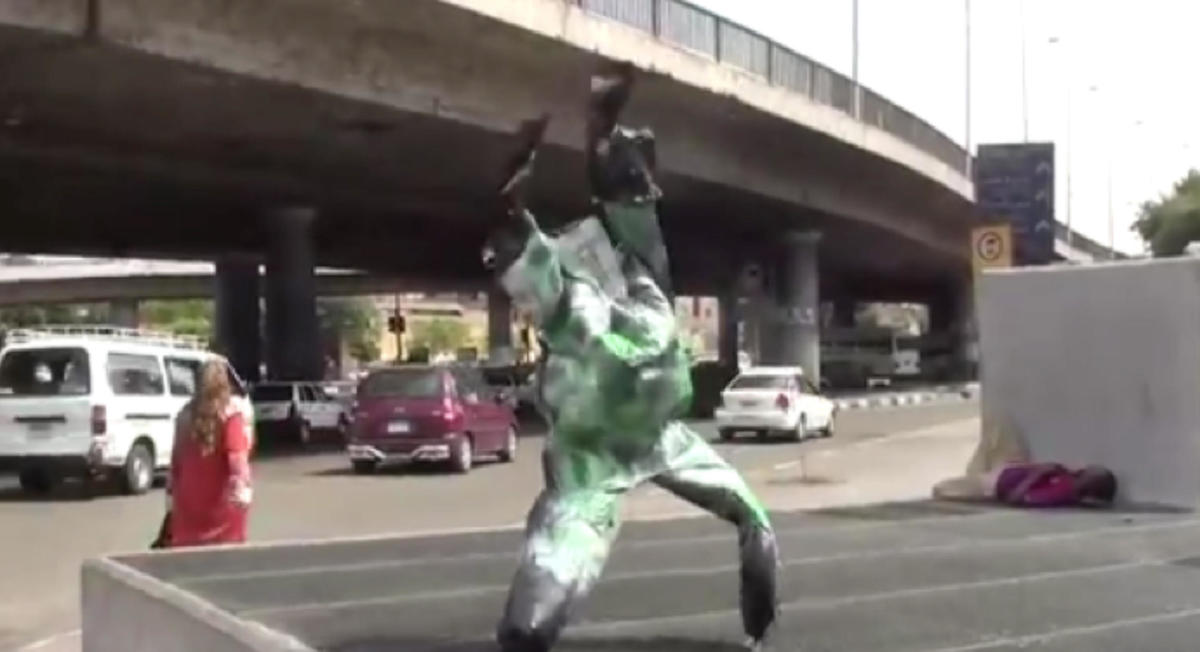
MM: We went to the square every day together. Ahmed was always carrying his camera — he was filming all the time. And he was wearing a gas mask. He had a sort of performative attitude. On the first day he was wearing a sort of worker’s costume. He was always wearing something that made him very visible. And I think that was one of the reasons why they recognized him so easily. He was wearing a gas mask from Russia! I told him, “Come on, it’s tear gas, not chemical war!”
B: Was he making art?
MM: I think he was documenting more than anything. He was collecting material. We all were.
B: You said it was kind of performative.
MM: That’s just the way he is. I mean, he didn’t film himself. It’s just something in his character. He was not always a serious guy. He was laughing all the time. But he was serious about what he believed in.
So on the 28th, after we had fought our way into Tahrir, Ahmed was interviewing people in the middle of the square, asking them if they believed that we were all sincere in doing this or not. What’s their expectation and blah blah blah. And he was in the middle of an interview when that thing with the police vehicles was going to happen. So I told him where I was going, that I’d come back for him.
After I was injured I wanted to call Ahmed to tell him I wasn’t there anymore, don’t bother to look for me. But the phone network was down already, so he didn’t know what happened. I believe that he went to look for me when I disappeared. He knew I was by myself.
And he took a rubber bullet, too. What happened was, he was trying to film some of the snipers with his camera set to night shot. So he climbed up on top of something and started filming those guys. And they shot him, and he fell to the ground, and a police car hit him. I really believe it was planned—if he’d just fallen by accident people would have helped him. At the very least I think the sniper planned the shot so that the car would hit him when he fell. His camera was lost, it was full of amazing material. And then they put him on a motorbike and took him to the hospital, but he was dead already.
When I came to Tahrir the next day, I went looking for him. I had no idea what had happened—those first three days, there were so many people in the square and so much going on, we’d lose each other by the end of the day. So it wasn’t unusual to have lost track of each other. But then that day, Saturday, he didn’t show up. And later we called his house and found out he hadn’t been home for days. So we started looking for him in the hospitals, but we couldn’t find him.
B: How was he eventually found?
MM: I mean, his brother was always looking for him. And by chance his family found him in one of the hospitals, in the fridge. What’s really strange is that they had a form for the family to sign—if they wanted the body, they’d have to sign away their right to press charges. And lots of people did it. Even though Ahmed died fighting for those rights, you know? But not everyone felt the same way. There were a lot of family conflicts about Tahrir. Everyone was hiding from their parents. So even though people were paying with their lives for those rights, there were people who were like, “No, we just want the body.” And it was a tragedy, because he was such a special person. His loyalty… he lived for what he believed in, for his teaching, for his art. That’s why so many people are sad about Ahmed, because they knew him. He didn’t care to be internationally known, he didn’t care about the market. He was himself, he liked what he did. And he was a very promising artist.
He always wanted to film the truth. I heard that there were people in the square who tried to stop him from filming, and he said, “No, there will be a judgment for this, and we have to have a proof that it really happened.” He paid his life for that.
B: Did you guys talk about art while you were in the square?
MM: You know, the action was always bigger than art. So in the end, you forget about being an artist and you get into just being a citizen. I mean, I was recording stuff, too — I have materials, images and sound and videos, but I haven’t even opened them yet. I have folders of stuff, but I don’t know when I will open them.
B: What do you think you’re waiting for? What is it that you don’t know? Is there a question that goes around in your head? Something you’re waiting to see?
MM: I think one of the greatest benefits of this revolution is that a lot of people have questions in their heads. The future is unknown — and this is really healthy. The definition of safety and stability was that you always knew what was going to happen. You were in “safe hands.” But now we don’t know. I like that I don’t know. To me, this is good news. So I think that the questions that are in my head are the same as everyone’s: what will happen tomorrow?
For me, specifically, I wonder if it was really worth it. To have lost so many people. To be worth it, things are going to have to go somewhere a lot better. I mean, if you want to change a law, or if you want to change presidents, the price shouldn’t be all these people. The price can be an election or something. But if you pay with the lives of all these people, then you have to change the whole history. There should be a wave of changes, new pages in history, for us to be able to say that it was well worth it.
B: This might be a weird question, but did you have any dreams that you remember? During the revolution, or after?
MM: I’ve had some dreams about Ahmed. I’ve seen him twice. But those are the only dreams I’ve had. Just his face, or him talking to me. I am representing him in the Venice Biennale. It’s like an homage. I think it’s the right time for him to be representing his country. I mean, he was qualified, apart from being killed. [Laughs] He’d applied for the one before, but he didn’t get it. Anyway, in my dreams, I have seen him smiling after the proposal of Venice. I was very hesitant to participate, because from my point of view there’s a bit of a promotional aspect for the people who do it. It’s also a bit exotic for me to be presented as his friend and as a representative of the revolution. But even his family suggested that I do it. And then seeing that smiling face of his was for me a sign of something. I needed to see him that way.
B: Do you still go to Tahrir?
MM: I went every Friday, until recently. Right now I have nothing to say. I want to have a solid idea of what’s going on before saying something, and right now I don’t believe most of what I hear. I’m not sure about a lot of things. It sounds good, what you hear in the news, but you never know what is happening backstage.
B: What’s changed for you? Are you still talking with people about what happened? And how do you feel about the way that the media sort of seized on “the martyrs” as a way of talking about the revolution? It seems perhaps limiting, in a way.
MM: It’s a difficult question. One of the biggest challenges is that not everybody has the same level of awareness. Most people would rather skip these difficult times and not struggle at all. And I think this is the perfect enemy of our dreams. There are a lot of people still living in the past, and this is the biggest challenge.
So I mean, yeah — every chance I have to speak, I speak. I don’t hesitate, because it’s the only way, I think, to change awareness. I live in a really traditional neighborhood uptown. I take the subway — I don’t have a car — and people next to me on the train would start talking. And some of them would say, “Fuck the revolution!” Things like that. I never keep silent, even if it will lead to an argument. It’s a rule I have for myself, a way of being loyal to Basiony.
People really don’t know — they were brainwashed by the media, which was working really well at making people believe that every other media source was lying or working with Israel or both. Most Egyptians are really kind and they want to believe in the goodness of others. So I speak in the name of being there, and I can show some images of things as evidence, point to a poster with Ahmed’s face on it and say, “We were friends.”
4: In any case, failure was with us from the start. We wanted to insert the risk of failure squarely into our process, as a matter of ethics. I’m disappointed to say we failed to do even this much.
The writer Mahmoud Othman talks about his sci-fi novel Revolution 2053, which, in more ways than one, prophesied the events of the revolution of 2011.
I’ve dreamt of being a writer since I was a kid, but my parents convinced me that it was just a hobby and that I should have a real profession. So I became an architect. First I worked as a plant manager for three years, producing “luxury motor cruisers,” yachts. Then I left that and started exporting cement. I was the first exporter of cement in the Egyptian market. Because there was no infrastructure to export it, I started to manufacture the belts that move the cement along the factory line.
From 1995 to 2009, I worked on a novel that dreamt of a revolution that was to come. The backdrop of the story was the situation of Egyptians and how they faced a kind of collective hopelessness. They felt they were all alone in the world. There was a great fear to take action, too. The message was that unless we stopped this progression toward suicide, we would be finished. In a way, I was putting out warnings about specific things that I hoped would not actually come true in Egypt.
The central hero of the novel is a successful, upper-middle-class Egyptian engineer. At a certain point, he has to choose between his own ethics and advancing his business. He is asked to turn a blind eye to certain non-ethical actions — like many Egyptian businessmen, he faces the prospect of having to collaborate with an Israeli firm.
As he’s going through this dilemma, we encounter another character, referred to as “the stranger.” He is a stranger in the sense that he is different from others. He doesn’t even use mobile phones! He’s a photographer with the power to see the future through his images. For each image he takes, he would make a short film about the future of the location depicted in the picture. When he was a child, for example, he had a vision of his family suffering in a car accident. And it came true.
The stranger begins to put all of his visions on a website which is called, appropriately, enlightment.com. It becomes the most popular website in Egypt. Of course, everyone wants to know who created it. The security police pursue him and they eventually arrest him and put him in jail.
Meanwhile, the main character — the engineer — loses his job. He starts to develop a plan to change Egypt. One day, he visits the stranger’s apartment. He takes the stranger’s black box, which is like his hard drive of ideas and visions, and sets out to change the miserable situation in Egypt. It takes him from 2026 to 2053 to do this. He didn’t necessarily set out to start a revolution, he just wanted to change society…
Throughout this time, he’s followed by the police. He develops activist methodologies, figuring out how to avoid getting his phone traced, as he works to develop Egypt without relying on the government or the system or even a central leader. In his vision, groups of people would work together in clusters, communicating through the internet. They wouldn’t even have to know one another’s names. Each cluster would have total freedom to adopt their own techniques.
Still, the hero was not actively involved in politics until the year of the parliamentary elections. This was the year 2053, and the opposition would be kicked out of the parliament. At the same time, there is an attempt to reform the constitution so that the son of the president could become president. This president had served seven successive terms and now hopes to pass it on to his son. I didn’t use names, but of course I was speaking of Gamal Mubarak. In the book, Gamal Mubarak is already in power, and he is plotting how he would pass on the presidency to his son. At the same time, one of the anti-regime activists gets killed — this is, you must remember, long before Khaled Said.
So 2053 is the year of the death of the activist, the falsification of the votes, and the planned constitutional reform to secure the president’s legacy, which, as you now know, all happened in 2010. Bit by bit, everyone discovers that the pyramid is upside down and we must right it. The people must be free of the slavery to which they have been wed. Eventually, what you could call the moment of stoppage comes, when all chaos begins and the people revolt. When the revolution begins, strangely, the engineer wants to stop it — maybe because he knows many will die — but he cannot stop what he initiated twenty years ago. It is now out of his control.
I published a first version of the book in 2007, with a run of 2,000 copies. It was self-published: no press could risk publishing something so directly about the president. At the end of the book, I included the main character’s email address, [email protected]. The protagonist calls for readers to write to him if they want to know what would happen even deeper into the future.
I was only waiting for a single email. I said that if I received one email, that would convince me that I was not alone. I ended up receiving hundreds, and responded to each one. No one was giving me praise for the novel in their letters. Everyone wrote about themselves — how they saw the future, how they plan to act. No one commented on the literary nature of the book!
When I reread the novel after the events of January 25, I was amazed by the similarities. I cried for three or four hours. I was thinking this change would take thirty or forty years; my kids might see it if we were lucky. But that I would see it so soon… I couldn’t believe it. I think that God has given me a certain privilege and maybe I don’t deserve it.
I am planning to publish another book very soon — I cannot claim to be the writer. I am narrating what I learned from the eleven days I slept in Tahrir Square. The start day of the book is Friday the 28th of January and the end date is the day Mubarak stepped down. I will be known as the narrator only, because I am not the writer of this revolution.
I am in an art gallery, we are having this exhibition.Then suddenly everyone runs away in all directions, an absolute mess. And nobody would tell me what was happening. Everybody runs. Not only people –– also words, letters, sentences, question marks, all around me. The taxis and trains don’t work, so we keep running until we are out of town. Then suddenly I am back in the city, in the gallery. But there is nothing. Everything is empty.
5: To be fair, what we wanted grazed the impossible, and the contours of our failure are not unworthy of print. Before we describe that unfolding, let’s establish in the simplest form the terms of our failure: to make something that placed revolution not as its subject but as its object.
From: XXXX [email protected]
Date: May 19, 2011 10:09:33 AM EDT
To: [email protected]
Subject: Interview Request For XXXX From Business Insider
Below is an email interview request for XXXX from Business Insider. Thank you so much for your help.
Best regards, XXXX
Dear XXXX,
I am a politics reporter for Business Insider, a news website based in New York. We recently launched a new interview feature spotlighting compelling/expert perspectives on the stories of the day.
In light of your illuminating coverage of Egypt’s revolution and political transition, we would love to hear your insight on the political/social landscape in Egypt in the aftermath of Mubarek’s ouster.
Would you be willing to do a short interview over email (or by phone if that’s easier)? The questions are below.
1: What is the feeling in Egypt in the wake of the Tahrir Square revolution? Has the general perception of Egypt’s Arab Spring shifted in the 100 days since President Hosni Mubarek stepped down?
2: The egalitarian character of Egypt’s uprising was widely noted in media reports and eyewitness accounts. Has that changed as the political transition moves forward? Do perceptions of the revolution and its accomplishments vary across different socioeconomic/gender/age/sectarian groups?
3: In your recent New York Review of Books blog post “Egypt: Why Are The Churches Burning?” you examine Egypt’s growing violence and sectarian strife. What factors do you think account for Egypt’s deteriorating security situation? What role, if any, has the Egyptian military and the ruling military council played in exacerbating and/or mitigating instability?
4: Can you describe Egypt’s political landscape as the country transitions to democracy? What are the political forces in play in Cairo? Have new or altered political elements taken shape in the lead up to this fall’s parliamentary elections?
5: How have Egyptians responded to the political shift? Are ordinary citizens taking an active role in the transition to democracy? If so, how has this manifested? If not, why do you think that’s the case?
Here is an example of a past “Five Questions” interview:
Please let me know if you are willing to do the interview, or just send along your responses when you have a chance! I look forward to hearing from you soon.
6: Mainly what you have in front of you is a recuperation. It pains me how natural it looks. How cohesive. How enclosed. Somehow we couldn’t separate the oil from the water. No amount of design or editorial discretion can dissimulate the series of separations that precede our work: the division of labor in our process of production, our means of subsistence; the separation between interviewer and interviewee, Egyptian and Bidouni. And this issue, especially: the schisms within our own team.
Abdel-Halim Qandil is a prolific journalist and editor whose work has been censored or banned many times in the past decade. He is currently the editor of Sawt Al Umma (Voice of the Nation). He was a founder of Kefaya (Enough), the Egyptian Movement for Change, as well as its official spokesman from 2004 to 2007.
Bidoun: You wrote three books about the Mubaraks that were banned. Can you tell us about them?
Abdel-Halim Qandil: Actually, there were four books:
Did El Rayis (Against the President), 2005. El Ayam El Akhira (The Last Days), 2008. Cart Ahmar lil Rayis (Red Card for the President), 2009. Al Rayis El Badil (The Alternative President), 2010.
Did El Rayis was printed after I was kidnapped by the regime’s security agents. After beating me, they threw me into the middle of the desert, naked. This was inspired by the articles I wrote, which represent the longest, biggest campaign against the president of Egypt and his family in the history of the country. My campaign against the institution of the presidency began on July 18, 2000, just after the passing of Hafez El Assad in Syria. The Syrian parliament met to conspire; the age for presidential candidates was reduced; and so, Bashar El Assad became president, replacing his father. Now remember, that same year Gamal Mubarak was in a similar position in the ruling National Democractic Party in this country. That book was published by Dar Merit. It is the least famous of my four books.
El Ayam El Akhira was based on the premise that we were experiencing the last days of Mubarak and posed the question: What will the end look like? It proposed five scenarios. One scenario was “The Impossible Succession.” It was more or less about Gamal Mubarak coming to power.
The second scenario was in fact a peaceful protest and sit-in in Tahrir Square. This was based on my belief that Egypt contained enough rage to make a thousand revolutions, but this rage had seeped into the ground, collected into what had become a tomb of rage, and it would required the lifting of its lid. [Draws circles and lines to illustrate the ground, tomb, and rage seeping under the ground] I imagined that this would take a hundred thousand citizens — that would be enough to lift this lid and release the rage of millions. And my focus was on Tahrir Square, where these millions would congregate.
The other scenarios included “A Nation Combusts” — a security vacuum, sectarian strife, general civil chaos and disorder. “If the Military Ruled the Country.” And “If the Muslim Brotherhood Ruled the Country.” I imagined that these last three scenarios would come into play at the moment of Mubarak’s departure, whether through death or the kind of peaceful uprising in Tahrir I suggested in scenario two.
El Ayam El Akhira was published in difficult circumstances. The writer Sonallah Ibrahim endorsed the book, and, as you know, he has long held a position against the regime, going so far as to refuse a top literary prize from the state — saying he could not receive a prize from a dictatorial system. After my book was published, Sonallah received a statement from the military calling for the immediate halt of its distribution. This was a problem at the time, because there was a party for the book at the journalists syndicate, which I belonged to. On the day of the party, there was a security takeover of the premises, and they halted the party. There was an exceptional turnout, almost three thousand intellectuals and artists and writers, so it was a big embarrassment, a catastrophe, for the regime.
After the launch, El Ayam El Akhira became widely distributed as a secret publication. I mean, I am the inventor of the book, but this book, both before the revolution and after it, has been printed hundreds, thousands of times without my knowledge. Everyone photocopies or prints it and then distributes it. If you look at the market, you will find that everyone has cooked up a different price for it. It has nothing to do with me anymore. You could say I consider this book the nation’s property — it belongs to the people.
And you know, the covers of these books — all of them — were used as posters in Tahrir Square during the revolution.
In Cart Ahmar lil Rayis, the main idea was, How do we get rid of Mubarak? The premise of the book is that Mubarak’s rule is unlawful, even against sharia, so the endeavor to get rid of him is a lawful endeavor. The book examines the use of the street for this task of annihilating the president, to whom I give a red card, or a foul, like in football. Hence the title.
The book makes a case study of the workers’ uprising on April 6, 2008, in the city of Mahalla. It suggests that it would take just five similar uprisings, in five cities simultaneously, to cause a national revolution to remove the president. Mahalla times five would bring success. The president would be removed. We could do it.
Al Rayis El Badil is about who would come if the president were removed. In this book, there is a general. And it is not necessarily Omar Suleiman. You have to understand, the military was against Gamal Mubarak, but they were absolutely and perfectly fine with accepting Hosni Mubarak until the day he went to his grave.
In this book, I spoke of the last elections, which were the greatest fraud in the history of the nation, maybe any nation, maybe the world. The book was published in 2010, yet it spoke of the elections as if they were the final elections this regime would see. It was written with the understanding that we were approaching the end. I had a sense we were moving toward a transition period and a period of rule of the generals. I had a sense of this eruption at the end of 2010…
Bidoun: Why did you know and no one else?
AHQ: Trying to get rid of Mubarak is a journey of at least ten years… I’ve worked for many newspapers, from Al Raya in Qatar to El Araby to Al Karama and now Sawt Al Umma. I published four books. I was completely banned from writing for two years, from March 2009 until the revolution — there was no written decision, but the ban was upheld by intimidation and threats, both to me and to the people who published me. It’s been ten years of fighting against the regime, predicting its end. When I started this campaign against Mubarak, everyone looked at me like I was crazy. Now they think I am a prophet. The truth is I am neither. What I saw is different from what the rest of the country saw. What I see, I see differently.
There was a time years ago, I think it was 2003, when Mubarak was addressing parliament and suddenly the reception on the TV was cut. Some long minutes later, the Minister of Health announced that Mubarak had a terrible flu. There was much talk about the succession issue in light of the frail nature of his health. Where the people saw just a leader, I saw an entire regime as weak, as sick. A corrupt family with billionaires around it that relied on a dense security apparatus. To me, the regime had died long ago; it was just overdue for its burial.
You can say that the regime had destroyed everything, and what resulted was the suffocation of the people, pushed into the underground grave I spoke of. The only thing that these people needed was a critical mass to raise the lid off this tomb of rage. And the regime itself, I believed, would help with the lifting of that lid, because any opposition to the regime was immediately crushed with the security apparatus and torture. So if you return to my scenario, if uprisings like Mahalla took place, and if you could envision the security apparatus pushing back, it creates tension, and provokes the people to react. And eventually, provoked by the state’s own apparatus, the hundred thousand people necessary to make a revolution would come together.
B: What changes have you noticed in publishing since the revolution?
AHQ: Well, look, today’s newspaper has reprinted a piece I wrote from 2008 called “Red Card” that was previously banned. So there is change.
Still, quality has been affected. People can write whatever they want… it is spiraling out of control. The same people who staunchly defended Mubarak are now attacking him. This I see as the greatest problem.
We need a social cleansing and a cleansing of the media! For example, people like Osama Saraya at Al-Ahram — who first denied the revolution was happening, then said the youth were causing chaos and disruption — now say the revolution is beautiful! Remember, after the Tunisian revolution, Abdel Moneim Said wrote that it would be impossible for such a thing to happen in Egypt. He should be ashamed. Embarrassed. If I were in his place, I would resign.
On February 2, Al-Ahram came out with the headline MILLIONS COME OUT TO SUPPORT MUBARAK!
On February 11, it came out with the headline THE PEOPLE OVERTHROW THE SYSTEM!
All those who were part of the regime’s media operations should step down. The people who were most scared to speak are now coming out and saying what they want. The Muslim Brotherhood were too scared to use Mubarak’s name. Now they have no problem doing so. Everyone is a hypocrite. All the hypocrites should stop writing immediately.
There is devastation in intellectual life, though there are some people with integrity — Ebrahim Eissa, Alaa El Aswany, Fahmy Howeidy. They are not necessarily for the revolution, but they have always been against the regime. They are not swayed as power sways.
B: Can you dictate the process of cleansing you speak of?
AHQ: First thing, cleanse anyone who was involved with the old regime. They played more of a role in the system than the interior ministry ever did.
Secondly, we need clear principles for the profession. This is divided into three parts: One, we must ensure the independence of the journalists. Two, there are twenty-five articles in the law that can land editors in jail — for example, article 179, slandering the president — which need to be reformed. Three, there also needs to be some law or legal measure that ensures that journalists will be able to get information from official entities when they request it.
Third, there is the question of ownership and legal licensing. All state TV should be canceled and there should be a channel modeled after the BBC, a general public channel. All these publications, like Al-Ahram, need to be restructured so they are not the voices of the regime. And the ones losing money, like Rose Al Youssef, should be canceled.
B: Are we experiencing a moment of total freedom?
AHQ: There is freedom, but it is temporary… it could end any minute.
B: Are you happy?
AHQ: Yes. But there is still great insecurity. We have paid the price for Mubarak twice. Once when he was here, and once again now that he is not.
7: In fact, for you, dear reader, it is treacherous to know too easily to whom we refer when we say we, much less our, me, my, and I. And it makes us cringe each time I type it. In stripping this issue of bylines, our intention may have been toward anonymity, but the result is also a false unity.
A walk through the Egyptian Museum in Cairo with licensed tour guide Ahmed Mohammed, at the rate of 150 Egyptian pounds per hour.
Ahmed Mohammed: You see this statue? Man or woman?
Bidoun: Man?
AM: A man with breasts?
B: So it’s a woman?
AM: A woman with beard?
B: I have no idea — transgender?
AM: It’s Hatshepsut. Better to say, Hot-Chicken-Soup. So complex. She’s the only queen that ruled the country. She married her half-brother. Her husband took another woman, so she poisoned everybody in the food. She presented herself as pharaoh, dressed as a man. She wanted to say there’s no difference between man and woman. In my opinion, she was a very successful leader, but she lost herself as a woman.
B: It seems like there are quite a few visitors to the museum today.
AM: No, the museum is really empty because there are no Russians in here. The Russians haven’t started coming back yet, and seventy-five percent of all tourists to Egypt are Russian. Nobody knows why.
Here, I will show you the organs. You know Cheops? Inside there are five vital organs — you saw them?
B: I don’t think I saw any vital organs.
AM: This is Tutankhamun’s heart. [Points to a jar]
B: How do they know it’s his?
AM: It says in the hieroglyphics. This is his underwear. It is like Pampers. This, for after he take shower—
B: That’s a towel.
AM: It will be very hot in the afterlife; here’s an umbrella. The first umbrellization in Egyptian history, also from Tutankhamun’s day. Inside these jars they found beer, still liquid. How did Tutankhamun go to sleep in the next world? He needed comfort. That’s why he needs to sleep in three beds, one with the form of lion, one with horse, one with cow. You know where we have more Tutankhamun stuff ? The basement. In storage. I been working here nine years, I’ve never been in the basement.
B: Really. I heard there are police interrogation chambers in the basement.
AM: No, those are next door. But four days after the revolution they found one tourist walking around down there, he was looking to find more Tutankhamun exhibit. I heard this from security police. After the revolution, we took a lot of time to repair ourselves.
I don’t know if it is right to tell you this kind of information — tourists are going to think Egypt is not safe. Anyway, when Tutankhamun was alive, he slept in this bed. Very uncomfortable, very narrow. You know, when I was working here with a Russian tour group, when I told this woman that this is Tutankhamun’s bed, she asked me a very strange question: “Where is his wife?” I have nothing to tell her! I wanted to make a joke. I tell her, “Maybe under the bed.” She told me, “No, no, not like that. I mean, the bed is so narrow, they must have only done 67.” I asked her, “What?” She said, “You know, 67, they do it all over the world, especially in Russia.” I say, “How old am I? I’m thirty years old, I don’t understand what this means, 67.” For thirty minutes, she explains it to me. I’ve been married for nine years, I’ve never done 67. No joking!
Tutankhamun and his wife — first love story. She was his half-sister — first love story. They found two sarcophagus, side by side. And here’s his toilet, made of papyrus. All the tourist love it, especially from Russia. What happened to Tutankhamun’s wife after his death? She called the king of Syria and asked him to send someone else to marry. You remember this information. And here’s Tutankhamun’s footstool: he step on his enemies. In Tutankhamun’s grave they find two statues made of wood and covered in gold. One of a man, one of a woman. One to the left, and one to the right.
B: What used to be in there? [Points to an empty display case]
AM: No, no. [Laughs and steers me away]
[Changes the subject] You know who is my favorite actor? Kevin Costner. And my favorite singer? Whitney Houston. Here they are, Kevin Costner and Whitney Houston in the Egyptian Museum.[Points to the two gold statues]
B: They don’t really look like them.
AM: What is that name? Body… guard? This is Tutankhamun’s Bodyguard. Very famous movie. Now, let me show you the mummy. Hey hey, give me fifty Egyptian pound. It’s okay. You see Braveheart? How they do it: they take out organs, heart, brains straightaway. They make liquid, they put organs into jars. It’s a procession for about seventy days. After that, you wrap the mummy. It takes forty or seventy days, many steps. Mummification is considered to be one of the most important secrets. The papyrus that explained it got burned. I got this information from tourists, many tourists tell me this. Also tourists, they tell me that Cleopatra, she was ugly. I did not know this.
American Egyptologists succeeded in mummificating today. But these mummies were left four thousand years, so who can make sure they got it right? Here, mummy of falcon. [Points] Here, three guts, drying. Here, key of life, funeral bowl.
B: Are you going to show me where the stuff was stolen during the revolution?**
AM: Just be patient…
Did you hear before about the curse? Pharaoh’s Curse. It means if anybody gets inside the grave, he will die or something strange will happen to him. It started with the king who built the second pyramid. A hundred years ago, his mummy was on a ship on its way to England, and the ship sank inside the sea. But it’s strange — they never found the ship.
B: Has pharaoh’s curse struck recently?
AM: It’s your decision to believe or not believe in Pharaoh’s Curse, but I will give you an example. You know the great ship of Titanic. How do you think it sank inside the sea?
B: It crashed into an iceberg.
AM: Do you know that one of the priestess mummies was on the ship?
B: There was a mummy on the Titanic? I’ve never heard that…
AM: That’s why it sank. You know the captain, Smith? He saw it and had nervous breakdown. After one hour, the iceberg crashed, the ship sank. You know about Tutankhamun? Forty workers, they enter his grave. Once they get inside his tomb, all of them die. The people inside Tutankhamun’s grave, all of them died for the same reason. Fever, understand? A few years ago, one of the tourists from Germany, he told me this story: that one of the German tourists was in Egypt and he succeeded to steal, or borrow, one of the small statues here, from Egypt. When he return back to his country, to Germany, with it, he died. How did he die? Fever. That’s why his wife was very upset. She took the statue and return it back to us and apologized to us. Six years ago, they wanted to make X-rays on Tutankhamun’s mummy. What happened? A falcon was flying around in the X-ray room. Computers stopped for two hours without any reason. The weather was very good — when they started to make X-rays, it became very windy. Tutankhamun wanted to say, “STAY AWAY FROM MY AFTERLIFE!” In the end, when they went to make conference to declare the results, the Egyptologist, when he started making a speech, a glass of water broke in front of him for no reason.
B: What about lately? Have bad things been happening?
AM: If you want to hear my point of view, I think we have Pharaoh’s Curse. During the revolution there were people who succeeded to steal stuff from the Egyptian Museum. They wanted to sell this stuff, so they decided to make website. It said, “We have all this stuff; if you want to buy it, we want 5 million pounds.” Very cheap! I think they had eight or nine pieces, all of them 5 million each. So then the police pretended they wanted to buy them, and they caught them in old Cairo. A lot of the stuff is still missing.
You see this display case filled with Egyptian soldiers? [Points to a long rectangular glass case filled with about two hundred miniature soldiers bearing sharpened spears] A thief fell from the roof on top of it and crashed through the glass. He broke his back — that was the Pharaoh’s Curse. And all the wooden soldiers’ arms were broken. All of the spears they are holding snapped off. They glued them back.
B: They look pretty good for having been broken like that…
AM: Better for him that he didn’t fall on these. [Points to a second glass case filled with miniature soldiers bearing sharper and longer spears] When the thieves enter the museum, they switch off all the light. But then they can’t see where is the gold. They were searching only for the gold. So the police caught him on the display case, of course. In less than ten minutes, the Egyptian army arrived.
B: So the thief is in prison now?
AM: No, they took him to Mena House [the five-star hotel next to the pyramids]. I’m joking! Of course he’s in prison.
B: I don’t know. He could have been beaten to death or something.
AM: The revolution at first was a peaceful one. But it wasn’t a revolution — you know why? Because it started on Facebook. It was just some young people organizing an objection. I was at home during the protests. I didn’t go.
B: But do you think they are right to protest?
AM: All the ministers, they need to go to prison.
B: Even Zahi Hawass [the minister of antiquities]?
AM: [Ignores the question] This is the second place where thieves came in from the roof. [Points to a skylight] But they couldn’t steal anything because the light was switched off.
B: It happened at night?
AM: I don’t know.
B: So was there anything stolen from this room?
AM: No no. Well, little stuff… less important stuff. I’d like to be honest with you. They stole some of Tutankhamun’s stuff. But very little. Two statues, some sarcophagus…
B: I heard some antiquities were later found in the Metro, in a bag.
AM: During the revolution? This is the first time I hear this… You want to know all the secrets. Like Sphinx. Have you seen his nose? Broken.
8: But we should be the least of our worries. What snakes most silently through our lips is not the false unity of our voice, but the ear we perpetrate by speaking. What worries us most, and gives us hope, is the owner of this ear.
A conversation with Nawal El Saadawi, activist, feminist, writer, doctor. She is the author of forty-seven books, including Women and Sex, Memoirs From the Women’s Prison, and God Dies by the Nile. Seventy-nine years old, she has long been one of the most outspoken agitators for women’s rights in Egypt.
Nawal El Saadawi: I am very angry today. Look at this silly magazine: they have misquoted me. It reads, “I am bigger than the president.” Who am I to say I am bigger than the president? Though, I admit, I do think that novelists are more important than politicians. No one knows who the president was during Virginia Woolf ’s time. Do they? Do you? This is a conspiracy or ignorance. I will call the editor of the magazine or write about it in my column in Al Masry Al Youm. I read the newspapers in the evening, because it spoils my mood. I must save the mornings to write.
Bidoun: The doorman asked me about you when i came up.
NS: What did he want to know?
B: He wanted to know why i was going up to see you. He said you have afkar moayena [particular beliefs]. He asked me what i thought about your particular beliefs, and if i shared them.
NS: They like to say Nawal El Saadawi loves absolute freedom. I’ve faced the Hezba law four times. Can you believe it? The state has taken my nationality, put me in prison, divorced me from my husband, and tried to kill me! What more can they do?
B: Why are they so sensitive to you, do you think?
NS: I think Suzanne Mubarak in particular tried to bury my name in history. She banned everything I did, including the Egyptian Women’s Union. We tried to establish it several times, and every time she banned it. Suzanne Mubarak wanted to win the Nobel Prize and to be known as the leader of the women’s movement in Egypt, and that is why she tried to bury the name of Nawal El Saadawi. I have forty-seven books in Arabic and they are in almost every home in the Arab world. Even the young people who started the revolution in Tahrir Square read my books… Suzanne Mubarak did not like my influence, and she certainly did not want a strong woman like me making a mark in history. She wanted to distort my image. So she and her husband and the system used the Hezba law.
You know, there is no difference between Sadat, Mubarak, Bin Laden, and the Muslim Brotherhood. Sadat and the people who killed him were twins. Mubarak and the Muslim Brotherhood and the Salafists are also twins. Many of my books were banned under Mubarak, and I was forced to publish them in Lebanon. Even my last novel, Zeena, was published in Lebanon.
B: Has anything substantive changed after January 25?
NS: The revolution came and we were very happy, but I believe nothing has changed. I am still censored on the television, for example. All the writers and journalists who are writing in the big newspapers are the same. They are Mubarak people! When you read Al-Ahram today or even Al Masry Al Youm, they have the same mentality: patriarchal, capitalist, classist. They are against women, against the poor. They are also hypocrites. They say they are with the poor, and they are not. They say they are not with the fundamentalists, but they are.
They even want to bring Mubarak back again; they want to forgive him. The army and the government plan to divide and rule, with the true power in America and Israel. You cannot exclude the external powers from this story. And they want to buy the young people, like Wael Ghonim! Or like Ayman Nour. Who is this man? He has no history. Or like Naguib Sawiris. How could he run the country? How could a billionaire run the country?
B: Is there any opposition you can believe in?
NS: I am going mad. There is no opposition. The political parties like Wafd, Tagammu, and the Nasserites, they are all working together. It seems that I am the only one who is outside of all that mess. Do you feel that? Do you agree with me?
I am with the young people but the young people are divided. I read yesterday that Wael Ghonim is writing a book about the revolution and taking two million dollars as a fee! I am the one writing for forty years and translated into so many languages!
B: What else are you angry about?
NS: Many things. When I was in Atlanta and a visiting professor the last three years, from 2007 to 2009, some journalists wrote something about female genital mutilation (FGM) in Egypt, and they put an image of Suzanne Mubarak in the New York Times. Some of my friends who have followed my work about FGM for forty years wrote to the newspaper and told them they were mistaken. They said, “How could you make a big page about FGM in Egypt and not mention the name of Nawal El Saadawi and instead include the picture of Suzanne Mubarak?” They didn’t publish their complaints or correct or even take one sentence from my work. You see, the New York Times censors me. Except when you have a writer called Nicholas Kristof. I was walking in Tahrir Square, and I met him by coincidence during the revolution. That was the first time that my name was mentioned in the New York Times by a writer. Same with CNN! Same with the mainstream American media. It is not different from Mubarak media. Now they are making Wael Ghonim the hero of the revolution.
B: Who made this revolution?
NS: Twenty million people were in Tahrir Square on February 11. The real revolution started after February 2, when the horses and the camels came. We were sitting in Tahrir Square, and suddenly horses and camels came in with weapons. I was about to be knocked over by a horse. Many people were killed in front of us, and bullets passed behind us. I was right in the middle of the square. We used to meet every day at the Omar Makram statue — you know the Omar Makram statue? We were a group of young men and women and we were moving toward this meeting point when the horses entered… and the camels. It was medieval; it was like a bad film. They passed like that [makes hand gesture], so the young people took me away, and they said, “We have to leave this place immediately.” The people were falling down around me and it was like a nightmare. This triggered the revolution. After this event of the camels and the horses, twenty million people came to Tahrir Square until Mubarak resigned on the 11th. So I cannot say who is responsible for the revolution. It is those twenty million people, of course, those people who showed up on the 25th — what do you call them? The Facebook people. They started it, they triggered it all. But who obliged Mubarak to step down was the twenty million.
B: Tell me about anxiety. Are you anxious?
NS: Today I am worried. I am not scared. I have immunity to fear. I am worried about the revolution. I feel that we are fighting big powers, America and Israel. And Saudi Arabia is paying billions of dollars to Salafists and fundamentalists so that we would say, “Oh, Mubarak, we need you.” It is all planned to bring the old regime back. Everyone is talking about the insecurity… Oh, the insecurity, the insecurity, we need security so that the business people will come and the foreign capital will come.
But we are not beggars to take US aid. We need to produce our own food. We need agricultural production, intellectual production. We have millions of young people ready to work, but no one wants them to work! We import ful medames from California. I eat ful from California! We import bread from California. And wheat. The textile factories — the best textile factories were closed for the benefit of what they call the free market. This is colonialism. We drink Israeli beer. They are replacing Egyptian production with American-Israeli production.
And the fruits! We once had the best fruits. Now the vegetables and fruits have no taste. None. I cannot eat a simple salad! I am worried. I have been fighting since King Farouk. And I am still censored by the media. Why does the media continue to try to make me quiet?
This is what makes people say I have afkar moayena. Like the doorman downstairs, or that stupid magazine. I don’t care. I am eighty years old. I have been struggling since I was ten. Since I was a child I have dreamed of this revolution. I am disgusted. We don’t have good lawyers and judges who can be really fair. The judges will be against me in the end. Because they are religious and with the mainstream.
B: How much further must we take this revolution?
NS: We should be in the street all the time. We have won the first phase only. Now we have gone back home and we are divided. We should have continued. They divided the revolution. Each party took a group and said, “This is the revolution.” They bribed them. They put them on the CNN, took them to New York, and gave them two million dollars!
There are more than fifteen hundred people who lost one or both of their eyes. No one wrote about them. They do not have the money for medical treatment. No one remembered them. They were here in the nearby hospital, they were here, I used to pass by them. The police of Mubarak pointed at their eyes. They wanted the young people to be blind. The rubber bullet was pointed directly at the eye… and that is why in the statistics they say fifteen hundred lost an eye, but I think it is much more. It is symbolic; they don’t want to kill them, they want them to be blind.
Amr Moussa, Mohamed ElBaradei: All the political parties represent the same thing. We have to depend on the millions again.
B: Tell me about dreams.
NS: During the eighteen days in Tahrir, I was remembering when I was a child. I used to close my eyes and hear the millions chanting, “Noorid esqat el nezam.” We demand the fall of the regime. This was my slogan when I was a child! My dream was to change the system. When people asked me what I wanted, I said, “I want to change the system.” When I was a student in high school and also later in the faculty of medicine, I wanted to change the system. Now people ask me what my dream is and I say, “I want to change the system.” Maybe this is because I came from a poor family, or because I was a girl.
B: Tell me about jokes.
NS: I think there are beautiful jokes everywhere. Even in America. To get rid of frustration, humor is essential. You need creativity. Egyptians have a very creative nature. I think this is because of slavery. Egyptians have been oppressed since the Pharaohs. We were colonized because of the Nile. Egypt is a very strategic country and all colonizers came to Egypt, up to today. We were colonized, and that is why we are funny.
9: Stop reading now if you want a smart take on Egypt. Egypt has had enough taken from it. And besides, there is not now and never has been anywhere to take it to. There is no elevated plane from which to observe. This is precisely what has to change if we are to claim this historical moment. What is demanded now is commitment and engagement. It is once again a good time to risk being wrong.
A conversation with the graffiti artist Ganzeer.
Bidoun: Introduce yourself. All we know is that you are a street artist.
Ganzeer: No, not all. But some things are more suitable on the street.
B: Have you been making things a long time?
G: Since 2007.
B: What were you doing before that? Are you a designer, for example?
G: Yeah.
B: So art has been something on the side, or design was on the side?
G: Not necessarily. I mean, I do both.
B: You do commercial work?
G: From time to time.
B: Meaning you don’t have a job?
G: Bingo.
B: I’m trying to get at what you were doing before…
G: What do you mean?
B: I’ll come out and say it — are you an artist? Were you an artist? C’mon, it’s a straightforward question.
G: Well…
B: Let me put it this way: are you someone who thinks about your work and the use of your work and the question of why one should work?
G: Yeah. I mean, sure. In general.
B: So before the 25th, how were you feeling about your work and the uses of your work?
G: I mean, I obviously didn’t think it was very meaningful… before.
B: You were, let’s say, frustrated?
G: I’m not sure I had reached the point of frustration yet…
B: Had you done shows in galleries?
G: Yeah. But that’s more of the problem.
B: Tell me why?
G: Why is it part of the problem? It doesn’t… Because it wasn’t fun.
B: It wasn’t satisfying?
G: No!
B: But it’s your very own show?!
G: Yes, it’s my very own show!
B: A solo show!
G: Yes, even solo shows!
B: It wasn’t satisfying because it wasn’t important. Okay. And what was the center of your work at the time?
G: My work as a whole?
B: Yes, in general.
G: I mean, it depends on the thing.
B: Now we are getting somewhere. So work depends on the thing?
G: Right.
B: Is it fair to say that?
G: Yes, that’s fair to say.
B: So, you didn’t want to just… work. You wanted to be responding to something?
G: Right.
B: So what kind of things would you respond to?
G: What kind of things? Okay, it’s like this — there are two types of shows… or art-type things… I’ve been involved with so far. There’s one where I have an idea, independently, and I do it, tell people and they’re like, “Great, okay, let’s do this.”
Then there’s when someone says something like, “Okay, we’re going to do a show about this theme, this thing.” And a bunch of different artists do something on this theme. And then I’ll do stencils for this thing, let’s say. So yeah, I’m really involved in both.
However, both are kind of dictated… In one you are put in this situation of having to figure out what to do with it, this specific theme. To respond to it or whatever. So you do a specific thing, responding to the thing, and it might be nice for this thing or whatever, but… there is still a very specific type of audience that goes to this thing to see these types of things… Whether it’s a specific audience in Cairo or elsewhere, it’s still the same very specific audience, and they see things in a very specific sort of way.
On the other hand — even if you do your own stuff, for yourself — you do your own stuff knowing you’re doing it for a gallery, eventually… Obviously if I do something for a gallery it wouldn’t be the same as something I would do for the street or in the form of a freaking zine that I give people on the street… or something for the internet. Like, in each situation I have the audience in mind, otherwise I would be kind of stupid.
So basically, I’d say the gallery stuff is the least satisfying work you could ever do, because — uh — what it means to the audience is not relevant to life. You know what I’m saying?
B: Yeah. I just want you to say it. So how did the thing that happened since the 25th affect the things you make?
G: You mean since January 25? It’s kind of fucked up. Like it always is. I was mostly staying at friend’s places, bumming around, whatever.
B: More concretely?
G: Well. I kind of did a thing that’s kind of hush-hush, top secret. I did this little leaflet as a PDF. Advice for protesters…
B: Is this the twenty-six page thing?!
G: Was it twenty-six pages? I made it on the twenty-seventh…
B: What was in the manual?
G: Just advice.
B: Like practical advice?
G: Yeah, like where, and how, we should move, maneuver, things like that.
B: And how did you come up with this stuff?
G: Well, kind of by coincidence — I hadn’t planned to join the protests on the 25th. I was just hanging out with friends who lived close to Tahrir. Day of, right. We were just dicking around. Listening to music.
B: What music?
G: Bob Dylan.
[Laughter. Short break for applause.]
And then, so I’m like seeing these tweets, Twitter activity, and all of a sudden I see masses of people, masses of tweets, live videos. Like masses right? And to see it happening — people joining, chanting, like, the Arab anthem. Just on the streets — it felt really amazing.
So I went down, I hit the streets and there were shitloads of riot police everywhere surrounding the square to make sure nobody gets through. By the time I reached them, the people… I’m not sure where they were coming from — they were marching, they kept coming, they kept arriving. I was kind of walking on the sidewalk and there are shitloads of people standing on the sidewalk too… lots of protestors chanting, and they met up with the riot police who were just behind me and at that moment — they clashed. Pinned them in. And then the people who were just standing on the sides went berserk. They started shouting at the police and then everyone started jumping off the rails, and fucking pounding the police….
B: The people on the sides weren’t actually protestors?
G: No! Exactly — they were just the people on the street, locals, workers, but when they saw what was going on, they just had to join because it was just so fucking — you know? So, anyway, I ended up there… and I started to notice how the riot police had a strategy… they would pull back and people would start relaxing, just chilling… They started chilling and started marching toward, say, Kasr El Aini Street, but at the same time they were totally ignoring the fact that riot police were closing off the rest of surrounding streets. It was weird for me, just as an observer: why were they ignoring the riot police behind them and to their sides? Obviously they were going to get cornered. Which is what happened. It got me to think, okay, maybe I should put something together and spread it out. Maybe I could help….
B: So it was just from observation?
G: I mean, it was observation first, plus things I looked up online. Like, what to do with tear gas: Don’t use water, use this or that… But the more specific Cairo stuff had to do pretty much with observation. With the hope that people would be more collectively organized.
B: Were you an activist before this?
G: No! I’m not an activist, but I wouldn’t have minded being one, obviously. But it wasn’t like my mission in life. Yeah, but it was obvious that we didn’t know what the fuck they were doing. They just wanted to head to the streets and figure shit out on the way.
B: What else did you do during that period?
G: As far as design and art, that was the main thing. And then there were stickers and flyers and specific things for Heliopolis, where I’m from. We did a protest in Heliopolis.
B: What was the impetus for that?
G: Midway during the thing — the whole situation — there was a point when you got all these really honest, really sincere, pro-Mubarak people. Especially where I am from. That was the part that was really sad. I would come here to Tahrir, and everybody would be celebrating, as if they were all of Egypt, penned in by the army. But on TV, and in newspapers, there were these lies being spread, that the people in Tahrir were mixed up with foreigners, and… I’d go home to Heliopolis and people were plastering pro-Mubarak fliers everywhere — and I was like, Dudes?! Thinking they’re doing, like, nice good deeds, for the people of Egypt. Handing them out to cars in traffic. And the guys inside are probably like, “Far out!” So I would come, and they would ask me for stories, and I’d be like, Yeah, check out these videos. And I’d show them these videos. And they’d be like, “Oh shit, all these people in Tahrir!” They had no idea that this was a revolution.
B: Okay, so that was during the revolution. What about now — with the changes that have taken place, whatever we call them — the change of atmosphere. Would you say it has changed the way that you work, or just given you a different context?
G: I think it’s just given me a different context.
B: It interests me coming from a country where we have not overthrown Mubarak — in a way we still want, and do not have, what you now have, in terms of a different context in which to make and show work.
G: Well, I know. Although, umm, I think you guys — and I guess by you guys, I mean people living in the States — you do have a lot to talk about… but you might not necessarily be very aware of, of, of… I mean. Listen. America is not a democracy. Okay? That’s something to talk about. You don’t need Mubarak to talk about politics, you know what I’m saying? Just because you guys have a little piece of paper you put in the ballot doesn’t mean you have a democracy. I think the situation has been neutralized in the States, in a way, for you guys to believe it is a democracy — that you are free.
B: We are totally free… to express ourselves.
G: Exactly.
B: How have you been expressing yourself lately?
G: The martyr mural project, which is, like, big murals with martyrs. This is a long-term thing, because it takes me a while to do one. And there are a lot of them. So it’s ongoing.
B: And you do this without permission — you just pick a wall?
G: Yeah. Usually public walls.
B: I heard one of your martyrs got painted over…
G: One of the martyrs was erased, with a horrible brownish-beigeish-pinkish weird color. It caused an outrage in the Twittersphere.
B: Do you know who erased the…
G: Looks like a government job to me. That awful color, man! And the paint splattered all over the floor — very government. It started an outrage so we’re kind of organizing a… response. We’re calling it the Mad Graffiti Weekend. And we’re going to mobilize and hit several locations across Cairo.
B: How many of you are there?
G: I have no idea, dude; it depends on who shows up.
B: So now you’re a street artist?
G: Well no, not at all.
B: Would you say that you care about street art? Or you don’t not care about street art?
G: Yeah. I mean, I don’t oppose the idea of street art.
B: But it’s not a fetishized thing.
G: Right, but I do think that it is an important thing. As a way to reclaim the streets, make it the people’s street, not anybody else’s… the idea that you need permission.
B: You have a new employer. You have a new context and you’re talking to a different audience, which is suddenly… the people. Rather than… art people. Does this audience exert a different pressure in terms of intelligibility… the pressure, let’s say, to be easily understood?
G: I mean, I don’t think it’s a good idea to underestimate your audience at all, but at the same time, I don’t think it’s fair to create something that doesn’t deserve to be created in the first place. That isn’t worthy of being… seen. If it’s too unclear to the point of it not meaning anything at all — if it’s that unclear — then I feel maybe it doesn’t deserve to exist… it needs to have people involved when seeing it. It’s like writing a book that shouldn’t be on the shelf. It has to be worthy of a person’s time to work through, to flip through, to read it.
B: But what makes it worthy?
G: What makes it worthy is that it is relevant to the viewer, not only relevant to yourself. If it’s just relevant to yourself, then there is no reason to put it on the street. I could just do it on my own, at home, on a piece of paper or sketchbook. But why do I choose to put it out there? Because it has to be relevant — obviously, if I’m doing it, it should be relevant to me, but if I’m putting it out there, I want it to be relevant to other people.
B: You want your work to work.
G: Yeah. But without underestimating people’s intelligence.
B: Do you have any examples of coming up against this issue?
G: Well, for example, I did a piece in Zamalek of Mubarak and his family.
B: Oh you did that piece? It’s very photo-real.
G: It’s life-size. It’s just the Mubaraks, taking a stroll, surrounded by little hearts. I drew them, and I drew little hearts around them. And that was it for me, I was done. But then when people were passing by some people would be like: Mubarak’s on a wall surrounded by little hearts — what the fuck is going on?! And I noticed that some people confused the message. It might have read like…
B: “I love Mubarak.”
G: Right. It might have seemed to people…
B: I thought it was state art!
G: So people got it confused. But initially when I came up with the idea it just made sense to me in that these people love each other. [Laughs]
B: It was right outside this really stodgy gallery though… was it commissioned?
G: Well… the owner of the gallery wanted me to do something at the space, and it was right after Mubarak stepped down. She was telling me, “We could have an evening where people could show art, speak, and talk about ideas, play music, poetry, whatever.” And people’s art could be sold and the profits could go to charity, whatever. And I was telling her, “I’m not sure if I would be interested in doing that sort of thing.” And she was telling me, “You know all these artistic people, I’m sure they do art, they respond to what’s happening.” And I’m telling her, “Yeah, they respond to what’s happening, but not necessarily in this gallery context.” And she’s like, “What! How are you responding?” And at that point I show her the picture of the mural for the first martyr, I had just finished it, and she’s like, “Perfect!” And she gets up and opens the gate and she’s like, “Do martyrs on all of these walls!” [Laughs] And she’s like, “Do Sally! Sally’s really cute!”
B: Who?
G: She’s a martyr.
B: Is she the hottest martyr?
G: She’s a chick. So, I told her, “Okay, I’ll see what I can do.” And then I called her back and said, “I’ll do it, it’ll be a nice surprise.” It took me a while to get around to it. She’d call me and be like, “I’m waiting for my paintings!” So I did the Mubaraks with the hearts. Outside the gallery. The attendant from the gallery calls me the next morning, very cautiously: “What does this mean?” I told him, “It’s a painting!” And he’s like, “But they’re not martyrs!”
And he says the gallerist told him to get a guy to come paint over it — the normal gray color. And so I talk to her and she says, “You deceived me!” I asked, “How did I deceive you?” And she said, “You said you would do martyrs and you didn’t do the martyrs.” And I’m like, “Well, at the time maybe I was reacting by doing martyrs, but right now I’m reacting to the situation at hand — and I did this. And you said you wanted to have an event where people react to the situation and stuff, so I thought I’d do this and then tell people, hey, check this cool gallery out, they have this wall, they allow us to do this critical art outside the space.” And I was talking to her that way. And she’s like, “No, no, no, no, no. It’s not acceptable, it’s not cool,” whatever. And then I had this really existential conversation with her about what’s acceptable and what isn’t acceptable, and what should be on the street and what shouldn’t be on the street. And then I made a deal with her that I’ll do the martyrs for her inside the gallery if she leaves this thing on the wall for one week. She said okay. But somebody else took it upon himself to spray paint over it.
B: So what’s happening — she’s disassociating from the mural?
G: I don’t know. But I’ll do the martyrs. There are walls on other streets. And it’ll make her happy. I want to do the martyrs anyway.
B: Why do you want to do martyrs?
G: Well, the martyrs are obviously — they are the safe street art you can do that is not offensive to anybody, so you know the possibility of them staying up for a long time is more likely than something more political. But at the same time they’re kind of powerful. Even though they’re the safest thing, they’re powerful. You’re seeing the person — it’s a strong reminder. These people died for a cause and you don’t want to let the cause die, for the sake of these people.
B: It’s a prickly issue, martyrs. It’s important. It’s important for it to stay in the public consciousness, but at the same time … when you repeat an image — when you see these people every day on walls and t-shirts, when you live on the street and you pass it on the way to work — there is the risk of them becoming like the Mona Lisa. Becoming invisible, kind of banal. I just kind of wonder if that’s part of your process?
G: Well, I never thought of that before. [Laughs] But it’s a good point. I mean, you do make a good point.
B: But is there a way of doing it that does both and not the other? It’s an interesting challenge. Because the easy thing to would be to think, “Okay, I don’t need to paint martyrs because somebody else is going to.” But the better question is, “How do I paint martyrs…”
G: Yeah. I mean, I don’t know…
B: There are a lot of martyrs.
G: 847.
B: Do you want to do them all?
G: Yeah.
B: Jesus Christ
G: Yeah.
B: How many have you done?
G: Three. [Laughs]
B: If you do one a day… so the one they painted over, are you going to redo it?
G: Yeah.
B: And every time they paint over one you will redo it?
G: That’s a very good question I haven’t thought of yet. I don’t know.
10: So we will risk sounding stupid. Today, the Middle East leads the world in producing revolutionary subjects. People with no choice but to risk error, and in doing so have resurrected history. When time is ticking, words are events. Life, possibly, becomes worth living. Although we may be wrong.
What has schizophrenia to do with serious art?1
Is psychosis something that interests you?2
And where in this delirium is the place of the human self?3
Isn’t there perhaps something diabolic in the yearning for perfection that can be glimpsed in this work that strives for the heavens?4
The yearning to be able to adhere to the notion of culture as a contemplative spectacle and maintain credibility as well?5
To what human being can a god ever be subjected?6
The loon gliding lonesome over the lake, with whom is he communicating?7
What enormous force is being concealed?8
Which would you say it was: wild or elegant, and why?9
How does this patch stand to the next?10
A painting of some dogs playing poker?11
Are they copies of one ideal model?12
The shooting goes on, profiteering goes on, hunger goes on, lying goes on; why all that art?13
Is it really necessary to be optimistic in the face of these facts?14
Can we set a limit to hubris?15
But how, and where, and through what gates?16
What has that to do with morality?17
Does the onlooker realize the amount of affection which goes into a work of art?18
The torments of the jellyfish, who ever feels them?19
But perhaps you have in mind the marble block which the sculptor shaped in the image of the darling boy?20
Are not all these separate “individuals” in fact moving in lockstep, only to a rather different drummer from the one called style?21
Does this suggests the existence of a vicious circle?22
Will we also set a limit to the exploration of those cultural experiences which go beyond moral norms and embrace the demonic in the delusion that all experience is “creative”?23
Would you have us present this abstract concept, with all its complicated feelings, by means of a boy and girl lightly tripping?24
How does it relate to the audience for whom it is made?25
Are we not on quite a different plane?26
How can we forget what has happened to painting, not to mention any other art, in the countries where the revolution has triumphed?27
Is there any need before we go to bed to recite the history of the changes and will we in that bed be murdered?28
What then is one to do with the container?29
Withhold?30
What is the justification of this classification?31
What right do you have to enter art’s soil?32
How does this “spirit of the place” seize you?33
1: Hans Prinzhorn, Artistry of the Mentally Ill
2: Fred Tomaselli, “Ourself behind Ourself, Concealed…”
3: Antonin Artaud, “Van Gogh: The Man Suicided by Society”
4: Marco Belpoliti, “The Memory of Oblivion”
5: Benjamin Buchloh, “Interview with Gerhard Richter”
6: Carl Einstein, Negro Sculpture
7: Barnett Newman, “The First Man Was an Artist”
8: Lawrence Rinder, “Tuymans’ Terror”
9: John Cage, “On Robert Rauschenberg, Artist, and His Work”
10: Richard Wollheim, “The Work of Art as Object”
11: Ted Cohen, “Humor”
12: Jean-François Lyotard, “The Sublime and the Avant-Garde”
13: George Grosz, “Art Is in Danger”
14: Alexander Blok, “Nature and Culture”
15: Daniel Bell, The Cultural Contradictions of Capitalism
16: Leon Trotsky, Literature and Revolution
17: Jean-Paul Sartre, Existentialism Is a Humanism
18: David Smith, “Aesthetics, the Artist, and the Audience”
19: Georg Baselitz, “Pandemonium Manifesto”
20: Jean-Paul Sartre, “The Search for the Absolute”
21: Rosalind Krauss, “Notes on the Index: Part I”
22: Aaron Meskin, “Style”
23: Daniel Bell, The Cultural Contradictions of Capitalism
24: Adam Gottlieb, Barnett Newman, and Mark Rothko, Statement from the Federation of Modern Painters and Sculptors, June 7, 1943
25: Vanessa O’Reilly, “Boa Constrictor Digesting an Elephant”
26: Samuel Beckett, Proust and Three Dialogues with Georges Duthuit
27: Alain Robbe-Grillet, “Commitment”
28: John Cage, “On Robert Rauschenberg, Artist, and His Work”
29: Robert Smithson, “A Sedimentation of the Mind: Earth Projects”
30: Dan Graham, “Presentation to an Open Hearing of the Art Workers’ Coalition”
31: Clive Bell, “The Aesthetic Hypothesis”
32: Nicolas Bourriaud, The Radicant
33: Ilya Kabakov, “On Installations”
In July 2010, I dreamed that I was flying over downtown Cairo in a one-person helicopter made of glass. Like a Segway, in the air. And the entire city was flooded to the level of the billboards, but the lights were all still on. It was post-apocalyptic. There was a sinkhole in the center of Tahrir Square that the water was rushing into. And I was afraid of flying too close to it. So I flew up to Muqattam, where the water was rushing over the cliff, creating this kind of waterfall, and I went underneath the waterfall, into this tiny cave. And inside there was a ten-foot-tall military man, like twice the size of regular person, sitting in a chair, and I spent all night just chewing on his ankles, punching him –– he was like a clown doll, made of rubber, but he was taunting me, I could hear his voice inside my head. And I kept on hitting him, and it was so satisfying, it was the most satisfying thing. And when I first saw the images of Tahrir from overhead, it was all I could think about.
11: We were wrong about many things when we arrived in Cairo. We couldn’t recognize the beautiful young body we saw from afar in the slew of organs in which we found ourselves. We met many people who had never seen this body; most of Egypt has never seen this body.
On three consecutive nights at the end of April, TV journalist Yousry Fouda’s show Akher Kalam (Last Words) considered the case of Dr. Sibai Ahmed Sibai, Egypt’s notorious head medical examiner. It was Sibai who had signed his name to the document that concluded that the activist Khaled Said had died after swallowing large amounts of low-grade hashish. Said, eighteen, had been beaten to death by two police officers at an Alexandria cybercafe in June 2010, and morgue photos of his brutalized face were all over the internet. It was a ludicrous charge — like saying he’d choked to death on pornography. Sibai was also the doctor who claimed that Mubarak’s health was too fragile for him to be moved from Sharm el Sheikh to his cell in Tora Prison, Cairo.
On the first night, Fouda hosted guests who had incriminating documents showing malpractice and corruption on the medical examiner’s part. On the second night, the medical examiner was given the chance to reply to the allegations against him. Dr. Sibai, who had graduated from college with a D average, proudly proclaimed that his appointment was entirely the work of Amn el Dawla, the state security apparatus. On the final day, Fouda hosted Khaled Said’s sister, Dr. Sibai, and Ayman Nour, a politician who had been tortured by Amn el Dawla and then examined by Dr. Sibai during his court case. The three-day saga was a Law & Order–style drama on live television, and it ended with a plea for an investigation into Dr. Sibai’s practices. One week later, he was sacked.
Dr. Sibai: When you raise questions about the medical examiner, you are asking for chaos.
Yousry Fouda: What is your personal view on the Khaled Said case? You issued a detailed medical report concluding that he died from swallowing his own hashish when the police stopped him.
Dr. Sibai: I would rather not comment.
Najd Berry, a lawyer: There were photographs of him with major facial and bodily damage, including broken teeth. How did these wounds happen?
Dr. Sibai: These were caused by the autopsy at the morgue. The teeth were fine in reality but looked bad in the photo.
Dr. Mohammed Abdul Aziz, a lawyer who specializes in torture: You did not consider what other people have said. Khaled Said was killed by torture.
Dr. Sibai: Who said he was not tortured? All I said is, Khaled Said died from the hashish swallowing.
Yousry Fouda recalls the 1985 incident in which Suleiman Khater, an Egyptian soldier stationed at a guard booth on the Israeli border in Sinai, had been told to stop any Israeli trespassers with orders to shoot to kill. When a group of twelve Israeli civilians refused his orders to stop, Khater shot and killed seven. He was arrested and later found dead in his jail cell. The official medical report accused Khater of being mentally insane and concluded he had hanged himself in an act of suicide. Yet photographic evidence of strangulation marks on his neck told a different story. The author of the medical report was Dr. Sibai.
Dr. Sibai: This is a different agenda and you are sneaking around the main subject. [To the audience] Ignore this.
Yousry Fouda: During the revolution, one man took the body of his son from the morgue and buried him. Later, he found that his son was still alive and in a Cairo jail. Why would you allow a man to take a body without confirming the identity?
Dr. Sibai: Usually we conduct DNA tests to confirm the identity, but in the chaos during the revolution people would just go inside the morgue, check the bodies themselves, take the ones they recognize, and leave. Anyway, we said that if this is a mistake, return the body. Take the body; bring it back if it is not yours.
Yousry Fouda expresses surprise at the idea of “returning” bodies during a revolution, and asks Dr. Sibai what happened when he discovered that mistakes had been made.
Dr. Sibai: I informed the prosecutor.
Yousry Fouda: But how could you just let people remove bodies from the morgue?
Dr. Sibai: I was threatened with violence if I did not give up the bodies. Thugs were coming in to steal them to get the 50,000 pound reward for the bodies of missing people.
Yousry Fouda: This is a handwritten note by you saying that you gave an unidentified body of a protester to a family without confirming that the body belongs to them.
Dr. Sibai: Let’s not talk about these things. I can tell you have some revolutionary thoughts.
12: This body, after all, is not Egyptian, and the outburst of nationalism that has followed its appearance is the site of its abduction.
In the storied lexicon of Egyptian dynasties, the curly-haired Seifs of Cairo will go down in history. Ahmed Seif El-Islam, the family patriarch, spent much of the 1980s in prison for his participation in a communist cell; today he heads the Hisham Mubarak Law Center, an organization that takes on human rights cases — involving Islamists, homosexuals, victims of torture — few others dare touch. His wife, Laila Soueif, teaches mathematics at Cairo University, where she leads a movement for reform in universities across Egypt. You may know their children, Alaa, Mona, and Sanaa, from Twitter, where they spend a great deal of time. Alaa Abd El Fattah, a software developer and activist, along with his wife Manal Hassan hosted some of Egypt’s first blogs in the early aughts, back when the Internet was still a novelty. Mona Seif, who works in a cancer research lab, leads the charge against military abuses in the aftermath of the revolution of January 25th. And Sanaa Seif, the littlest Seif, just seventeen, launched a newspaper in the midst of said revolution called Gornal with likeminded friends. (She insists on calling them “colleagues.”) As we go to print, she is struggling to finish high school. Confusingly, everyone uses a different name, but occasionally the family converges, like the tentacles of a fast-moving… octopus? At demonstrations, like the ones that shook Cairo this past winter and spring, it is a wonderful sight to see.
Mona: We almost don’t agree on anything.
Alaa: Our father is more tolerant than the rest of us. We say we want to ban the NDP.
Mona: He says we can’t ban any political party.
Alaa: I say it’s not a political party: it’s a mob!
Mona: We say, let’s attack families of the officers who killed Khaled Said. Dad says, why bother the families?
Alaa: Who would weep if we killed Osama Saraya?
Bidoun: The editor of Al-Ahram?!
Alaa: He looks like a TV villain.
Manal Hassan: We need to raise the price of torture… like the price of tomatoes and eggs.
Alaa: Egyptians consider this violence! [Laughs]
Bidoun: How did the events of the past weeks change you guys?
Mona: The revolution changed you [to Sanaa]. You weren’t that interested, for example, in talking about images of torture. Next thing we knew, you went to Lazoghly, to the state security headquarters, and tried to beat up some people.
Laila: There isn’t a single person who is not changed.
Alaa: But Sanaa, it’s true. She became an activist against the state security. You know they were buying German technology for spying. Like the tear gas canisters that were made in the USA.
Mona: The one that completely fucks up your eyes is made in the USA. One of the images I’ll never forget from this revolution was people in Imbaba throwing onions from balconies. It was like the Coco-Cola tip from Tunisia…
Bidoun: Who saw this coming?
Alaa: Everyone involved in the movement knew the regime was weak. When Tunisia happened, we all knew it was khalas. Maybe September would be the time…
Mona: I believed the 25th would be different. I went to the streets on January 25 expecting three to four thousand people, like for the demonstration for Khaled Said.
Manal: Or the demonstrations for the judges a few years ago.
Alaa: I was here during the last day of the Tunisian revolution and we made a joke that the Qatar World Cup would be in a free Arab world. But we thought the catalyst would be elections. A revolution can’t happen with a Facebook event! We know doctors who came to Tahrir on the 25th with medical equipment. They knew.
Laila: What we learned is that the people wouldn’t stand for less. But still, I wouldn’t have dreamed. I’ve known for the past years that something would happen, maybe some kind of violent eruption, but this was so peaceful. So focused.
Bidoun: What were you doing that day?
Laila: That evening a friend, a younger colleague, called me and asked me to come to Tahrir and I joked, listen they’re calling me to the revolution. We went on the 25th thinking, the kids are mad! They’re making a revolution by appointment! Suddenly you had thousands and thousands and thousands and then again on the 28th. That is when we knew that something would give. I told Alaa, don’t come from South Africa until they give us the internet back. Well, he came anyway and they gave us our internet back…
Bidoun: He made it come back.
Alaa: I came straight from the airport to Tahrir…
Laila: I’m happy he made it back. It’s time for everyone to come back—there’s a lot to be done.
Mona: You know, when you think about what happened, you won’t find that there was one moment or one individual.
Bidoun: Who were the most unlikely activists involved?
Mona: Take, for example, the soccer fans, the “ultras.” They played an instrumental role in the first few days.
Bidoun: How did that work?
Mona: They’re fan associations outside of the soccer clubs. They’re sort of critics of the club system.
Laila: Before the revolution they had experience fighting the police. So they translated that experience into the square.
Mona: They were spider men! On the 25th a fire truck approached the protesters and the ultras jumped on it until it retreated… there were activists having secret meetings with them. I want to marry one.
Alaa: There were ultras in Tunis, too. Everyone is reinventing themselves—“during the Tahrir era” has become a theme. The Gabha, Al Ghad, Kifaya, all of them are taking credit…
Bidoun: What do you make of that?
Alaa: The only traditional force that played a role is the Muslim Brotherhood.
Bidoun: Were some leftists in the square against the Brotherhood taking part?
Alaa: No. Tahrir was magical. Those sensitivities melted away. So did any idea of sectarianism.
Bidoun: Tell me about when you knew something would give, that there was no going back.
Alaa: Mubarak fell on the 28th. People hit the streets without mobile phones and without email — it was when communication was cut.
Bidoun: No Facebook, no Twitter, no social networks…
Alaa:The people are the social network. On the 28th the people beat the police. The process was rapid. There was news that the police were collapsing… we were all surprised when people burned their police stations first or destroyed Ahmed Ezz’s office. It was so telling.
Mona: These people need to be tried.
Bidoun: The Ahmed Ezzes of the world?
Alaa: Yeah, but I think the Egyptian people are very tolerant.
Bidoun: What if we end up with a Mubarak regime without Mubarak?
Laila: It won’t ever be the same regime.
Bidoun: Do you know anyone who wasn’t involved in the revolution or who was explicitly against it? I imagine that’s rare in your milieus.
Sanaa: I know people who are still pro-Mubarak… some of the kids at school, their parents were in the NDP. The day Mubarak fell we were dancing in the streets and I saw one of them and he said, “You will regret this.”
Laila: They’re still all around. The Dean of the Faculty of Mass Communication at Cairo University is from the NDP.
Bidoun: That’s where you teach.
Laila: Yes. So he spent the days around January 25 writing about how we’re all foreign agents, paid by foreigners. He can’t expect students who have been in the revolution to come back and accept him as their dean.
Bidoun: What’s the strategy?
Laila: Some of our students have gone on a hunger strike. We’re demonstrating in front of the faculty. I’ve been doing this for thirty years. You keep pushing and you make their life hell.
Bidoun: And?
Laila: And if you’re me, you get arrested. One week ago the military police came into the university during the strike and broke up the sit-in by force. They put some of us in a security truck for thirty minutes and—[Father, Ahmed Seif El Islam, enters]
Alaa: [Laughs] Mom and Baba are both very good at getting arrested. I remember being a kid and getting dressed up to go see Baba in prison. They had workshops in the prison so I would get these nice wooden boxes and necklaces… it became quite normal.
Laila: Ahmed is very social. He made friends with everyone. I used to get these requests for sports shoes, like someone in prison needed shoes! Prison is a mini-world, it’s a reflection of society.
Alaa: And then later, when I was in prison, I met someone who had been a guard in my father’s cellblock back in the 80’s…
Laila: He came out with more friends than we could dream of. He taught literature to other prisoners…
Alaa: Plus, every few years Dad donates a laptop to the government. You know they took one again from him during the revolution.
Ahmed: I’ve given two to state security, one to the thugs, and one to the mukhabarat. Soon I’ll retire and use a pen and paper…
Bidoun: How did you experience this past year?
Ahmed: Something happened last year and that was Khaled Said. Of course, before that there were torture cases all over the country, but people’s reactions were very limited, very local…. This was the first time that there was a movement across the country. Even the people in the middle class, the ones that go to America, use Facebook, are highly educated. They wouldn’t stand for it any more.
Bidoun: What happened?
Ahmed: I don’t know but you saw the change take place from the start of the 25th till the end of that day. In one day! People went out targeting Habib el-Adly and the regime of torture in the morning and by the end of the day the demands had shifted to Hosni Mubarak and the fall of the regime. What happened we know, but what will happen we don’t know.
Bidoun: What will your role be?
Ahmed: The problem with me is that my ambition is limited and I’m tired. I didn’t expect this to happen. I’m not a bad guy, but I didn’t expect this… up until now, I’ve wanted to withdraw from public life. It’s time for younger people to….
Bidoun: What was your experience of the protests?
Ahmed: I went to the square most days. On the 2nd of February, at about 11am, I was arrested. Thirty-two people got arrested from our office. It had become a gathering point for clothes, medicine and information and so on. Three or more military police came and searched everything, took my computer… by 5pm they took us by bus to the HQ of the military police in Heliopolis. There they photographed and took our names, threatened us, moved us to Nasr City. We were held till the 5th… though there were no formal charges in the end.
Bidoun: What did you do when you were released?
Ahmed: I went home, changed my clothes, and returned to Tahrir. Alaa, Mona, Laila, and Sanaa were all there.
Ahmed: Like Alaa said, it was magical. Young people kept the place clean. There were functioning bathrooms near Omar Makram Mosque, when entering the square people checked bags for security… there was no lack of food or water. Or even cigarettes! I always had cigarettes. One day I left my coat and came back the next day and found it in the very same place. No one had touched it.
13: BIDOUN: When did you stop going to Tahrir? CAIRO: It was on the 11th. I stopped going because it changed; the energy changed. I got sexually harassed for the first time. Before that nobody would touch you, and if anyone thought about it, you’d have ten guys protecting you. For those eighteen days Tahrir was the safest place in town. But on this day nobody did anything. Nobody interfered. I turned around and I slapped the guy, twice. Then I went home and stayed in bed for a week.
This past May, Abdel-Moneim Abou El Fotouh announced that he would run for president of Egypt. The news sent ripples through the ranks of the Muslim Brotherhood, the oldest and most formidable opposition movement in Egypt. Abou El Fotouh, who is sixty years old and resembles a friendly bear, is the author of many books, including A Witness to the History of Egypt’s Islamic Movement. He is also secretary general of the Arab Medical Union and was until December 2009 a member of the Brotherhood’s executive council. His outspoken progressivism has made him a polarizing figure; in June, as this issue went to press, he was expelled from the Brotherhood for his independent presidential candidacy.
Bidoun: What did you make of Ayatollah Khamenei supporting the Egyptian revolution, calling it an extension of the Islamic revolution in Iran?
Abdel-Moneim Abou El Fotouh: We refuse this. After the revolution, when our Sheikh Qaradawi came back to Egypt for the first time in many years, people said it was like Khomeini coming back to Iran. He said “No, I am not like Khomeini.” There is a lot of Ikhwenophobia these days — fear of another Iranian system. People forget that the Muslim Brotherhood is a Sunni organization. I respect our brother Shia, but the most dangerous thing is velayat faqih [the rule of the jurist]. How can I give my mind over to another human like me? As if one man can know everything!
B: And what of Mubarak … ?
AMAF: Mubarak was a scaremonger. He made the West afraid of Islam. When you reduce Egypt to the Brotherhood — it’s as if you are my daughter and I have ten daughters but I introduce you as my only daughter. Yes, the Muslim Brotherhood is a part of Egypt, but it is a minor part. From the start of this revolution, the Brotherhood was among the people.
B: But they refused to take part…
AMAF: It’s true that on January 25 the leadership of the Muslim Brotherhood refused to take part in the demonstrations. But the young people refused to listen to the leadership. They took part. And when the revolution went on, the Brotherhood participated.
B: To what extent did they play a role in what happened?
AMAF: They were the minority, not more than five percent. One of the surprising things about this revolution is that you can’t say there was a leader. This is a revolution of the Egyptians. All of this, without chaos and destruction.
B: What about the battle of the camels and the martyrs and …
AMAF: That was the baltagiya. The thugs. And then the people formed public committees and policed themselves. We live in a safe society. In Tahrir, you had communists, Copts, independents — all of them were in the square every day and night.
B: Did you go to Tahrir?
AMAF: Many times a day. My office, as you see, is down the street. The worst thing Mubarak did was ruin the wigdan of the Egyptian people… their hearts and conscience. In the square, we got it back again.
B: What changed for you with the revolution?
AMAF: We grew more encouraged. We always thought this young generation was “soft”… that they only watched video clips and so on. They astonished us.
B: Tell me about timing. Did you see signs of this coming?
AMAF: If you study revolutions, the first thing you learn is that you can’t predict the timing. Since last spring, though, I felt there was much more oppression and corruption than even we as Egyptians had come to be used to.
B: What do you see happening in elections?
AMAF: I don’t think the Brotherhood will take more than twenty percent of the vote.
B: Are you worried about counter-revolutionary forces?
AMAF: Yes! This is why we are still in Tahrir…
B: And the role of the US?
AMAF: I hope the American regime understands that democracy in our region is the only way they could protect themselves from extremism. I just hope they do not follow the Zionist media that says we — as in, the Islamics — are going to grab power. I also hope they do not interfere in the democratic process with money, like they did in the last elections.
B: Do you believe everything that was said about religious cooperation that took place in the revolution?
AMAF: Yes! One week before, if a Copt and Muslim met in the street, they would not necessarily shake hands. In the square, we were all one. Things changed. There was a clear before and after.
B: There’s a lot of talk about a split in the Brotherhood now that you’ve announced your candidacy for the presidency as an independent.
AMAF: The Muslim Brotherhood is confused. I have long wanted to separate the Brotherhood and its dawa activities from politics. The Brotherhood established the Freedom and Justice Party, and this is good. But it hasn’t gone far enough. They should officially make the Brotherhood an association; the party should be separate.
B: What is preventing them from doing so?
AMAF: Because some our colleagues in the leadership are afraid. They are worried about the future. They still do not trust what has happened in Egypt.
B: Why didn’t the Brotherhood take part in last week’s protests?
AMAF: This was a very bad decision. We should let the members behave according to their mind.
B: What do you think will happen to the Mubaraks?
AMAF: The trials will continue. Something may occur so that there is no big punishment. I do not expect a big punishment.
B: What’s your next goal?
AMAF: My aim for the next twenty years is to build Egypt. People come from Europe, the US, everywhere… to ask me about the Palestinian problem. But my priority is Egypt. Egypt can play a very good role in solving many problems in our region, but only if we solve our own problem, first.
B: What is the biggest challenge ahead?
AMAF: The main threat in our region is extremists. If we do not build a tolerant stream, extremism will destroy our countries.
B: Do you worry about Salafis?
AMAF: I went to a Salafist conference last week in Mansoura. They are organizing and forming political parties, two so far: the Nour party and the Al Fadila party. And this is good. These groups should be engaged in society — this is the way to make them moderate. I do not worry, though. I think every Egyptian has his right to express himself, even when he has extremist eyes. And the Islam of Egypt is mostly tolerant.
B: Do you think Saudi Arabia is involved in encouraging extremism?
AMAF: [Nods emphatically] But the Salfism in Egypt is more tolerant than the Salafism in Saudi Arabia. It is the nature of Egyptians to be tolerant. You see this in the mainstream of the Muslim Brotherhood…
B: A lot is said about the Brotherhood’s positions vis-a-vis Copts and women.
AMAF: I have no problems with Copts or women. This is precisely my problem with the Muslim Brotherhood! Three years ago I said I am okay with a Copt or a woman as president — and you know what controversy this created.
B: Is there any turning back?
AMAF: There is no way for Egypt besides being a democratic state. When I visit the south or north, everywhere, and I see farmers, workers, professors — all of them agree that we can’t go back. No one wants to be part of a backward system.
14: Who will claim this body? One is torn. Journalists, curators, backpackers, and Bidoun descend upon Egypt. Armed with a highly sophisticated form of reticence that in most respects resembles modesty — derived from hundreds of thousands of dollars’ worth of education.
A conversation with Sanaa Seif and Hanin Tarek, two teenage girls who started a newspaper called Gornal in Tahrir Square during the revolution. Their co-founders include Youssef Bagato, Mariam Abu Ghazi, Mostafa El Kashef, Nada El-Marsafy, Lina Megahed, Hossam Shukrallah, Sami Soliman, Ziad Tarek, and Shady Said.
Bidoun: How did it come together, how did it start?
Sanaa Seif: We were all at Pierre’s apartment when Mubarak stepped down, celebrating. We were kind of talking about alternative media and how it was so important for the revolution to create alternative media. Someone said to us, “Why don’t you just start a newspaper?” We said okay, tonight we celebrate, tomorrow we have a meeting. And the next day we had a meeting and we started working on the newspaper, just like that.
B: How long did it take to make the first issue?
SS: I think it took about two weeks. It was the most hectic edition, it was short notice and we started working really fast. It was a bit messed up but we managed to get it out in the end. We started off thinking we were going to publish once a week but we’re all students so it became every two weeks, and now we’re discussing once a month. I think we’re going to be monthly.
B: How many issues do you print?
SS: The first issue was 10,000 copies and the second and third were 25,000.
B: That’s more than us. How do you pay for it?
SS: Funds from different people. Now we’re trying to create this network of funders so that no single person would pay a huge amount of money.
B: How many editors are you? Who is the core team?
SS: The core team now consists of only six members. But it will definitely expand after our exams.
B: Is it growing?
SS: I think it’s shrinking!
Hanin Tarek: Sometimes we’re shrinking, sometimes we’re growing.
B:So what is specific about Gornal?
SS: When it started it was about challenging the law: in order to start a newspaper here you have to get certification from state security. So it was kind of a challenge; freedom of expression was our main goal. We’re open to anyone who wants to publish anything… it’s basically a tool for us to express ourselves and for other people to send in articles and stuff and we publish them.
HT: We have no personal agenda.
SS: We believe in awareness. Awareness comes through freedom of expression and not the other way around. So Gornal is basically about giving people a tool to express themselves.
We try to choose main topics for each issue and sometimes we ask professionals to write about things we can’t write. For instance, we wanted someone who was a professional in military law and the curfew laws. Because there’s a lot of confusion on this issue — some people say they have the right to shoot you if they need to, other people say, no they don’t have the right to shoot you — they have to stop you or arrest you. So we thought we should make that clear.
HT: Or we asked another lawyer to write about the difference between military law and the emergency law. It’s a bit confusing.
B: Have you printed anything you don’t agree with?
SS: We want to print things we don’t agree with. For example, one of the members of the Muslim Brotherhood is writing something. We want some articles from people who support the military as well, even if we personally don’t believe in the military’s performance in ruling the country. But many of these people don’t want to write.
B: Why don’t they want to write?
SS: I think it’s because the whole newspaper looks like it’s very revolutionary and stuff and so they just don’t want to join in with something like that.
B: It seems like people against the revolution must have a hard time knowing how to express themselves. I mean, previously if you were “pro-Mubarak,” what did you do? Your job was to stay home.
SS: Yeah, they won’t write. I was really disappointed.
B: Maybe they don’t have time, they’re too busy emigrating. [Laughter] Do you feel like besides freedom of expression you have particular ideologies? Let’s say you receive a hundred articles and you have room for ten, how do you start to decide what to print? Have you rejected anything?
SS: No, we don’t reject. But that’s why we’re doing the website, because sometimes people send us things that are too big for us to publish in the newspaper. Anything we can’t publish, we can put on the website. Sometimes we choose what’s the best written, or what’s most recent… And we definitely have an ideology ourselves, but we express it under our own names.
B: I find it really interesting that you’re not publishing a newspaper from a certain point of view, or toward a specific objective. It’s about a mode of expression, an open forum. In a sense, once you guys are successful, Gornal won’t be necessary.
HT: It comes back to the concept of establishing the same freedom we had in the square… We’ve worked on other things, too, like this event on a Friday when people made music in the streets. Before, we never had places to meet, so the idea was to change that. The police used to come out into the streets to stop it.
SS: It didn’t work everywhere, but in some places people took the idea of organizing for themselves and are doing it over and over again.
B: So how does that link together with Gornal for you? You want to see changes in public life, you want to take advantage of the situation — while no one is sure what is illegal or legal — to establish what will become normal?
SS: Yes, that was the concept. Right after Mubarak left, that was the time to establish freedom. This is the time to push the borders, we don’t have to wait for the law to change. It’s the time to start any initiative.
B: It’s funny that now you guys decide to do something in print just when people are saying, “newspapers are dead,” and the internet is the future…
SS: We were talking about how the internet was a major reason for this revolution and it’s true, the internet is a tool where you have actual freedom. At one point, it was the only space in Egypt where you could actually express yourself. I thought, after the revolution you have to value these things — if we don’t create new spaces now, it’s never going to happen. So that was where the idea came from for a newspaper.
B: Do you think all this talk about Twitter revolution and Facebook revolution is exaggerated?
SS: It’s very exaggerated, definitely. They think all we do is tweet. But it’s true that, like five years ago, people would complain about torture and stuff like that and nobody believed them. If you discussed police brutality with people in the streets, there was no awareness about it at all, but when the videos of torture came out on the internet… Things started to change. Maybe it could have happened through another tool, but this is how the change began.
HT: There are still so many people who do not know how to use the internet, uneducated people. And a lot of people who are just not that into the internet and technology. So I believe that print is still the way that we can reach them.
B: It’s also a bigger risk to print than to post, right? Is this part of why you do it?
SS: According to the constitutional declaration, they can’t stop us from publishing without a court order, unless there’s an emergency case in which the newspaper threatens national security. But that isn’t well-defined! I don’t know who decides when a newspaper is threatening national security.
HT: That law came out on April 14.
SS: That’s another thing. We saw that the magazines and the newspapers that were attacking the revolution all changed sides after Mubarak stepped down. So we knew that the revolution had to create alternative media, not just newspapers but radio stations… everything.
B: Who’s your audience, how do you distribute the paper? Do you bother with the villages or do you just try to get it out in the center of the city, to students?
SS: We distribute in a lot of bookstores, like Shorouk and some cultural spots like Art el Lewa, El Sawy, Townhouse… We still haven’t reached Haram and 6th of October much. We sent copies to Mansoura and Menya. We also distribute copies at demonstrations.
HT: I’m still discussing whether I can distribute the paper at my college. That’s still undecided.
B: So you don’t have actual permission to distribute…
SS: No. THAT’S CRAZY.
HT: And we don’t need permission, we just do it. We’re trying to establish teams that go out to the different governorates. We’ll try Luxor and Suez…
SS: And they can hopefully become contributors because there has been too much of a spotlight on Tahrir.
B: Does anyone have any reactions, like: why are you doing this?
HT: Our colleagues Hossam and Hany were distributing in Mustafa Mahmoud Square. A woman started crying and told them they were ruining the country.
SS: They made a ball out of the newspaper and started playing with it. And in Shobra, right after the Christians were so terrified of the Salafis; Lena was distributing it in front of a church, and a lady came out of the church and said, “You work with the Muslim Brotherhood,” and took the newspaper. But these are the only things. It’s very rare. We usually get great feedback. There are two kinds of people who are against Gornal. There are people who benefited from this regime, who benefited from the corruption. Or there are people who are very, very poor, and it’s very hard for them…
HT: During the revolution, they didn’t have food. Prices went up, so that was hard.
SS: I kind of realized that two weeks after the protests. A lot of them are very angry, they say, “You’re ruining our lives.” Others are just too hopeless to even think about change, they just want to live this day. So they didn’t believe in the revolution because they didn’t believe that their life could ever change.
B: And that’s scary, because it might get worse.
SS: Right now, there’s something wrong, definitely. You have this insecurity and this paranoia, and tourism is a very big part of our economy and it is damaged. It’s causing too much fear.
B: So what’s in the next issue?
SS: We want to start interviewing all the presidential candidates. In this issue we will have Hamdeen Sabahi and Buthaina Kamel. And probably ElBaradei and Bastawisi and then later, Abou El Fotouh. There are twelve questions for each one. And then one that depends on the person. So Buthaina, we’ll ask her about being a woman. With Amr Moussa, we’ll ask about how he’s part of the old regime.
HT: I was supposed to have an interview with someone from the military council…
B: Does the army take you seriously?
SS: The army was scary. I called a lot until a secretary called me back.
B: What did you say?
SS: I told him we are working on an independent newspaper and we want to do an interview with Ismail Etman, a member of the military council. And he asked me, “What is the interview about, and with whom?” And I said, “You can just say we are the youth of the revolution, you know, the Facebook people.” He asked me what the interview would be about and I told him we have torture testimonies and we want to print them and we want his response.
B: What did he say?
SS: He said, “Torture!?”
B: WHO TOLD? [Laughs]
SS: The secretary finally called back, and said he would need to check out our newspaper first.
B: Did you send over copies?
HT: I said, “You need a copy?” And he said, “No, we already know you.” They even had copies of it already.
B: Are you going to tell them how old you are?
SS: They probably know already.
HT: They know everything! [Laughs]
B: So how did you two meet?
SS: We got to know each other at Pierre’s house.
B: Sanaa, I know your parents are political, but Hanin — how do your parents feel about what you’re doing?
HT: The same. My mother was okay but my father less so. My mom and my brother were in Tahrir with me all the time — he was actually there before me. My mom couldn’t sleep there, so she went home and came back in the mornings.
B: Do you guys find it interesting that you follow in the footsteps of your parents? Because some kids rebel against their parents…
SS: I used to be really against demonstrations because of that! My parents are very active and my brother and my sister became like that and I always thought, “I’m not going to be like that, I’m not going to be like that!”
HT: Same here…
SS: Although after Khaled Said was killed, I started to go to demonstrations. But I wasn’t very involved.
HT: Actually after we spent more time together, we found out that our parents were friends when they were our age. So our parents were part of a circle and now…
SS: We’re doing the exactly the same thing.
B: Can we ask you a really stupid question? Did you have a plan of what you wanted to do when you grew up? Before the revolution? And has it changed?
HT: Well, my plan got ruined when I started college. I wanted to major in fashion design, but now I am majoring in journalism because there is no fashion design major. But I don’t think it has changed. I started thinking more politically about everything. My goals became more about the people; people around me at least.
15: Let the Egyptians speak for themselves. A polite proposition, a polite distance. But the lining of this modesty is a refusal of responsibility. A refusal of communal ownership; not just of the success of the revolution, but its failures.
A conversation with Hassan Gamal, a history teacher in Siwa, one of Egypt’s most isolated settlements — a Berber oasis in the desert 50 kilometers from Libya. We talked on the balcony of a hotel built into the ruins of the thirteenth century mud-brick fortress that melted during three days of unprecedented rain in 1926, as refugees of the Qaddafi regime wandered in and out.
Bidoun: Did Mubarak ever visit Siwa?
Hassan Gamal: In 1998, I was in primary school at the time. And they tell us Mubarak will come and we will see him, and we will stand on the streets and say hi. They bring all the students from the schools and we were waiting in the roads — and he doesn’t come.
B: What happened to him?
HG: We don’t know. And we were so sad. We had spent time putting his picture up everywhere. So we were young; when he didn’t come, we tore at his pictures. We began to take stones and throw them at the pictures. And after three hours, after school had finished and we go back to our houses, they say, “He changed his mind!” Maybe someone told him the Siwans were feeling sad. And Mubarak comes, and there he was in the car driving past. And he opened the glass like this much — just a teeny little bit — and looked out with his head ducked down. I remember his face — he has a very big face. That’s it: the only one time Mubarak visits Siwa.
B: So Siwans were the first to throw rocks at his picture.
HG: [Laughs] That’s true! Thirteen years ago.
B: What was happening in Siwa during the revolution? Were there any protests?
HG: Siwa was so quiet. There was one Friday when the protestors went to the state security headquarters to seize the files from the security police to keep them from destroying the papers, to hide their crimes. Everyone was going, in Cairo and Alexandria, to take the papers from the offices. The same thing happened in Siwa. Like, two or four thousand Siwans went out together to get the files and take them. It was crazy.
B: Did people find their own files in the police station and read them?
HG: Yes. They write everything, security police. They write everything. If someone goes to buy a tomato they write, He buy a tomato.
B: Did any violence happen here?
HG: No, there was no violence. Just during the revolution when the police wasn’t here, we made all the people go to the important places — all of us, each tribe brings thirty men every day, and we sent them everywhere — like to the hospital. They send people to protect it. And I go one day. A whole day I was working at a very important place.
B: So you had a neighborhood watch here, too.
HG: Yeah, Siwa is so quiet, but even here we had it, to just make sure that everything is good.
B: When Mubarak resigned, were the Siwans celebrating?
HG: Yeah, everyone was happy, everybody was saying, “Congratulations.” And “congratulations” in Arabic is “Mubarak.” [Laughs] We say mabrook. It is really a historic moment, and I will always feel proud to be Egyptian, and I’m really proud with our revolution. So this is my feeling — one of the moments I can’t forget. I write poetry about it. Yesterday I wrote a really nice poem. [Recites in Arabic]
All the nation’s leaders are servants, except for our leaders, we are servants to them.
We were oppressed by them and they stole our money in ways that were haram.
They were afraid of our enemies, so they allied with them.
They were tough on their people, so may toughness be on you governors.
We’ve met them with peace; they’ve met us with weapons; and for years they deluded us with peace.
B: Whoa.
HG: Yeah, there’s a lot of writing poetry in Siwa. I write in the Siwan language, but I love Arabic more. I told the poem to another teacher at the school, and when he was leaving for the day he says, “So may toughness be on you governors.” He liked that line. There are some words in poetry that stick like this. I have one about Qaddafi, too.
B: Were you surprised when the revolution happened?
HG: No, I expected the revolution, a long time ago. I told my students, “There is a revolution coming in Egypt.” Like five years ago.
B: How did you know?
HG: From the situation. The stealing of our money, and the police’s relationship with the people — everything shows that we would have a revolution. So I’m telling everybody that there would be a revolution. And one month before the revolution, I’m telling my cousin, “There is a revolution in Egypt coming.” I swear.
B: So that was before Tunisia? You just had a feeling. Maybe you were born with the power of oracle. [Siwa is the site of the Oracle of Amun, which Alexander the Great journeyed to consult. The oracle told him he was the god’s son — so Alexander considered himself divine.]
HG: Yeah. [Laughs] When they interviewed me at the school, the students say, “You make my mind more open and we understand a lot of stuff we didn’t understand before.”
B: So what do you predict will happen with the elections this fall?
HG: Oh, it’s very mysterious. [Laughs] I don’t know who I’m going to vote for in the next election for president. But I taught them in school that it is not necessary to have a good president but to have a very good constitution and very good laws, and if the president makes any mistake, we kick him out.
B: How does Siwa’s local government work?
HG: Siwa is under the governor of Marsa Matruh, the nearest city to Siwa, and we have all the systems that we have in other cities in Egypt. We have a police station. But the leaders of tribes figure out most of the problems between the people. Some of our problems they can’t fix — like a criminal, they send him to the police. But we can say eighty percent is resolved by the leader of tribes and only twenty percent by the police. Even if someone goes to the police, he should call the leader of tribes first.
B: What tribe are you a part of?
HG: We have eleven tribes. One of them is Bedouin, plus ten Siwan. We have five tribes in the east side and three in the west side. So, I live on the west side and I belong to the west side, and my father is leader of my tribe, called Shahayem.
B: Do Siwans consider themselves Egyptians, or is Siwan a different identity?
HG: Oh, yes. Siwans are completely Egyptian. In all our history we are living in this land, and this land is completely Egyptian. We come to Egypt like two thousand years ago, from Morocco, Libya, Algeria. We come before Islam. And there are some Romans and ancient Egyptians and Greek already here, and they mix it together.
B: So Siwans are Egyptian?
HG: If two thousand years doesn’t make us Egyptian, when will we be Egyptian?
B: Very good. So will you become the leader of your tribe after your father?
HG: Maybe I’ll be leader of tribe one day, but I’m not so interested in it.
B: Because it’s just too many problems?
HG: Yeah, it’s so much work. I have my main job as a teacher, and it’s hard to do both together. So maybe my uncle, or my brother — maybe him. I don’t know. I am so bored here, really. I feel it in my body.
B: Maybe the revolution has made things better though?
HG: Yes, the mentality of the people began to change. Everyone wants to change. After the revolution, Egypt be Egypt. How did that happen? Before, it wasn’t Egypt. We were living like in Somalia, in Congo — that’s not Egypt, who was for seven thousand years a very modern country. So now, after the revolution, Egypt be Egypt. We say we want to change our country, to work so hard. That’s the atmosphere everywhere, in Siwa too. We will have problems, the same we had yesterday and the day before yesterday, but I think everything will finish. Egypt will finish. I think Siwa will have a lot of change. And I know it is happening because, as I was walking to my school, I found people working so hard building sidewalks, which Siwa has never had. On all the roads. So after two months we have seen something — it is change.
B: What do you think should change in Siwa? What should be better?
HG: Everything, actually. Everything should be better. We have a lot of good stuff, but even if it is good we want better. The biggest problem in Siwa is agriculture — the people waste so much water, and it makes lakes outside of cities. And there’s no sewage system. We want better. More plan. Because the last thirty, forty years, in Mubarak time, they have only one plan: to steal our money. [Laughs]
B: I just noticed the “Mubarak Hotel” today.
HG: It’s not his business, Mubarak’s. It actually was a sports village. It has a stadium; it has each kind of sport. And it cost eighty-five million Egyptian pounds seven, eight years ago. That’s so much money; it’s like thirty million dollars. And they don’t do any work on it. Nothing. Thirty million dollars and for nothing. No one does anything. That’s how they waste our money.
B: So there is corruption in Siwa, too.
HG: Everywhere. Everywhere. This lamp on the street? Each one cost four thousand Egyptian pounds. And they say the brother of someone who works at the government, he has a factory for it—
B: Yeah, there are an absurd number of streetlights here.
16: A denial that there is still — even after, even in, especially outside, Egypt — a collective failure of the imagination, for which we are all responsible.
A conversation with architect and urban designer Omar Nagati.
Bidoun: If you were going to try to redesign Tahrir Square to prevent a revolution from happening again, what would you do?
Omar Nagati: [Laughs] I would refuse, of course. But if you want to do something substantive — meaning subversive — one could divide it into small areas with fences. Now the army has planted it with grass, which is a not too subtle way to say, “Nobody go here!” Or you could put in a water fountain.
B: It seems that the people were using the planted parts for picnicking.
ON: Yeah. [Laughs]
B: It would be best just put a roof over all of Tahrir — no more aerial shots.
ON: I hadn’t thought of that! I don’t know — this is the first time this has happened here. We learned that paving stones are more useful repurposed; the fences, too, were used as barricades. But there are certain elements in finishing material that are definitely less conducive to revolution. For example, the sidewalks in downtown Cairo are incredibly slippery. They could be made slipperier. There are some things that you don’t think about that really prevent, or at least discourage, gathering. If you take the courthouse in Giza, it has grand steps leading up to it. It was designed as a prestigious symbol, as if you were ascending to justice. But what happened is people started using the steps to protest — they were perfect for this. So then on the courthouse steps suddenly planters appear, everywhere, with crappy flowers to make the steps inaccessible. But that didn’t work, so now they erected a huge fence, a cage around the whole facade! Brutal. These are examples of the state trying to prevent protest through architecture.
B: What has the revolution given architects? Since there is no money and no architects have jobs, is it that they can focus on more important things?
ON: That’s a good one! [Laughs] I mean, I’m not sure how useful I can be — I can speak more as a citizen than an architect. If I were to reflect on my earlier work before the revolution, I would have to be much more critical about it now, maybe.
B: Oh really?
ON: Yes. Of course architecture and urban management are really complicit with power, by definition. The paradigm for the past five years has been very limiting, almost suffocating. You can only get commissions from private owners, residential projects. So, you end up arguing about what kind of tiles to use for the bathroom, those kind of questions. Or, on a larger scale, you can get a commission from a developer for projects with names like Palm Springs. They come to us and ask, “We have a plan for a new compound. How can I make this a little bit more interesting, or less exclusive or… ”
B: …less terrible?
ON: Less terrible. So we’ll talk about sustainability. Let’s make this gated community more “green.” But the parameters are incredibly fixed — you couldn’t dare suggest the compound should be more socially or economically diverse.
Then, on the other hand, the government institutions would sometimes offer competitions, but these were equally implicated in this paradigm. The previous cabinet was pretty much composed of former businessmen or con men, so the policies of housing, infrastructure, and transportation were based on this ideology of privatization, selling our public land.
B: Would you say that it was a bad version of privatization, or just privatization?
ON: It was an extreme version. Privatization started in Egypt in the late Seventies, and the first initial transformation of state economic structure started with Sadat around 1978, but it was still kind of modest, not systematic. The neoliberal paradigm of social adjustment led by the IMF and the World Bank did not start until the late 1980s or early 1990s, and with privatization came corruption. So now the minister who is responsible for transportation is himself an owner of transportation companies…
B: So literally privatization.
ON: Exactly! And in the shape of clans and families forming a monopoly or cartel on housing. One cousin sells the land, and another cousin buys it; another builds it; another markets it. So 0.5 percent of the population controls 95 percent. It is a very crude, pre-1952 revolution way of doing things. And you could see it in the revival of a pre-revolution aesthetic, not only architecturally in the return of the neoclassical, but in other ways. Terms like pasha, lord, and prince were coming back. All signs of status were reflecting this: lines of trees, giant villas, big Roman pediments at the entrance. Even in soap operas and films, all the verbiage and lifestyles were reflecting this, the landed aristocracy. It was an omen.
B: When did you notice that, significantly?
ON: I think it started in the 1990s. From an architectural aesthetic, the 1980s was a time of Islamic revival. We had Hassan Fathy, a famous Egyptian architect in the Forties who started to rediscover Egyptian rural architecture and developed this language of domes and vaults. His approach was a cheaper way to build, more economic and sustainable, more community building. It was a return to rural roots of living as opposed to Western modes. Over time, Fathy’s attempt at low-income and community architecture was aestheticized, and what was left was the dome, the vault. That of course was at the same time when Saudi Arabia and the other Gulf countries were on the rise, so Islamic discourse made it some sort of designation.
B: Islamic postmodernism?
ON: But there is no irony or twist! They take it very seriously. It is not postmodern — they take it as real, not as sarcasm. For example, the slogan from one of the gated communities, called New Giza, reads, “Where Life Happens.”
In the 1990s it used to be called Beverly Hills. There was also Green Meadows, the British Countryside, Dreamland, Farm Hills. There is all this greenery with a real kind of Western, preferably Californian, connotation. It’s all very crude, really, almost laughable. Everything is desert, and then suddenly there are these green meadows. First there is a sign — a billboard of a young woman lying all alone, contemplating a man playing golf. It’s a caricature. When you’re driving, just pull over and stare at the billboards.
B: What do you think will happen to them? Are there developments that you think will never be finished?
ON: Yes, of course. The momentum had been very strong; even those who successfully finished a development started a new one simultaneously because the market was very, very hot. It is all about speculation rather than returns, like Dubai. I used to work on this project for the real estate developer SODIC; we had three complexes in progress. Because I worked there as an architect they had my name in their database, but of course I am not their target demographic. But the other day this young lady called and said, “My name is so-and-so from SODIC. We have special offers now.”
B: She was trying to sell?!
ON: I laughed. “Well, okay, but I’m not sure you know who I am.” And she says, “Yes, I know who you are. We have new terms because of the slow market, so we have an offer on the ten-year mortgage and we have a bit of flexibility in terms of interest and you can change it without penalty… ”
B: You wouldn’t want that though, would you?
ON: No, no, no, regardless of finances. But I think what’s happening is they have lowered the target group, so they are now targeting professionals, for example. The middle class as opposed to… They’re shifting the mark just to try to survive.
B: “Special revolution deal!” It’s the end of an era.
ON: Perhaps. It has a long history.
B: Tell us about it.
ON: Well, there are two main highways which leave Cairo: 6th of October, which goes to the airport, and the Ring Road, which goes to the Pyramids. Both run through government land, and both were planned as part of a new development program that goes back to the late 1970s. It was never realized, but 6th of October initially started as a government city like Ramadan, Sadat City, 15th of May, and so on. They built all the streets and infrastructure, and some of the districts. The idea was to ease the demographic pressure — it was designed to have a mixed social profile. You have the low-income area, the middle area, the special or privileged area, and an industrial area. But as of the 1980s, nothing had been built. By the 1990s, with the shift to this crude neoliberal paradigm, what happened was a deal was struck to sell these still undeveloped public lands to private investors so that they would initiate the development. This was extremely profitable, because those with government posts could sell the land extremely cheaply to those in their circle — and all the infrastructure was already in place and paid for with public funds.
So in the midto late 1990s, these private developers bought this huge tract of land, including Amer, Mubarak, Rasekh, and instead of mixed houses and industry, they built private gated communities. That was when the idea of the compound emerged — it was a new typology.
B: But what’s interesting is this same thing has happened in america as well. But it’s not something that is specific to a developing country. It’s just what neoliberalism seems to build.
ON: Neoliberalism is about state withdrawal. The Fordist model, the model of the 1950s or 1960s all over the world, is about states providing or regulating welfare. By the 1980s, a shift took place, first through Reagan and Thatcher. The shift meant basically that the state pulls out; instead of providing services, it subcontracts. So Egypt is no different. But in developing countries, state withdrawal means two things in terms of housing: private gated compounds, which I was talking about before, and slums — the rise of informal housing on the outskirts of the city.
In Cairo, along the Ring Road, you see this endless improvised redbrick housing. It constitutes up to seventy percent of the housing stock, so it’s not even a marginal form. Statistically speaking, this is the mainstream form of housing. And it is within these neighborhoods that the NGOs, mostly religious organizations, started to replace the state, providing schools, clinics, education. That was the main reason the religious organizations have gained a hold in these areas. The idea of fundamentalism derives from this paradigm.
B: So what about now? Do you see things moving forward?
ON: This is the difference between revolt and revolution — the revolution takes years and years. And what it means for architecture? It’s about a new legitimacy. I call it “building legitimacy.” Your constituency as an architect should be different; you should answer not to the project developer or the state, but to the communities. I think my own mode of practice will change, big time. What should now happen is less — we should not be concerned with aesthetics, color, or form, but about what kind of institutions we should be engaging with. For example, I think there should be some sort of local government for every neighborhood, with a council to decide what the neighborhood needs, and then they should hire the technical expertise to translate their visions. That we need a new system of government on the local level, not just a change in president or parliament. That would be the starting point for a new kind of practice, and the role of planned architecture should change accordingly. Not the other way around. To me, this question of legitimacy should start with the institution, not the form.
The other thing is the question of economy. People are so obsessed with the idea of regime change, but the key question that has not yet been addressed is the economy. Look at the productivity rate, the unemployment rate. Egypt is a very poor country — or at least it has very limited resources. It cannot just decide to shift back to a welfare state economy. We are no longer in the 1960s, we cannot live in isolation. The state has to be connected to a global system. Otherwise we will be isolated, besieged. That to me is the main challenge: how can we develop a just economic system, with growth and distribution, and yet be able to engage the rules that are set by the IMF and the World Bank? To me, that is the most challenging task of any future government. We have to find a model. I fear that a reform capitalist model is not going to work.
B: It’s not going to work?
ON: No. We don’t have so much oil, and even tourism is not enough to generate enough GDP to create employment. So you have to have a magic formula to engage in this kind of neoliberal paradigm globally and yet maintain — or create — a welfare system, internally. I don’t know how. And that is connected to the urban system. The city is a reflection of the state. The geography of injustice, of the informal housing, and the gated communities — these are all signs or reflections or manifestations of economic injustice. Unless we start from the economic basis, any changes are just going to be cosmetic. Yes, there will be some upgrading, beautification, revitalization, but the structure of the city is unjust. That’s reality. It is not necessarily segregated, but there is inconsistent distribution of resources to different groups.
B: Where do you think that gets done? Answering those questions?
ON: Economic process starts from policy makers. I mean, you have the mandates of revolution. You need to translate that into policies and programs to address the majority. I don’t know how they are going to do that. You could increase taxes and create employment, but that leads to a paradox, because if you do, you are going to discourage foreign investors, which you need. Now we have already arrested all of the big investors, so there is no money. We all see the problem, but it is not easy to solve. I think the way out is to start to think regionally. That was the Nasserist vision. You know, a country like Libya has the reverse of Egypt’s problem: they have a very small population and very rich resources. A country like Sudan has a lot of land that is not being used because they do not have a trained labor force. So through the creation of a regional body, perhaps, you can actually have a more integrated and sustainable economic environment.
18: And there are many to choose from, both before and after the revolution, most of them incredibly young and inspiring. Taking responsibility, taking action, making change. It is easy to see why the world as well as Egypt would want to believe they are responsible for this.
Shahira Amin was a senior correspondent and the deputy head for the state-owned Nile TV who resigned on February 3, following the network’s refusal to provide coverage of the revolution that was under way. She is, it should be said, now back at Nile TV. On her own terms.
Bidoun: Did you see any of this coming?
Shahira Amin: I had heard there would be a day of rage and people were sending me messages on Facebook about it, but I didn’t anticipate what would happen in my wildest dreams. When Tunisia revolted, many people asked me if Egypt would be next. I said, “Never,” because I thought there was so much apathy. I had covered the legislative elections the year before and noted the apathy. People didn’t care anymore, and people were being bought. I felt we had hit rock bottom.
B: Did you cover the parliamentary elections for state TV?
SA: Not for state television! They knew I would speak my mind. So they kept me away. I asked my boss if we could cover them and they said we want you in the studio. I took a fixer job with Time magazine instead. Through that experience, I lost hope that Egypt would rise again. I went all over, from Helwan to Saida Zeinab, on election day. We followed some of the Muslim Brotherhood candidates as they were casting their ballots, and it was the same everywhere I went: either the gates were closed or they weren’t letting voters in. We would call in the number used to report irregularities, and they would reply, “Wait twenty minutes — we will get the place in order.” Of course that would never happen.
One of the security guys at one of the polling stations said to me, “Why are you swimming against the tide? Your arms will get cut off.”
I had to go on air that night. They called one of the MPs — he was Coptic, Dr. Magdy something. I got him on the line and asked him if he was happy with the results for the Copts and the Coptic representation in parliament. The phone clicked: he just put the phone down.
We were two presenters that evening, Mohamed and myself. Mohamed said, on air, “I don’t agree with Shahira’s question!” We moved on… I think the guy was just so shocked I had asked him such a truthful question. Of course the Copts were not happy with their election results!
Still, I’ve never had a big problem with Nile TV until the revolution. This was the first time. I was always getting my story out as impartially as I could. I got a lot of stories out on female genital mutilation [FGM], for example, a very sensitive subject here. The first time I did an FGM story was in 2002. I asked my boss for a camera to go to one of the villages in Assiut that had declared itself FGM-free. She told me we didn’t have any cameras. I managed to get a camera from another channel and did the story…
When the earthquake hit in Haiti, I wanted that to be the top story of that day. Instead, our editor in chief told me there was to be a phone call between Mahmoud Abbas and Mubarak that day. A phone call! And all these people were in the middle of dying! I went ahead with Haiti, but I had to sign a paper saying that it was my decision alone to do so.
On another occasion, an editor had written that Israel had bombarded Hamas in Gaza. If you read the wires just hours before, it was clear that it was Hamas that had fired into Israel… She had turned the story around.
Other things bothered me. When it came to Palestinians, they always insisted on using the word “freedom fighter.” They would never use the word “suicide bomber” for the Palestinians. I always changed it to “suicide bomber,” rather than “resistance fighters.” State TV was very much a propaganda machine.
On the 25th we hadn’t expected a protest of this size and intensity. I was on air that day. We were given press releases from the Ministry of Information that said the outlawed Muslim Brotherhood had instigated these protests. We were also asked to talk about the outlawed foreign agents involved and to report that there were no injuries or clashes. I had a program that night, the daily debate, with Mustafa Kamel El Sayed, a liberal thinker and political science professor. I was told to tell him not to come, so they pulled him and put one of the regime’s men on my show instead who spoke about the foreign agents. I went home feeling sick that night.
I was off the air from the 26th to the 30th, as I had been invited to an EU-sponsored workshop in London on media and the state. I followed the news on BBC, and there was an Internet blackout. I couldn’t even reach my kids, who were here in Cairo.
I came back on the 30th and told my boss I couldn’t be on air because I had a bad hair day. In the next days, I went to Tahrir twice not to cover it, but just to be there. I saw families, I saw that it was inclusive, I saw that there was no religious agenda.
On February 2, I was on air. That was the day of the pro-Mubarak rallies on state TV. All day we showed these rallies, and we showed peaceful corners of Tahrir Square with no sound. This was the day of the horses and camels — and there was no mention of what had happened. No mention of the demands of the protesters. There was just talk of people being bought off by Kentucky Fried Chicken.
I was watching Al-Arabeyya in the newsroom the entire time. I went home feeling very bad. I didn’t sleep that night. I think deep in my mind I knew I was not going back.
The next day they were to put me on air at one o’clock. I stalled. It was 11am, and they called to say, “Why aren’t you coming?” I parked at the Semiramis Hotel, as I usually do, and told them I would be there shortly.
As I started walking away from the hotel and toward the state TV building, I heard the chants of the protesters in Tahrir. I turned instinctively and walked toward the square instead of to work.
I sent an SMS to the head of the news section, Mr. Abdel Latif. I said, “Forgive me. I won’t be coming back to the building. I’m on the people’s side, not the regime’s.”
Ten minutes later someone from the head of security at the news sector called me. “What happened?” they asked. “Are you upset?”
I said nothing.
They said, “Why aren’t you coming back?”
And I told them, “To have a clear conscience.”
That was the day of the truck. The day the truck ran down the protesters. But you know, it was the men on horseback that did it for me. That and seeing the Molotov cocktails being thrown. I knew I wouldn’t go back.
19: But the appearance in the streets on January 25 of many hundred or a few thousand demonstrators and what came afterward is as obscure as the meaning of a vegetable peddler setting himself on fire.
Mohamed Abdullatif, strategic planner at Tarek Nour Communications, reflects on the birth of the Ana Masry (“I am Egyptian”) campaign. Abdullatif met with Bidoun in his stark, all-white office in Agouza. His agency is known for everything from selling Hoover products to working with the Ministry of Health on an avian flu awareness campaign.
Mohamed Abdullatif: The idea was to treat Egypt as a stand-alone brand that would sell and spread a message of optimism and a brighter future. It would communicate how Egyptian values had changed. For the first time in a very long time, Egyptians could be proud. There are lots of stories of Egyptians flashing their passports in airports and immediately getting a clap on the back: “You guys really showed us how to have a peaceful revolution!”
That’s how the Ana Masry (“I am Egyptian”) campaign started. After the eighteen days in Tahrir Square, we all came back amped and wanting to do something. We wanted to move the cycle because everyone was worried about the accounts. In advertising you’re second in line in the economy, so if the companies suffer, you do, too. We wanted to generate something that would pump up the action and provide a meaningful message, too. The trick was how to package it without being disingenuous and making the clients feel they were advertising just to distract from the negative media surrounding a lot of Egyptian companies. After the revolution, every company needed to find a way to address the revolution.
With Ana Masry, we wanted to play on how the set of negative values Egyptians had lived with, like corruption and harassment, that were embedded in the culture, disappeared during the eighteen days. In those days we had no crime, no sexual harassment. People were focused on one thing, which was dropping the government. People became very daring against the state, and the revolution brought out their creativity. Two very important values emerged: pride and unity… all the tales of nothing happening to the churches, no attempts at vandalism or terrorism or destruction, were powerful.
A Harvard Business School professor once said, “Brands that increase advertising during a crisis when competitors are cutting back can improve market share and return on investment at lower cost during economic good times.”
It’s also important to know that consumers in a downturn buy from brands that they associate with quality and longevity. This is what we tried to communicate to our clients: marketing is part of the solution, not the problem, and this is a golden opportunity! By talking when everyone else is silent, you can get an edge over your competitors.
Brands need to understand this sensitive situation and understand that the strategy needs to change accordingly. What we do now will be remembered for the coming years. Talk and conversation is our new Key Performance Indicator. Our task as an agency is to become the architects of a conversation.
The description “Ana Masry” has become a brand… it’s not just a description anymore. We used the colors of the flag, and the word “Masr” is on a postage stamp. This is basically the idea, that the words are coming out of a stamp. We also used old Arabic typography. I think they call it khat osmany.
We had other campaigns with our clients. We handled the Persil account, and it was hugely successful. The slogan was “This country is our country.” The hook was that Persil is cleaning detergent, so let’s clean the streets because we’ve always had a problem with rubbish in the streets in Egypt. It also played on the attractive image of Egyptian civic duty during the eighteen days when all these young people were cleaning up the streets.
We also worked on the account of the Emirati construction company Emaar. They had one of the first ads out there to say they would stand by the economy. It communicated something along the lines of “We are here and staying to back the Egyptian economy!” It was on billboards and in newspapers.
There were other ads. Coke had a campaign launched one month ago saying, “Make tomorrow better.” It had an image of kids scraping away a gray surface to reveal a beautiful Cairo behind it. Pepsi also did something along the lines of that: “Tomorrow only started with a thought.”
Rawabi created a smaller-sized pack of margarine for one pound. It communicated that they understood the hard economic times. That was quite meaningful. Then there were telemarketing companies like Tamima, with its revolutionary bedcover, that really went viral. People are dying, and you’re asking us to buy a bedcover with the Egyptian flag on it? It was quite pathetic.
Vodafone also had this message that they would eliminate illiteracy in Egypt in five years. This was their promise to the Egyptian people. Mobinil played on being proud to be an Egyptian.
If anything works in Egypt it’s humor… laughter, taking the piss. We dropped our government with our humor. Think about the signs in the square:
He should leave, we will not.
Please leave because my hand hurts.
Please leave, I want to take a shower.
and so on.
Humor was the fuel to stay.
Still, in advertising, we think that humor will take a step back for a bit. More emotion will be used… playing with music and voice-overs, especially tingly voice-overs and the more “us” messages that we’re in this together. Those are the messages that will be communicated within the coming six months to a year.
17: But in all its reprehensibility, it is merely the wrong answer to a false question: someone should be responsible so I will not have to be; I will find this person and thoroughly respect their voice. One ignores the fact that the vast majority of the hands and feet that won this revolution aren’t attached to faces and mouths, much less an ideology. One seeks a face.
I am an American journalist based in California. I am writing an article that partly concerns the Egyptian revolution in February. Would you be kind enough as to offer your answers to my questions below? If so, I would be deeply appreciative! It is for a high profile newspaper with international distribution. So, I want to be sure all my facts are correct.
Also, my deadline is Monday (possibly extended to Tuesday, May 4). So, I would need your answers AS SOON as possible. Kindly place your answers after each question.
1: Do you happen to know if those who linked arms around the Cairo Museum to protect the antiquities, in the first days of the protest movement, were the anti-Mubarak loyalists. Or, were they the protesters?
2: How long did these citizens remain in this protective role?
3: Were they linking arms?
4: Were they later (or soon) replaced by police or the military protecting the Museum?
5: Who was protecting the Museum on the day or days when the riders on camels entered Tahrir Square to beat back the protesters? Were they linking arms — or possibly armed?
6: I’ve often thought about the idea that the accomplishments of modern Cairo (in all fields of endeavor, artistic and more) do not compare to those of the ancient Egyptians. Is this an accurate assumption?
7: Are the most varied and beautiful minarets in Cairo close to Tahrir Square? Can they be seen from Tahrir Square?
8: Do farmers along the Nile, and those who farm close to Cairo, still use centuries-old farming methods — such as oxen with blindfolds tramping around water wheels, etc?
9: During the Mubarak decades, how much intellectual freedom existed at Egypt’s major universities — such as the American University of Cairo, other Cairo universities, those in Alexandria and more? Because of Mubarak’s political repression, were the university professors and students prevented from engaging in free and open intellectual exchanges, even discussing the quality of life under Mubarak, historical issues, etc.? Were scholars and political scientists — who could bring in fresh ideas — brought in from Europe and America?
Was there a repressive feeling, in which challenging ideas were stifled — and not permitted to be expressed? Were ideas taught that were critical of Mubarak’s regime and foreign policy?
10: Is it accurate to say that Mubarak was paternalistic — that is, treated the youth of Egypt like children who had to be restrained and taught only what he (“the father”) wanted them to know?
11: During the Mubarak decades, were those who criticized the government consistently thrown into jail? Were they tortured throughout all those decades? How many (or what percentage) were released by 2011, to form, perhaps, the core of protesters during the Revolution?
12: Were protest groups, or anti-Mubarak groups infiltrated by undercover government agents in the years before 2011?
13: In their passionate demands to free their country from Mubarak’s rule, why didn’t the protesters ALSO demand that all his close associates, advisors, and inner circle also step down — people such as Mohamed Tantawi? Was it because they were so eager to depose Mubarak that they did not seriously consider what would happen if his associates remained in power?
Why didn’t they think one step beyond Mubarak’s ouster, and realize they would or could likely confront similar repression if they and the Supreme Council of the Armed Forces remained in power — those hand-picked by Mubarak? I am VERY CURIOUS because now, with the Supreme Council leading the country, I have read that the Emergency Laws are still in place, and protesters are STILL being thrown into jail? Tortured?
It is hard to believe that the protesters, with their intelligence, insights, strong instincts and savvy, would not consider this troubling issue? Am I correct?
MANY thanks if you are able to offer your responses so I could receive them by Monday, American time. In California, I am on Pacific Standard Time which is 3 hours earlier than New York.
Born in Cairo in 1913, Albert Cossery wrote eight novels in sixty years, all of which celebrate his philosophy of laziness and boast a cast of hedonists, vagrants, anarchists, and thieves. Written in 1999, Les couleurs de l'infamie was Cossery’s last novel before his death at the age of 94 in 2008.
The human multitude meandering along the torn-up sidewalks of the ancient city of Al Qahira at the nonchalant pace of summer seemed to be dealing serenely, even somewhat cynically, with the steady, irreversible decay of its surroundings. It was as if all these people, stoically strolling beneath the incandescent avalanche of a molten sun, were, in their tireless wanderings, benignly colluding with some invisible enemy eating away at the foundations and buildings of the erstwhile resplendent capital. Immune to drama and devastation, this crowd swept along a remarkable variety of characters pacified by their idleness: workmen without jobs; craftsmen without customers; intellectuals disillusioned with fame; civil servants forced from their offices for want of chairs; university graduates sagging beneath the weight of their futile knowledge; and finally those inveterate scoffers, philosophers in love with their tranquility and shade, who believed that the spectacular deterioration of their city had been expressly created to hone their critical faculties. Hordes of migrants had come from every province with preposterous illusions about the prosperity of a capital that had become a hive of activity and they had latched on to the local population, forming an appallingly picturesque pack of urban nomads. In this riotous atmosphere, cars sped by like driverless machines heedless of traffic lights, transforming any vague notion a pedestrian might harbor of crossing the street into an act of suicide. Along the thoroughfares neglected by city maintenance, apartment buildings doomed to imminent collapse (whose landlords had long banished from their minds any pride of ownership) displayed, on balconies and terraces converted into make-shift lodgings, the multihued rags of their destitution hung out like flags of victory. The dilapidation of these dwellings brought to mind an image of future tombs and gave the impression, in this country awash with tourist attractions, that all these pending ruins had over time come to be prized as antiques and were therefore not to be touched. In some places water from a burst sewer pipe caused a pool as wide as a river to form, where flies pullulated and from which wafted the effluvia of unspeakable stenches. Naked and unashamed, children entertained themselves by splashing about in this putrid water, sole antidote to the heat. The streetcars overflowed with clusters of people as if it were a day of revolution, and dug out at a snail’s pace a pathway through the rails obstructed by the pressing mass of a populace that had long ago gained expertise in strategies for survival. Resolutely circumventing every obstacle, every pitfall in its path, this populace, discouraged by nothing and with no particular goal in mind, continued its journey through the twists and turns of a city plagued by decrepitude, amid screeching horns, dust, pot-holes and waste, without showing the least sign of hostility or protest; the awareness of simply being alive seemed to obliterate any other thought. Every now and then the voices of the muezzins at the mosque entrances could be heard emanating from loudspeakers, like a murmuring from the beyond.
More than anything, Ossama enjoyed contemplating the chaos. As he leaned his elbows on the ramp of the elevated tracks that encircled Tahrir Square with their metallic pillars, he was contemplating ideas that flew in the face of the theories propounded by those certified experts who swore that a country’s continued existence was predicated on order. This absurd notion was utterly belied by the spectacle that spread before his eyes. For some time now, he had been using this structure, dreamed up by humanist engineers to shield the miserable pedestrians from the street’s dangers, as a panoramic observation deck to reinforce his profound conviction that the world could go on living indefinitely in disorder and anarchy. And indeed, despite the elaborate free-for-all that dominated the huge square, nothing seemed to alter the population’s mood or its spirited gift for sarcasm. Ossama was convinced that there was nothing more chaotic than war; yet wars lasted for years on end and it even happened that notoriously ignorant generals won battles because shock, by its very nature, is a great producer of miracles. He was thrilled to live among a race of men whose exuberance and loquaciousness could not be spoiled by any iniquitous fate. Rather than fulminating against the problems they faced because of their city’s outrageous decrepitude, they behaved affably and civilly, as if they attached no importance whatsoever to those material inconveniences that could lead to suffering in petty souls. This dignified, noble attitude filled Ossama with wonder, for to him it was a sign of his compatriots’ complete inability to fathom tragedy.
Ossama was a young man, about twenty-three years old who, although not strikingly handsome, nonetheless had the face of a charmer; his dark eyes shone with a glimmer of perpetual amusement, as if everything he saw and heard around him were inevitably comic. He wore with incomparable ease a beige linen suit, a raw silk shirt set off by a bright red tie, and brown suede shoes. This outfit, quite ill-suited to the scorching heat, was not the result of some personal wealth, nor was it due to a taste for show; it was donned solely to reduce the risks inherent to his profession. Ossama was a thief; not a legitimated thief, such as a minister, banker, wheeler-dealer, speculator, or real-estate developer; he was a modest thief with an income that varied, but one whose activities — no doubt because their return was limited — have, always and everywhere, been considered an affront to the moral rules by which the affluent live. Possessed of a practical intelligence that owed nothing to university professors, he had quickly come to learn that by dressing with the same elegance as the licensed robbers of the people, he could elude the mistrustful gaze of a police force for whom every individual who looked as though he lived in poverty was automatically suspect. Everyone knows that the poor will stop at nothing. Since the beginning of time, this has been the only philosophical principle by which the moneyed classes swear. For Ossama, this dubious principle was based on a fallacy because, if the poor really stopped at nothing, they would already be rich like their slanderers. Consequently, if the poor continued to be poor, it was simply because they did not know how to steal. In the days when Ossama had lived his life as an honest citizen accepting poverty as his inevitable lot, he’d had to put up with the wariness his rags aroused in shopkeepers and closed-minded members of the police force. At that time, he had felt so vulnerable that he dared not go near certain city districts where the privileged set led their glittering lives for fear he would be suspected of evil intentions. It was only later—once he’d at last caught on to the truth about this world—that he’d decided to become a thief and, in order to carry out his trade with respectability, had adopted the visible attributes of his superiors in the profession. From then on, suitably attired, he could without difficulty frequent the lavish milieus where his masters in plunder lounged about, and steal from them in turn with elegance and impunity. True, with these petty thefts he recouped a mere fraction of the fantastic sums that these unscrupulous criminals amassed without a thought for the misery of the people. Yet it must be pointed out that Ossama’s objective was not to have a bank account (the most dishonorable thing of all), but merely to survive in a society ruled by crooks, without waiting for the revolution, which was hypothetical and continually being put off until tomorrow. Cheerful by nature, he was predisposed to humor and mischief rather than to the demands of some dark and distant revenge.
He thought he’d had enough of admiring his compatriots’ performance as they attempted to dig themselves out of the chaos and he was about to leave his observation deck when — ever on the lookout for an entertaining detail — his eyes were drawn to a scene transpiring on a traffic island that served as a streetcar station. Several plump, buxom women carrying innumerable packages and straw baskets were conferring with a burly young man who wore a tattered t-shirt and some sort of filthy fabric draped about his hips as if he were a classical statue representing destitution. These monumental nymphs had apparently just climbed off a streetcar and seemed to be having some bizarre dealings with the scantily-clad fellow — unfortunately the distance and the ambient cacophony made them inaudible. Ossama was concentrating, trying to make out the nature of the discussion when suddenly it came to an end in an unexpected way. He saw the man take the females, who were terrified by the permanent onslaught of cars, under his protection, raise his arm skyward as if to invoke the name of Allah, and escort them onto the roadway in a blaze of horns, until they reached the haven of a sidewalk. Having arrived safe and sound, the survivors unknotted their handkerchiefs and each gave a coin to her savior who, having caught his breath, was already offering his services to any number of pedestrians hesitating at the edge of the sidewalk, still stunned by his exploit. Ossama keenly felt all the hilarity of this one-of-a-kind scene. Street crosser! This was a new trade, even more daring than that of thief because one risked a violent death; it was a trade he could never have dreamed up even in his wildest theories about the ingenuity of his people.
Excerpt from Albert Cossery’s The Colors of Infamy, translated from the French by Alyson Waters, forthcoming from New Directions in November 2011
21: The clamor to clarify. The onrush of expert opinions from the salaried superegos of banking conglomerates. Of pundits and essayists. Read on the streets of Cairo, their narratives seem almost completely alien. Between the hotel and the airport, there is very little to see. What is true each day is less and less defined by visibility. There are an infinite number of hours between each Friday. At least this much is true.
The artist Ayman Ramadan listens to Mohamed Hamdy Mustafa, a seller of spare car parts.
Ayman Ramadan: What do you think of the revolution?
Mohamed Hamdy Mustafa: I was happy at first about the protesters and then I really regretted it.
Before the country used to be safe. But no longer. The country is a mess. There are so many problems.
People now are killing each other. There is theft of houses and cars. I have a friend, Mido, he had LE30,000 stolen from him during the revolution. From his apartment. He spent years sweating to save this money, and then boom, overnight, gone.
Another friend, his car, a Mitsubishi Lancer, was stolen.
Tell me where freedom is in a situation like this. This isn’t the freedom people have been talking about.
More than thirty-one thousand cars have been stolen. The thieves came out, the police are gone, there are fights now with guns — no longer fists. The whole country now has weapons. People die every day or two or three.
All the cars of the country have been stolen.
Women are being kidnapped, too.
I’ve seen gunfire with my own eyes. I’ve seen shops being looted with my own eyes.
So the revolution has done nothing for me. Where is the revolution?
One day I have work, one day I don’t. There’s no freedom. Where is freedom and my rights in all this?
Mubarak was better for one thing: we had peace and safety. Now no longer. That’s gone. The change is for the worst. We’re waiting for the good to come. But when? When I die? When is the change coming?
And what are we going to do? There is no one who can be a president. What are we going to do? I don’t mind a dictator for a hundred years, as long as I have safety back. As long as we have the stability and security we had before…
People at first were happy for the revolution, that the thieves like Ahmed Ezz would be jailed — the son of a bitch. But it hasn’t worked out like that. There are other thieves and killers and bad, bad things now.
I want my rights. The revolution is meant to help the poor people. It’s not happening. I still don’t have work. I may have to steal, like the thieves and thugs.
I don’t want that. I want rights. I want to be able to pay for my wife and child, for their medication. That’s freedom — to be able to buy medication, to have healthcare.
And you know, there are people much poorer than me. They have to steal. What are they going to do, leave their kids to starve?
The problem is the education system. How can you have seventy or eighty kids in a class and expect them to learn? My daughter’s son has to take private lessons for LE25 a lesson to learn and he is just in first grade. How can he learn if the teacher is thirty meters away from the student because there are so many people in class?
And kids need LE5 a day to eat and drink. Plus lessons. Plus plus plus.
I’ve been working since I was eight. I never went to school. I am now, I think, thirty-two… or thirty-five. I have no idea. I haven’t saved any money. How? An apartment is LE20,000, and then you have to do it up and buy furniture. That’s LE50,000. You have to do it in installments. I am about to have another child and I still have payments due.
I want my kids to have an education like in Europe. Or maybe America. Kids have rights. Even if their parents have money, the government is responsible for them. Kids get their rights.
Kids here are weak because food is bad and there are no vitamins.
The revolution should have changed this. Or it should change it, at least for the next generation. For our kids. I want my kids to be the happiest kids in the world.
I don’t see the revolution brought anything new. I want people to love one another, and now, even a brother won’t help his brother. If you have a pound, you would keep it to yourself.
Everything is still done by bribes, everyone is still stealing. You won’t change thirty years of a way of being overnight.
When you make LE400 a month you have to steal. You have no choice. Either you kill yourself working or you steal.
I want safety and a good job and freedom. I want the next generation to have rights, to have a good education, to have a future.
The revolution harmed me. I went for two months without work.
The revolution destroyed me.
I don’t want to eat kebabs everyday. I just want to live okay.
I don’t dream of being in a palace. I just want to live. One word: live. Find a good hospital, a good school, a safe path on the way home at night.
You have a good head, you’re successful. Teach me. Share your knowledge.
The revolution is now all about talk. Talk talk talk. Everyone is busy saying things on the internet. What is all this talk? Show us action.
I am illiterate, I don’t know about the internet. I want action. I want results.
During the revolution people would make protests in our area to create chaos so that they can go and steal the houses with gold. Catastrophe.
The army is trying. It wants to hand the country to a clean government, but there isn’t one. The poor army, it knows this.
And ElBaradei. I’m not convinced by him. He didn’t live here. He didn’t see what our suffering is.
He hasn’t felt it.
He lives in palaces, in Europe. He hasn’t seen a poor person. I want someone to feel Mohamed is suffering. He doesn’t feel us. He won’t give me a job.
You know, it’s a mess. Now everyone wants to do a political party, but there is no time for this. It’s all talk. We need to get on with things, find work, build the country. And this business of Tahrir, every week they want to do a revolution, a revolution. It’s over. The revolution was the 25th. No more revolutions. Time to move on.
22: CAIRO: The news was full of false information, but on the street what we heard was impossible to verify… There were many days when to understand at all what was happening, you had to go to Tahrir. But then there were days where I was in Tahrir and I had no idea what was going on and would need to go home to watch the news to understand. I guess if I think about it, it was actually always news about power, from power, like from the president or the army. And you would go home to see the announcements or go to a café to watch the TV. But any news about the revolution, from television — it was not possible. The only way to know was to actually not see the entirety of it… To not see the aerial shot.
In his official capacity, Mido Sas is a project manager at a contemporary art gallery at the intersection of two lanes filled with car mechanics. If you ask him what he does, he says that, you know, he solves problems. He loves to work with his hands. He collects heavy-duty Leatherman tools, army knives, reinforced flexible wires, stuff. He is quick to teach you how to tie a special knot — something that came in handy during the revolution.
Man on the street: Why are you smoking Cleopatra? This is for the poor people.
Bidoun: It tastes good.
Man: If I got my money, if I’m rich — I would not smoke this tobacco.
B: What would you smoke, then? Marlboro?
Man: Anything that come from somewhere.
B: [Laughs] This is like, a pre-revolutionary attitude.
Another man on the street: Dunhill.
A third man on the street: Dunhill!
B: Dunhill?
First man: Yeah — Marlboro, Newport, Camel… Kent…
B: I don’t know. I like these.
Man: The only reason people buy these cigarettes is because they are poor. Not much money to buy one packet: ten pounds, fifteen pounds. Government wants people to not speak — they make this cigarette for them.
B: Have you heard of David Hockney?
Mido Sas: No.
B: It’s not important. He came to Cairo, I think in the 1980s, and fell in love with these cigarettes. I heard he still has them delivered to him in London.
Man: He is stupid.
B: So I heard you were very involved in the revolution.
MS: Sure. I don’t know. I don’t like to talk about it.
B: Why not?
MS: I hate it. I don’t know. It’s too much. I don’t know what it means.
B: You don’t know if it was worth it?
MS: I don’t know.
B: You don’t know what has changed exactly?
MS: I don’t know. So many people were killed. I mean I see it with my own eyes. I was so angry. It’s just, I see them and I get angry.
B: Who?
MS: The army. I remember when the people started to say, The army is protecting the revolution! The army is saving the revolution! I was saying, This is bullshit. The army is saving nothing! The army is doing nothing. The army is doing zero because it cannot do otherwise. What could the army do?
B: I mean, they could have… crushed the revolt.
MS: What are you talking about?
B: If you look at history, that has happened many times. When there is a revolution? Often.
MS: In Egypt?
B: I’m sure.
MS: In history of Egypt…
B: I mean, the history of Egypt! Seven thousand years!
MS: No, this is too long.
B: I’m just saying, if you look at history, when a city was revolting — they kill all kinds of people.
MS: [Laughs]
B: This is part of our history.
MS: Yeah, but it’s not like that. And actually — this is not Libya.
B: Egypt is not Libya. I’ve read that somewhere.
MS: Egypt is different. [Sighs]
B: Anyway, what I was saying is that from the outside it seemed like a stroke of genius to embrace the army… it was like this violent affection, holding them in check. It was genius—
MS: —but only in a way—
B: —especially in this situation.
MS: —where they cannot do anything.
B: You know, like errrrr! [simulates bear hug] I love it!
MS: Imagine if I see you coming from the streets, I smile at you and I shake your hand, and you… punch me in the face. And everyone saw this.
B: You really think the army didn’t have a choice?
MS: The army didn’t have a choice.
B: But what was the relation of power between the army and the people in that situation? Who was in charge?
MS: The people kicked out the police. There are way more police. And the police are smarter than the army. The police know all the tricks — they know the city — where to go — what to do. They are trained to deal with these kinds of things. The army is not. The army can’t do anything.
B: [Laughs]
MS: No, really, they can do nothing. I was one of them. Look at the pictures people were taking of the army — the soldiers sitting on the tank. Look how they look. Being in the army is terrible. You’re in a camp in the desert. Being in the city? It’s heaven. And sitting, watching people, seeing what is going on? That is heaven. It’s nice to be in the city. When I was doing military service, in the desert, when a private car entered the camp it was like seeing a naked woman.
B: So they’re happy.
MS: So happy. Colors, and civilians… it’s really so much fun. For them.
B: Not for you.
MS: I remember one of the days, the officers were trying to convince us — this was when people were supporting the barricades in front of the Egyptian Museum. Military police was being so rude and violent with us. And they had a tank. Like, why are they bringing a tank? Let’s say someone tries to rob the museum — are you going to shoot them with the tank? What is the point?
B: The point is to scare people.
MS: Yeah, and it didn’t. So the guy was like, Take this barricade down, so the cars can go in and out. So things can get back to normal. And I was so angry! I went in and pushed them — I felt like they were trying to take something from us. And then at like 2am my friends all called me — Mido, you were in the news. We saw you on Al-Jazeera pushing the army officer!
B: [Laughs]
MS:We could tell it was you! Your glasses and your jacket! I was like, That’s cool! [Laughs]
B: Were there any other… battles? That you remember?
MS: Actually the fight with the police on January 28 I remember very well, because the police used the criminals. They got the criminals out of jail to attack people. You could tell the police by their uniforms, but the criminals… might be one of us. So me and my group, we were talking to each other on walkie-talkies — the phones were all dead then. And some of us were on a friend’s balcony, telling others friends on the walkie-talkie how to find the criminals. The criminals were arresting way more protestors than the police were — they would put them in a big car or beat them or cut them. And we were really furious about that. So that day we mostly ignored the police and just focused on the criminals. I arrested a lot of them, actually. We’d tie them up and put them in one of the buildings.
B: You tied them up?
MS: You know, we have these of plastic things that you can just — ahh, how to describe it. I still have so many of them…
B: Like what would you use them for normally?
MS: For cables and wiring. I have long ones, so I’d put them like this [gestures] and…
B: How do you catch the guys though? So you’re using walkie-talkies and you’re watching them…
MS: Okay, so I say, What? to this guy, because he is among the protestors but he really looks like a criminal. He’s like, Really? Three or four of us walk after him and we watch the guy go and talk to the police and then he comes back. So we get him, we arrest him, tie him up, and put him in one of the abandoned buildings.
B: And then… someone would guard them?
MS: No, we didn’t guard them. We had this iron door; it’s like the gate to the Townhouse building, you know? With a lock, so you close it. If you tie them from behind, in the legs, they will never move. It’s like an office building, four floors. We kept doing this until 8pm. Then, we were so tired from the tear gas, we decided to rest for an hour in the building, watching these people tied up, cursing and shouting. This was just what we felt we had to do. Like, it was chaos out there, but these people seemed like the most threatening, the ones who looked like civilians.
B: Were you fighting the police that day, too?
MS: No, not at all. I don’t know why. I swear, a lot of those guys, if you asked them? [Laughs] They didn’t even know what was going on. A lot of them come from Upper Egypt. They are not educated. They do this for three years. They feel that they have no future. Maybe they know who the president is, but they don’t know what is going on. They go to their camps. They are really blacked out from what is going on. Because once the officer will come and say, Okay, we have a demonstration in this place so we have to go there. We’re going to beat the hell them up. So they take the order and they do it. Really, they are not aware of what they are doing. It’s like if somebody drugged someone and then you tell them to do things.
B: Do you feel that was part of why they couldn’t win, also?
MS: Yeah, for sure.
B: Because they’re in a situation where everything’s changed. Do you know what I mean? You can’t wait for orders.
MS: Yeah, yeah, for sure. So many people! I believe it! A friend of mine was arrested at one point and he told them, We are doing the revolution for you, you know. Me, I have a car. I have a phone. I don’t need anything, but I’m doing this for you… and here you are doing this to us. How can you do this? And the guy answered, I swear, We don’t know what is going on. We arrested you because you are making violence in the street.
And my friend said, This is not what is happening. It’s a revolution, for God’s sake! And they let him go.
23: What you are holding in your hands is not what happened.
“We’re both strangers in this place, eh?” Haitham smiles at you, gesturing toward Esna’s unpaved main street. He explains that he has spent the past three days traveling the sixty kilometers from Luxor, stopping in villages along the way to sell cheese made from water buffalo milk from the back of his donkey cart. The cheese is stored in clay jugs filled with brine. As the day warms up, the jugs sweat, keeping the cheese soft and cool. After spending most of the afternoon walking the streets of Esna shouting “Cheese! Cheese! CHEESE!” at the top of his lungs, hoping that the women at home in their apartments will hear and send their children down to buy some, he is tired. “Come to the market with me,” he says. “You’ll meet my friends and we can have dinner.”
You offer to pay for it, sending a runner off with some money, while Haitham introduces you to his friends Musa and Chocolata. They’d made the journey together, rounding their carts into a makeshift circle at the end of each day, just as they have done tonight on the periphery of the Esna marketplace. Soon the runner returns with several plastic bags filled with beans, bread, spiced Jew’s mallow, and some chicken. It is more than enough for four, but you’re surprised the money didn’t go further. Haitham brings out some of his cheese, which is firm and very salty.
After dinner, Haitham goes off for a time, leaving you to chat with Musa and Chocolata. “Esna is really a village,” Chocolata explains. “Nobody is educated and everyone is poor. Most people don’t even have a water buffalo to milk, which is why our business is so good.”
“And just look at all of these empty apartment buildings,” adds Musa, waving his hand to encompass the entire area surrounding the market, a zone filled with desolate concrete frames six stories high. “The Ministry of Housing was supposed to finish those for the people, but who knows where the money went?”
You chat about the NATO intervention in Libya, about the death of Osama bin Laden, which was announced earlier that day. Though they do not have a television or a radio on their donkey carts, there’s always enough banter in the streets where they work to stay up to date. As for the revolution? “We had a great party after Mubarak left,” says Musa. “We are definitely proud to be Egyptian now,” adds Chocolata, “but, aside from fewer tourists in Luxor, things haven’t changed much down here. People want to eat cheese just as much after the revolution as they did before. And compared to all these ignorant people in Esna, our life is pretty good.”
Musa laughs. “Unless the next president can convince people to eat more cheese, the revolution won’t make much difference to us. Everything will be just as it always has been.”
Haitham returns, pulls a package of white pills out of his pocket. He bites each one in half and passes them out to his friends. So that’s where the rest of your money went. Chocolata looks doubtful. “Is this stuff Chinese?”
“No, no,” Haitham insists. “This stuff is genuine.” Apparently satisfied, Chocolata swallows his with a swig of cheese brine.
“What is that stuff?” you ask.
“Oh, just something to help us sleep.” says Musa. “Do you want some?” You graciously decline.
The cheese men roll out a large mat on the packed earth between their carts and produce several pink, flower-printed blankets. You ask if you can join them for the night. “No problem,” says Haitham. “Just remember that the mosquitoes can be annoying because we’re so close to the canal.” They wrap themselves from head to toe in the blankets and stretch out on the ground, woozy from the pills.
Haitham is right — the mosquitoes are annoying. As soon as the sky is gray enough to see by, you hit the road. On your way out of town you pass a poster, high on a telephone pole: Hosni Mubarak welcoming visitors to Esna. From his perch, he greets the rising sun in a black suit and sunglasses, as if nothing at all has changed.
I am sleeping. The telephone rings and wakes me up. Somebody is asking me, “what are your plans?” I have no plan, I think to myself. “Yes, you do,” the voice insists. What is it, I am asking, but there is only silence. I am begging for an answer. Finally the voice says, “Your plan is to grow.”
24: What happened was a series of face-to-face encounters, audio recordings, some small purchases, transcriptions, confessions, discussions, debates, protests, walks, depressions, anger. Writing, editing, design, thought. Meetings. Many meetings.
During the first week of March, some weeks after the fall of the House of Mubarak, hundreds of protesters stormed state security offices across the country in an inspired show of citizen force. At the Cairo headquarters in Nasr City they discovered luxurious offices, bedrooms, and even gyms awash in shredded paper, as well as underground prison cells and torture equipment. Many of those who entered the building discovered something nearly equally disturbing: their files. One of the more massive files belonged to Esraa Abdel Fattah, a small, veiled thirty-something activist who was quite shocked to discover that she posed an existential threat to the state. She examines her file with Yasmine El Rashidi.
This. [She gets out a book-thick stack of A4 papers wrapped in a nylon bag, stuffed in an inconspicuous canvas tote.]
Look. [Flips and reads to herself]
Look. [Shakes her head]
Look, my CV.
Look, a picture of me on the street.
I can’t believe it.
I mean, I know how ruthless the intelligence and state security are, but really — I really can’t believe it.
They have monitored all my calls.
June. Phone call with Basem, activist friend.
June. Phone call with Austrian entity.
June. My mother.
They had my email accounts and passwords listed. And look, all my emails going back so far! Here, my Yahoo account. And look, my password.
An email about work. An email not about work. An email about meeting friends, picking up dinner, buying a present. They know when I had ful and taameya for lunch. [Laughs] The sandwiches were laced with secret plans.
They were watching everything I was doing. Every step. Every call. Every SMS.
They describe me as some sort of femme fatale. “The threatening woman.” Me!
Look at me! Dangerous! Can you believe they described me as threatening?
It made me upset. But then, I found it amusing. Actually, I found it so amusing I couldn’t stop laughing. Ha ha ha. [Laughs to herself]
They documented my meetings with the very famous Islamic TV preacher Amr Khaled; do you know him? Look, I had two meetings with Amr Khaled, and in my meeting it outlines in great detail my pledge to support him as a presidential candidate and to help him on his quest to turn the country into an Islamic state. They think he is funded by foreign entities.
It also said that I met with a woman called Magda, who is also close to Amr Khaled. We were seen meeting twice. She went with me to see him once.
Is that interesting to you?
Well, let me tell you something, I haven’t met Amr Khaled in my life! Not once. And this Magda woman. Who is Magda? They say I met a Magda, and she sounds like she is my BFF according to these papers.
Last year the state security ordered my 3G services interrupted at this time [points], on this date. [Points] I was scheduled to have a conference call with an international entity. They tried to intercept it.
I can’t remember if I had the call or not. Probably I did, but probably the connection was bad. But then, the connection is always bad.
They thought they were clever, but they weren’t that clever. We always knew when they were monitoring us or tapping our phones.
I have no secrets anyway.
I’m not sure exactly what they did with all the information. Look at all this. Piles and piles, and it is just a fraction of what they have on me. They say that my file is the biggest among the activists’ files. They saw me as the greatest threat.
When they arrested me on April 6, 2008, I was blindfolded and interrogated for the entire eighteen days I was in detention. They thought I had some grand plan, lots of foreign funding and lots of foreign connections. They kept asking me about those things, wanting to know exactly how I had planned the nationwide strike on April 6 and who had groomed me for it. For eighteen days they asked me the same question.
I kept telling them, “I woke up one day early in April, found an SMS from Mahalla laborers asking for solidarity with them, and decided I wanted to support them and would create a Facebook page for them.” It was that simple.
They couldn’t believe it. It had to be some grand conspiracy.
I really did just wake up one day and spontaneously decide to do that. I made a Facebook page calling for a nationwide strike. Is it that hard to believe?
After that incident I came to be known as “The Facebook Girl,” did you know that?
Eighteen days in a horrible little cell. I want to write a book about it. Isn’t it strange that the Egyptian revolution was also eighteen days?
There are many things like that in my life. Many.
What do you think I should call a book like that?
I already know the title of the book.
I’ll tell you, but I can only tell you. No one else knows.
25: BIDOUN: We held a meeting last night. An email was sent out to something like two thousand people. Twelve people showed up. We were hesitant… we had no idea if our questions were, like, boring. We were not clear on what we wanted among ourselves, but we all wanted to get started. We wanted to find out, eg, who they would want to talk to, or what conversations they wanted to listen in on… what would make this issue of _Bidoun_ exciting for them as Cairenes.
A conversation with human rights activist Ramy Raoof, who set up a multimedia tent in Tahrir Square in late January, where people could share their video footage, photos, and testimonies from the revolution.
Bidoun: How did people find you?
Ramy Raoof: I just went and hung out in Tahrir Square for long hours. We had big signs in different languages saying our purpose was to gather images. So people just came to us with their memory cards and cellphones with Bluetooth and different cables. We had a team of six or more with five-hundred-gigabyte hard disks. I had a huge bag with laptops and cameras and cables and everything. It was like Radio Shack in a bag. We provided a place for everyone around us to charge their cellphones and cameras. Every few hours, we’d send our friends to an access point where there was internet, and we’d put the data online. Or when the internet was down, we’d transfer it to DVDs.
B: The army didn’t give you any problems?
RR: The problems were not only from the army. I don’t look Egyptian — I was beaten many times in the revolution because I look foreign. Even when they see my passport and my Egyptian ID, they think that it’s fake. So officers would either take my camera away from me or hand me to a military checkpoint. And there, if an officer is wise enough, he would just let me go.
B: So if I go online right now, how do I find this stuff?
RR: We’ve put everything on a torrent — you can find a link on the website of the Egyptian Blog for Human Rights.
B: Do you ever throw anything away?
RR: Never. All content during the revolution is useful. It doesn’t matter how good the quality is; what matters is the content. A seemingly useless video might show you the rank of a police officer, the kind of weapon he’s using, his name tag, a car’s license plate number, the name of a police station. That’s why the people who are investigating what is happening, they call us. We give them thousands of gigs of stuff.
B: Do you know if the investigators learned anything helpful from it?
RR: Yeah they did, especially from the sniper videos. There were very few videos of snipers shooting people — until I met many people who had seen the snipers themselves. One of our friends from the Al Jazeera crew was at the Ramses Hotel, and he filmed a sniper targeting with a green laser. When he first told me, I didn’t believe him. Lasers? Then he showed me the video.
I also have bultugaeah (thugs), at least twelve interviews with them. I took the videos myself, in Tahrir Square. We had this kind of prison in Tahrir that we built for people that we catch, and the next morning we hand them in to the military. So of course once we catch someone, people keep beating him like shit, and then at 4am when everything is calm I go inside with my camera and tell him, My name is blah blah, and I do this, and, Can I interview you. If he says yes, I ask him if he wants his face shown or not. If he says yes, I just film him talking, and if he says no, I put the camera on his leg and that’s it.
B: Some thugs said yes to having their faces shown?
RR: Many said yes. Because at some point they felt that the officials cheated them and lied to them and they wanted revenge. So, here is my face, here is my name, here’s what happened to me. There were some people in suits in the neighborhood saying they’re from the NDP, and handing out two hundred pounds. And they told people there are some Americans in Tahrir Square trying to destroy stuff — we need you to go tomorrow morning to beat them up.
B: Did they actually say, “Go beat them up”?
RR: Yeah, just go beat them up. The meeting point was at the Ramses Hotel and they told them that they’d find a truck full of stones. They said, just keep beating people with stones from the bridge. Very simple.
B: Did you talk to any police officers?
RR: I spoke with one ex-army officer and with two police officers. The army officer kept saying he’s not a thug, he was just caught by mistake and people are wrongly accusing him. And the other two, they said, Yes we were using Molotov cocktails, we were paid money to do this. It’s hard to say who is honest and who is not, but it’s good to just get all the information out to everyone. And then, if it makes sense, we put it into a legal case. We have all these documents from this union of doctors who were in Tahrir; they have an initiative to document all cases of violence they saw, how many bullets, the names of victims. They agreed to share it with me and I told them I’d make it available online to everyone, though I would remove any private or personal information.
The only content I lost — I didn’t throw anything away — was from the 26th of February, when protestors were again attacked by the military. They were beating us. I had a live stream of the whole thing. They were beating me and I was live streaming it. And I am tweeting. They were just like, put away that stuff. Just run for your life.
B: You tweeted while you were running?
RR: Yeah, I had the keypad going — it’s not like I need to look. [Laughs] At some point I was running and just put the camera up and pointed it backward. When I got home and saw the video, they were exactly behind me and chasing me with sticks.
B: What did you do before the revolution?
RR: I worked with human rights NGOs on how they can use cellphones and online platforms in order to spread information and raise people’s awareness, and how human rights defenders can maintain their privacy and security online.
B: What do you think about Facebook?
RR: I hate Facebook. I don’t expect anything good from them. Twitter, they are much better. I also hate Flickr. They removed our pictures. Our friend was working security somewhere and he found two DVDs with all the police officers’ pictures, their names, ID numbers, passport numbers, everything. We put them online and in forty-eight hours, Flickr removed it all, and sent an email saying I’d violated copyrights. They’re public-domain pictures, there are no copyrights, and they’re of people involved in torture and kidnapping. How can you remove them?
B: Is there still a steady stream of media, given the pressure from the military and everything that’s happened in Tahrir since the revolution?
RR: The army is of course putting extreme pressure on all local newspapers. They sent a message from the ministry consul to every newspaper in Egypt telling them not to cover or publish anything unless you have our permission. In the last twenty days there were three human rights reports and five statements about the actions of the army and not a single newspaper or TV channel covered it. If the army could control online platforms, they would put limits on them, too.
B: Do you think what people are saying is true, that state security has been disbanded?
RR: It’s still the same. We have many leaks from state security and we are going to put them online soon. The leaks say they own software worth millions of Egyptian from that company to state security, and state security to them. They were learning how to monitor SMS, how to stop SMS, how to interfere with the content of each SMS, how to block the internet in each street and city. They were training for this.
B: So there’s an official contact for this company?
RR: There is.
B: Do you want to contact him?
RR: No, I don’t want to contact him. I want to fuck him.
B: Having worked with technology and human rights for so long, do you think this revolution was unique in terms of the role played by the internet?
RR: People keep calling it the Facebook revolution. There’s no truth to that. These are just sexy words made up by the American administration and newspapers, but they don’t have real meaning. Define “Facebook revolution.” We didn’t have Facebook from January 25 to February 6. Facebook didn’t mobilize people. Very few people on the streets were on Twitter.
Facebook did help in spreading our ideas. It was the only way we could deliver the facts on the ground, because the government was controlling all state media and kept publishing fake videos and spreading false information. Pick any particular date, and Channel 1, the state media, was showing a video of Tahrir Square nearly empty: a fake picture with the label “LIVE” on it.
B: That was amazing. Al Jazeera actually decided to show what was on state media.
RR: Yeah! It was very rude of them. [Laughs]
B: Just to clarify: you don’t think the ability to create and share content via the internet is a part of why now — rather than five, ten years ago?
RR: People, for the first time, agreed on something. They didn’t agree before. For example, in Tunisia, with Mohamed Bouazizi — it wasn’t the first time someone set himself on fire. In Egypt, we had torture all the time, but people didn’t speak about it.
B: But you would agree that something shifted, with those first videos of torture?
RR: The difference was the content.
B: It’s interesting to meet someone whose work is all about propagating information on the internet yet who doesn’t believe the internet is an essential part…
RR: Because it’s not!
B: So why do you work so hard?
RR: It would still happen without the internet! It helps but it’s not a basic tool. That’s the point.
B: What’s a basic tool?
RR: Demonstrations. Offline tools are the best. If you want to fight, go on the ground and then use the tools around you. Use newspapers, use colors, use graffiti, use cellphones with internet, use your camera, use dancing. But the basic tool is peaceful assembly on the ground. That’s what made us successful, even after the internet was shut down.
Though there were a few of us who still had access after they shut it down — forty or fifty of us. It was nice actually: I’m online in Egypt! [Laughing]
B: How?
RR: We had one company who said no, we won’t shut down the internet. They were attacked for it. The others could have refused as well. The mobile companies could have said, no, we won’t kill people. Many people are dead because there were no cellphones.
B: So how do you approach this as something real and not just a collection of images and facts and narratives?
RR: Whenever there is a question raised in the media nowadays, I find a picture about it. People are saying there were no girls with hijab in Tahrir Square, and I have hundreds of pictures of girls with hijab. People were saying that there were no small kids playing around in Tahrir Square, and I have pictures of many kids — like, a small school — playing in Tahrir. Whatever people say and discuss, there is multimedia content that can prove or disprove it. There is too much content.
26: BIDOUN: Initially people were sort of bored, but as the subject turned to format things began to heat up. This was my concern — whatever we make of our time here is going to end up as a thing. And that thing will have its own dynamics, its own uses. So how do we make some thing that is not ultimately opposed to what it claims to cover? What is wrong, to begin with, with coverage — what does coverage assume about its reader? About its subject matter? About its, kind of, mode of production. Last night was exciting. I mean, for me, this has been a really difficult process. CAIRO: I think you guys have set yourself a very difficult task at this particular moment.
The revolution at the zoo started not because certain chained individuals were striving to break free, but because those individuals had been put in the wrong cages — and their chains were too short. The call went out on Facebook; activists from the whole of Egypt’s sectarian animal rights movement were to gather on Friday, April 16th 2011 at 11am at the main gates of the Giza Zoo. Kicked out of the World Association of Zoos and Aquariums (WAZA) in 2004, the Giza Zoo is legendary for its failed polar bear cooling systems, for the elephant kept on a twelve-inch chain, for giving human birth control pills to lions for contraception after a leonine population explosion left the Zoo with fifty-three big cats to feed. And for its zookeepers, who for a $2 bribe will let your children play inside the cage with the animal of your choice. Their salaries well below minimum wage, the Giza zookeepers have been known to slaughter their charges for meat, leaving the occasional inedible hoof behind. It was noon by the time I caught up with the protest — they had assembled unannounced at a side door, in a standard Facebook feint to throw off the police. As roughly forty activists, an even mix of Egyptians and foreigners, stood in the street, slowing traffic with posters of the small, the furry, and the mutilated, I was taken under wing by Marie Antoinette Castelli, a woman in her fifties with a hijab and an American accent.
Marie Antoinette Castelli: Orangutans in the whole world are endangered. In Dubai, they had three. They gave them as a state gift to Egypt. But Egypt is not qualified to receive them; they are not even a member of WAZA. Egypt put the orangutans in a chimpanzees’ cage, without much food, and one named Fatouta died. We want to get the other two of them sent back to Dubai. So we’re telling the ministers, SEND THEM BACK! They refuse, because they’re too proud, so they’re going to build them a cage now. But Egypt has no money for this, because of the revolution. Three chimps were displaced by the orangutans and had to be sent to Alexandria, which doesn’t have proper facilities for them, either. We want the orangutans back in Dubai and the chimps back in Cairo.
Anna Della Subin: So this is mostly a primate-oriented protest?
MAC: No, no, then there was the dolphins. Last year there was a guy who had eight dolphins imported from Japan to his villa in the desert in Hurghada, and kept them in a 9x9 swimming pool in dirty water for three months. Here’s a picture of the dirty water. We had this in color—it was supposed to be big — but someone printing it didn’t come through. I want to introduce you to Heather, she came all the way from Hurghada, and she’s a foreigner. She’s from Ireland, and she did a lot with the dolphins, and she called for the protest today. She’s really our leader.
Heather Nagy: [in a heavy Irish accent] I called for it. We were fed up, mind, with emailing, begging, petitions, there’s only so much of that you can do. I live in Hurghada, where the dolphins were imported from Japan, though we have the Red Sea seven minutes walk away and people can see them swimming in the wild. Today, we want them confiscated. My activism started with the dolphin issue, because they were imported into a swimming pool just around the corner from my house. Then there was another group of dolphins that had been imported from the Ukraine and the dolphins stayed in the airport for seventeen hours, on board the aircraft, due to missing paperwork. But they had the documents the whole time! They were just not shown because they would reveal the dolphins were wild and the governor had decreed, no more wild dolphins to be brought into Hurghada. Totally totally corrupt.
MAC: And this chimp, who was displaced by the orangutans, had cancer and a tumor and they put him in isolation with no sun for a year. [Shows me a photograph.] So Heather invited people and they came. She didn’t even tell me she was going to do it, but the next day she advertised this protest on Facebook and asked me to support it. At first I thought, it might not be the right time to say, “We love animals, don’t kill dogs.” I mean, it’s a problem that they kill dogs, it’s a problem. But maybe this isn’t the time to say, “Awww, don’t kill dogs.” We have other problems in Egypt. But if you’re replacing all the other corrupt ministers, why not replace these corrupt ministers too, and build a foundation. So I said, “Ok, I support it.” Over here is Susie, she works at the Egyptian Society for Mercy to Animals (ESMA). She did a lot of work recently with the horses who were starving at the pyramids since the revolution—
Susie Nassar: They still are. With no tourists visiting the pyramids and paying for horseback rides, the owners of the stables can’t afford to feed them — their source of income has dried up. There’s a graveyard of corpses in Nazlet El Sema, and more dying from malnourishment each day. We feed now 650 horses every week. [She holds a poster of a dog with its front legs chopped off.]
ADS: And what happened to him!?
SN: This a dog called Felfel. Some schoolboys chopped his front legs off. He’s recovering in Germany now and got a prosthetic leg.
MAC: I got to meet him once at World Animal Day.
ADS: It doesn’t seem like there’s much of a pet culture in Egypt…
SN: No. We’ve got so many Persians and small white dogs at our shelter that have been dumped in the streets of Zamalek since January 25. Mona [gestures towards a woman standing nearby] was in Tahrir during the revolution saving the stray cats and dogs from the rubber bullets.
Mona Khalil: I was not there particularly there for the cats, I was there because I wanted to be in Tahrir — I’m an Egyptian. But it caught my attention with the first tear gas bomb that the cats were suffocating. We took some kittens that were hiding inside a tire in one of the buildings back to the shelter. And later, after the demonstrations ended, we found others that we think were abandoned from homes or people who had to leave the country. You usually don’t see Persians and Siamese in the streets. We took in eleven cats after the revolution. One didn’t make it. One is now living in Chicago.
MAC: [handing me a packet] We have a list of demands and at the end of the protest we’re going to deliver them to the three ministers. Two offices are in the zoo — one office by the chimps and one office by the orangutans. And this is going to be handed to the Minister of Agriculture in Dokki. The ministers are making money, and it’s endangering people and animals. We want to replace the current CITES ministers [Convention on International Trade in Endangered Species of Wild Fauna and Flora] because they take money and they sign papers for the illegal import of animals. We want to ban exotic animal photo sessions. And encourage quarantine—when an animal comes from Japan, they should quarantine it! It could have a disease. Don’t put it in some guy’s backyard. The neighbors could get some sort of big disease, you know. And then impose restrictions on slaughterhouses and the ways they kill the dogs, and on pet shops. [Reads from the list of demands] Humane ways of transferring rabbits and chickens — they carry rabbits in bags of rice. Licenses for donkey carts, and getting them get check-ups. You know when Americans have a car, you have to get an inspection. Why can’t the donkeys go for maintenance? And all zoos must have one day off during the week so the animals can rest. Yesterday one of the women, Dina, was talking to the Minister of Agriculture and he set some kind of meeting up today, later on, with her. But this whole protest is not, like, one organization. It’s the people, and animal lovers. But what happens is a lot of organizations try to hijack the protests. I’m not from any of them. Heather called for it and then I jumped in, and then we got the shelters interested one by one and now we have a whole bunch of people but all of them are supporting their own causes and the last to join are the ones taking over…
ADS: Do you have conflicting ideas with some of the organizations?
MAC: Yeah, because shelters handle dogs and cats. They don’t handle dolphins. But CITES, and Wildlife, and the Zoo are dealing with dolphins and tigers and lions. So, most of the people out of the shelters are just dealing with their own finance problems, they want fundraising for that, to help the dogs. Which is important, but what I’m more concerned with is building the foundation. Later on you can deal with the administrative stuff, but the lack of foundation is why they’re struggling. We’re building up a new Egypt, why not start from the bottom up? The reason I’m here, this is more than just a protest about animals, it’s because of the revolution. Because, if all the other ministers and people have rights, what about animals? A lot of people say, “Wait, wait, It’s not the right time.” Wait for what? The Animal People need to focus on the Animal Laws.
ADS: How long have you lived in Egypt?
MAC: Eleven years. And my heart is Egypt. Originally I’m from New Jersey, East Coast. I became a Muslim in 1999 — and I lost my job. They didn’t want me to wear a hijab. It happened around September 11th. My birthday is September 11th, you know, 1960. It has nothing to do with 2001. But for some reason… One piece of material and I get discriminated. I was sick of being harassed for that, and so I said, I want my freedom! I actually came to Egypt for freedom. But now the people in Egypt think they need freedom — and they do — but the thing is, they are freer here than in America….
A shout from the crowd: [Shouting] We enter the zoo in half an hour! The officers leave their duties at half-past one. One o’clock we enter and deliver the demands.
ADS: Are we going to pay the admissions to the zoo?
MAC: I don’t know, I’ll see what The Leader wants. You see, one of the girls is very bossy and she’s bossing us around like she’s the leader. So I don’t listen to her. Whatever she says, she’s the boss. She’s not the boss. She’s treating me like I’m a secretary. She told me to organize her papers, in Arabic, I don’t even know what they say. I said, No way. We had an argument. She has a personal friendship with the Minister. I was supposed to be on her committee but yesterday, behind my back, she had tea with the minister. So it’s like, if she says we have to leave the Zoo, it’s because the Minister has told her to. It’s corruption. It’s internal corruption within the movement. She’s friends with all the ministers we want to step down! A lot of people here have their issues with each other. We actually had someone from the Humane Society in America come here to Egypt to try to unite all the shelters because they were arguing. We can’t help the animals if we’re all just in-fighting. But we came together for this event, as the Animal People. It’s very amazing actually, that we got people who didn’t talk to each other for years to work together. But the one thing in common, in our own opinions, is that we all love the animals. It’s not like someone loves apes or we-don’t-care-about-apes. We’re here for the animals, that’s what was meant to be. A lot of the activists are into politics, into playing blackball. Like, “I have a protest tomorrow and if you negotiate with me, I’ll call it off.” I’m not into that. I don’t like politics. I’m American. But my husband, who’s Egyptian, is into it. He slept at Tahrir.
ADS: Does he get involved in animal rights?
MAC: No, he doesn’t like animals too much. He was for the other revolution.
We enter the zoo, after the zoo security confiscates the protest signs. Half the activists leave for the police station to file a report against the zoo for the illegal seizure of private property.
A young man: The zoo security’s saying we’re spies. This is Egypt.
Dog shelter-owner Amina Abaza: They do not notice that we care about the animals. They are saying, “We are spies, we take money from abroad.”
[The young man introduces himself as Abdallah Al Alfy]: I usually work with Dina Zulfikar at AWAR (Animal Welfare Awareness Research Group). But the shelters are divided, and so the last few weeks I’ve been volunteering with ESMA to figure out how to bridge the divide. I want to talk to all the presidents of all the movements and try to form some sort of coalition.
ADS: How old are you?
AAA: Twenty-one. The only good thing about getting older is that now I can get a gun. After all the stuff that’s happened here…
ADS: Did you participate in the protests?
AAA: No, I was against this revolution from the start. Here’s the thing, people accuse me of being pro-Mubarak, I was never pro-Mubarak, I’m just against this particular revolution and how it’s conducted. In a sense, I’m pro-Mubarak even though I hated him throughout his whole regime. This time he was right — I never figured I’d be on his side, ever, but they put me on his side.
ADS: What solution would you have preferred?
AAA: The solution would have been a general strike. Striking and protesting are two different things. When you strike you just stay home, you don’t stop anything, you don’t give anyone a chance to do anything, but at the same time, you stop the country from running so you get what you want. But you avoid the violence. And if the revolution was really a majority thing, then enough people would have joined the strike and they would have yielded eventually. Everyone should have just said, “I’m staying home in my bed, I’m not moving…” [Gestures at all of the trash littering the zoo] With just a little bit of work, this place could be so much better. The pricing of the tickets is part of the problem, it’s so cheap, 19 cents, so people treat it like this, but people can’t afford to go other places. If you raise the prices here, all the newspapers are going to slaughter the Ministry, and then the Ministry is going to be in trouble with the whole Cabinet, and then the Cabinet is going to be in trouble with the President. But now there is no President! So it’s all fucked.
Dina Zulfikar: [Running around and shouting] The chimp is held in the monkey’s enclosure! Does anybody want to say hi to Mousa?
ADS: Who is Mousa?
AAA: Mousa’s a chimp. She’s a chimp, she’s locked by herself, I don’t know why. We’ve demanded that she should be locked with another chimp, at least. But here we have this culture of, “Slip it under the next guy’s door, I didn’t see any demands, I didn’t sign anything…”
We enter the zookeeper’s office, next to the lone chimp. A screaming match ensues between the activists and the Zoo Minister’s secretaries. They threaten to call the police, and zoo security forces us to leave. Abdallah and I get into his car and drive to the Ministry of Agriculture in Dokki. Stuck in traffic, we talk about the fantasy novel Abdallah is writing, set in a parallel Egypt, and resume our conversation about his wanting to buy a gun since the revolution.
AAA: Is your seatbelt buckled? Good. I don’t want any Americans dying in my car. I don’t carry weapons with me, because I have a temper. Twice I nearly killed someone. So I wasn’t armed in the zoo, no. But if you’d like I can teach you how to use the quarterstaff today. I have a matching set of steel broomsticks here in the car and they do the trick, they work just fine for beginners. During the revolution I used to go out every night, armed to the teeth with weapons I never had to use. We had vigilante patrol teams all over Cairo because the police were downtown and looters were running wild everywhere. People in our area caught gunmen and all that. The only guy I ever caught personally was someone who had apparently ran away from a mental hospital. But in the end, we all do the things we do because they fulfill a certain feeling. People worship God either because they feel fulfilled doing it, or they’re worried they’ll go to hell if they don’t. Lovers, say, they try to please each other, whether platonically or… yeah. It’s an ego boost.
ADS: So you’re saying there’s no such thing as a purely altruistic act?
AAA: Yes. I’ll tell you what, if I had a kid, and I did right by that kid, it would be because I feel good doing it. If you talk from the perspective of evolutionary biology, there is this concept that all species survive because they want to pass on their genes to the next generation. And they want to give that next set of genes they’re propagating the best chance they have to survive, so that eventually their genes can dominate the gene pool. That’s it. That’s the ultimate goal.
ADS: So why are you studying pharmaceuticals?
AAA: I like science a lot, and I wanted to study medicine to be a veterinarian, but I hate messing around with corpses and dead bodies, of animals especially. I don’t particularly have a problem with humans dying, I mean, humans die. I can see a dead body. Just don’t ask me to start… doing things to it. That’s why I decided not to be a vet.
We enter a restaurant near the Ministry of Agriculture called The Roastery and join twenty other animal activists for lunch before a select group of them will meet with His Excellency Mr. Ayman Abu-Hadid. Everyone at the table argues about what most needs to change in the animal welfare system in Egypt. “The law! The law!“ Amina Abaza screams in my ear.
AAA: [leaning over toward me] Would you ever kill someone?
ADS: Of course not.
AAA: Not even in revenge?
ADS: No. Why, would you?
AAA: I wouldn’t think twice about killing someone who had wronged me. Fine, then. Who is the dearest person to you in your life?
ADS: My parents, my brother…
AAA: Pick one. Ok, your father. What does he look like? Hair? No hair?
ADS: Curly gray hair, balding…
AAA: What does he usually wear?
ADS: Grays, dark blues… earth tones?
AAA: Visualize he is sitting here. [Gestures to the empty seat next to me.] Really picture it. [Grabbing a knife from the silverware on the table, Abdallah lunges at the empty space and violently stabs my father.]
AAA: What do you do now? I am walking away!
ADS: At this point, I think I’d be more concerned with ministering to his wounds. Plus, how could I attack you? I am not armed…
AAA: [Hands me a fork] Now you are.
Amina Abaza interrupts to scold me for not finishing my club sandwich. I promise to take it in a doggy bag, and lunch soon adjourns. I return home with soggy slices of chicken and veal, leftovers from the revolution at the Zoo.
27: We held a meeting. But we didn’t all enter through the same door and may not have even been in the same room, much less the same city. Cairo was just something under our feet, to stop us from falling toward the earth’s core.
A one-sided conversation with a middle-aged communist named Zahara, demonstrating on May Day in front of the Kentucky Fried Chicken in Tahrir Square.
We’re trying to gather the workers today to ask for our rights, establish a real party for the workers, and defend our rights. You see this flag? This is the first time that we raise the hammer and sickle in more than thirty years. Sixty years. We painted them ourselves. We don’t have any money. No money! It’s a new flag. But we hope it might become more widely available. We hope the street vendors will start to sell them, so we don’t have to make them ourselves.
Here in Tahrir there are only a small number of people demonstrating for the workers. But Al-Mahalla? That’s where the factories are. It’s full of demonstrations. In Alexandria, Ismailia, and Tanta, too.
The secret police prohibited the working class from expressing its opinion, because it threatens the capitalists all over the world. American capitalism wants to accumulate money, and Egyptian capitalism also wants to accumulate money, so the working class was driven to hell. For example, in Yemen there is a crushed social class where all people are very poor, without anything to wear — they only have their slippers. It’s a social class conflict also in Syria, and here, too. We’ve been demanding that Mubarak step down since 1999.
Mubarak changed the Egyptian people. Now the Egyptian people suffer from depression. They suffer from schizophrenia, they have paranoia. We are a people with paranoia! I am going through many crises. I walk in the street, talking to myself. Me, an intellectual, walking in the street talking to myself! He made us lose our minds.
Israel has lost an agent who has been working for their country for thirty years. He dismantled the working class, the factories. Today Israel is going through a boiling state. It has no idea who is coming after Mubarak — it will never have someone like him again. He sold the factories, he sold the gas, he built buildings on top of the farmland. The youth don’t work because they were kicked out of factories. The girls don’t get married. They get social diseases from not getting married and from unemployment and they commit suicide because of lack of opportunities.
And the corrupted still rule Egypt. The faithless. The revolution did not succeed yet.
28: BIDOUN: What are your feelings about helping us collect found material? CAIRO: I am not interested in the staging of content that then becomes interesting by virtue of its performance. I’m more interested in how the real images are generated by content. Does that make sense? I’m not interested in connecting and reprinting found material in this particular context because it’s a display of something that already exists but now, here, it’s cute. I don’t like cute.
8am. The city clamor has not yet found full amplitude, but sound still makes it through the balcony door. Aquarius wakes from anxious sleep. April 28, 2011. His fifth day in Cairo. The American writer showers, shaves his head, dresses. In the sparse lobby of his down-market hotel, he asks the woman behind the desk for breakfast. He waits, eats. He leaves, descending three flights of worn stairs. Aquarius is going to the Museum of Egyptian Antiquities. He wants to see the Stele of Revealing.
In spring of 1904, Aleister Crowley, the one-time Wickedest Man in the World, was honeymooning in Cairo with his new wife, Rose Kelly. Crowley was a walking embodiment of the late British Empire: moneyed, educated, brimming with arrogance, and prone to foreign misadventure. A sometime poet, mountain climber, and raconteur, his true claim to fame is a lifetime spent practicing ceremonial magick.
In their honeymoon suite, Crowley and his wife performed a series of rituals invoking spirits of the air and ancient Egyptian deities. Kelly fell into a light trance and began speaking as if possessed by the god Horus, who she said desired communication with her husband. A lifelong doubter in the abilities of women, Crowley thought such contact beyond his wife. As a test, he brought her to the Bulaq Museum on the outskirts of Cairo and demanded that she show him an image of Horus. Ignoring several obvious representations, Kelly settled on an unostentatious wooden funeral stele with two stylized depictions of the god. Its catalogue number was 666. Crowley was convinced.
Weeks later, Kelly informed her husband that a messenger of Horus would soon appear. On April 8th, 9th, and 10th, Crowley transcribed words apparently dictated by this outside and invisible intelligence. The amanuentic text is split into three chapters, each narrated by a different Egyptian deity. It proclaims the end of an era dominated by Osiris — linked by Crowley with Christ — and the triumph of Horus, ushering in a new aeon of freedom and personal liberty.
Crowley titled his text The Book of the Law and used it as the foundational document of a new religious movement he called Thelema, which boasts practitioners into the present day. The Book of the Law gives prominence to Kelly’s stele, glorified as the Stele of Revealing. Every Thelemite temple must possess a copy. Thousands of replicas are now scattered across the globe. The stele itself was moved to the Egyptian Museum some time after Kelly’s fateful encounter, where it has been on display ever since.
Aquarius accepts, abstractly, the truth of The Book of the Law. He abandoned God long ago, but he believes in the gods. His heart is pagan.
The Museum has hung around the edges of his trip, the sun-bleached pink paint of its exterior visible whenever he nears Tahrir Square. He discovers now that the building boasts three rings of security. These checkpoints are no different from the others encountered in Egypt. People with skin like his, somewhat less pink than the museum, are barely inspected, waved through. Egyptian security seems solely concerned with keeping out certain kinds of Egyptians. In his few days on this soil, Aquarius has grown accustomed to such privilege, to the relics of colonialism.
In the museum’s outdoor courtyard is a long, man-made pond. A large number of state-licensed tour guides orbit this body of water. Some approach with vigor, others sulk in silence. He remembers a bit of 1950s Turkish slang that he learned from his father. Tirnakaçi.
As he nears the main entrance, Aquarius is stopped by a guide wearing a polo shirt and khaki shorts. On his hat, the Canadian maple leaf.
“Are you looking for a tour?” he asks.
“Not now. But I think I will be back in a little bit.”
“I am right here.”
Aquarius goes inside, drifting through the final wave of security. He stands before the open maw of the central concourse. Here is grand statuary, millennia old, unfathomable treasures. This could be his Ozymandias moment. He does not care. He wants to see a piece of painted wood.
Room 22, second floor. He climbs the stairs, dodges packs of bored teenagers, walks through rows of coffins and mummies. The Egyptian Museum is like the Platonic form of a museum, what he imagines American and European museums were like before their infection with Disneyland tech. There are no touch terminals, no 3D, no interactive displays, no air-conditioned climate control. Priceless objects are crammed into dull wooden cases, occupying every inch of available space. You can smell the dust.
Last night, he checked LAShTal.COM, a message board on all topics Crowley. What the internet said was this: two weeks earlier a Crowleyite visited the museum and was unable to locate the stele. The object, and its case, were gone. Now in Room 22 Aquarius sees that the internet, for once, was right. There are many stelae here, but not the one he seeks.
He goes downstairs and exits, forced onto a long march through the gift shop. Returning to the courtyard, he seeks the guide. He sees the maple leaf hat and approaches.
“Hello,” he says.
“Hello, sir.“
"I have come from California to see one piece,” he says. “But it is not on display. Do you think you can help me?”
He shows the guide a picture of the stele on a cellphone. “There many wonderful pieces in the museum,” the guide says. “Wouldn’t you like to see them?”
“No.” He explains more. “Who should I talk to about this?”
What fascinates Aquarius about The Book of the Law is the concept of a religious movement emerging entirely out of Orientalism. Crowley attempted a revival of Egyptian magick, but which Egypt? Not one recognizable by the Egyptians of the early 20th Century, nor those of the ancient world. An Egypt that never existed, an Egypt of the West’s imagining.
In 1909, Crowley returned to the Middle East. His companion was the poet Victor Neuberg. The two men began practicing sex magick in the Sahara, inaugurating the theme that would dominate the rest of Crowley’s Thelemic experience. Egyptian magick meets the solid British fuck, as if Crowley understood on a primal level that the colonial gaze was fundamentally erotic.
Aquarius is attracted by these faint hints of the absurd. He believes that each religion’s ridiculous aspects should be so easily identifiable.
The guide suggests speaking with someone inside the museum. “Would you like me to go with you?”
“Yes, please.”
He follows the guide through the entrance, again passing security. The guards recognize him, smile. The guide flashes his license and walks into a giant room just right of the entrance. More statuary, more stone. The guide speaks in Arabic with a man behind an elevated desk. The man gestures toward the right. The guide takes off. Aquarius races after him.
The guide moves to the far right corner of the museum, a crook nestled beside the stairs. A woman sits at a table. Two men dressed in the pure white summer uniform of the Tourism Police hover beside a metal detector. On the other side of the detector, down a hallway, are vague details of offices. A German film crew is walking through, all boom mics and cameras. The guide talks with the woman. The uniform reminds Aquarius, as ever, of the sailors in Kenneth Anger’s Fireworks. (A proper Thelemic reference.) And then his paranoiac-critical faculty does overtime: he decides that one police officer is the spitting image of the Bangladeshi film star and master criminal, Dipjol.
The guide starts yelling, “Mohamed Ali! Mohamed Ali! Mohamed Ali!”
A man on the other side of the metal detector runs down toward the offices.
“They are being difficult because some people are here to film,” says the guide.
More discussion. Aquarius avoids eye contact with Dipjol. At last, the woman says that they may enter. The guide rushes into the long hallway. Aquarius follows, wishing he had time to look inside the open doorways. The guide turns left into a corridor that bends down on a sharp incline and ends in another office.
“Come along,” he says, rushing into the office. Several women sit at desks, doing paperwork. The guide brushes past, moves to the right, approaches a small man in a green sports coat sitting at his desk, eating. The guide speaks in Arabic. Everyone shakes hands. The man speaks back.
The guide asks for the cellphone and the stele’s accession number. Aquarius tells him. The guide shows the man the stele’s image, repeats the number in Arabic. The man in the green sports coat stands, moves around the writer. The guide follows. Aquarius follows the guide, back into the long hallway. The man in the green sport coat talks with yet another man. He palms fifty pounds into the other man’s hand.
Another round of discussion. Again the guide asks for the accession number. Again he repeats it in Arabic. Again the cellphone. Aquarius becomes concerned someone will recognize the object for its outré associations. He worries there will be another moment in his life where he is obliged to explain that he does not, in fact, worship the devil.
Green sports coat moves further down the hallway. More discussion. Again the accession number. He takes off back toward his office, then left, down a set of stone steps into a sub-basement that Aquarius hadn’t noticed. At the bottom of the steep stairs, he calls out, again asking for the accession number. Again the guide repeats it in Arabic. The man disappears. Aquarius only sees hints of what is below.
A silence, standing with the guide. The discordance of another moment in which people are taking Aquarius far more seriously than he has ever taken himself. He is just another bozo writer, some half-Turkish dude born in the abattoir of Rhode Island. How the hell is he here? (Why is he calling himself Aquarius?) What is it about Egypt, about colonialism, and its subsequent metamorphosis into the tourism economy? He has come this far on little more than entitlement and bad manners. He tries not to think about it. The silence is punishing.
“You’re an excellent tour guide,” he says.
“Thank you,” says the guide. “It is my duty.”
They talk about how the guide entered his profession. The man in the green sports coat bounds up the stairs. By the man’s face, it’s clear it’s not going to happen. There is some discussion in Arabic. “They are making a new case for it,” the guide says. “The old case is damaged.” In the revolution? “Yes,” he says. “I think so.” Aquarius doesn’t believe this. He asks again. The guide asks the man in the green sport coat. “Yes, the case that held the stele was damaged in the revolution.” Where is the stele now? “Locked in a box.” Can they get the key? “There is a form for visiting archaeologists. You must be approved.” If only he knew how to bribe.
And that’s that. The man returns to his desk. The guide takes Aquarius back into the museum. He gives the writer his business card, which reads Mohamed Ali. In the frenzy, he never even bothered to ask for his guide’s name. Aquarius had foreknowledge that this might happen, but Mohamed Ali didn’t. He seems disappointed. He insists on showing him the statuette of the Pharaoh Khufu, the sole extant representation of the Great Pyramid’s builder, only ten centimeters tall. This is more the guide’s style. There is less frustration.
They argue about the tip. Ali doesn’t want one, doesn’t feel like he’s done anything. The American writer insists. It goes back and forth. He gets Mohamed Ali to take a hundred pounds. The guide takes his leave, wishing him a good day. Aquarius finds a bench and sits and stares, and he wonders.
29: BIDOUN: That’s exactly what we don’t want to do!
In March 2010, Egyptian president Hosni Mubarak was in Berlin talking to Chancellor Angela Merkel about Middle East peace prospects, bilateral relations, and so on. The meetings seemed perfectly unremarkable. But shortly after a joint press conference on Thursday, March 4, Mubarak took an unscheduled trip to Heidelberg, and on Friday Egyptians received the really interesting news out of Germany: Mubarak, aged eighty-two, would be going into emergency surgery the following morning. As stunning as the news itself was the fact that it was reported at all.
Only two years earlier, journalist Ibrahim Eissa had been jailed for questioning Mubarak’s health. Although Eissa was eventually pardoned, the message was clear: anyone who called attention to the fading health of the leader would be punished. But now state television was issuing regular briefings about Mubarak’s gallbladder surgery and recovery, and although the tone was the same — Mubarak’s surgery was a success! His recovery is remarkable! — the plot had changed. The president remained out of sight, and social networking sites lit up with speculations. Journalists and activists wondered whether the malady might be something more serious, and the wondering sounded an awful lot like hoping. Was this sudden slip in Mubarak’s health actually a sign of the end of his thirty-year regime?
As if to quell this notion, images of Mubarak joking with his doctors in Heidelberg were released ten days after his operation. But the photos only quieted the rumor mill momentarily; the taboo against discussing Mubarak’s health was broken, and with it the fear of discussing a post-Mubarak Egypt. Egyptians obsessed over the leader’s deepening wrinkles, his shoe-polish-black hair, his frequent getaways to Sharm el Sheikh. The conversations about health were really coded conversations about politics. And they were productive — less than one year after Mubarak’s surgery, mass demonstrations forced him to resign.
In the ten long months between Heidelberg and Tahrir, the sudden reminder of the leader’s mortality presented an interesting challenge to the country’s journalists. What could be said in the ever-likelier event of Mubarak’s death? How accurate could the reports be, considering the then-inevitability that Mubarak’s son Gamal would take office? How do you write a biography when reporting the facts is a crime? At Al-Masry Al-Youm, the independent daily newspaper where I worked from June 2010 until June 2011, thinking about Mubarak’s obituary posed nearly insoluble difficulties. Saif Nasrawi, co-managing editor of the paper’s English edition, recalled the taboos that remained in place even after the president’s health became fair game: “His wealth, his wife, and corruption.” Reporters on every beat were asked to bring up the question of Mubarak’s legacy with whomever they might happen to interview, in hopes of obtaining suitable copy. The frustrations were manifold. In late 2010, at a staff meeting dedicated to discussing the right tone for the putative obituary, someone posted a headline — “Mubarak Dies” — and a giant frowny face. But weeks later, with reports of Mubarak’s health positive and his regime seemingly intact, motivation wilted. Most believed the leader was indeed healthy. “His father lived to be 103,” Nasrawi noted.
Since leaving office, Mubarak’s health has precipitously declined — or reports of his health have caught up to the facts. He is said to have suffered a heart attack, a stroke, severe depression, the return of long-rumored colon cancer, and periodic bouts of coma. Al-Masry Al-Youm again began work on an obituary. Although the details have yet to be finalized, the column announcing Mubarak’s death will begin with the death of his regime. “It will begin with the revolution,” Nasrawi said.
The Daily News had been forced to respect the same red lines, editor in chief Rania Al Malky admitted to me. But even before the revolution, she had looked forward to publishing Mubarak’s obituary, and anticipated flooding it with censored information. “Once he dies, khalas, he’s gone,” she said. “The red lines die with him. The obituary would have talked about everything. Corruption, money, his tight grip on the media, as well as his plans to hand over the presidency to his son.” She still spoke about the eventual publication of the obituary, which her staff had been preparing for over a year, the way one might speak about lancing an especially painful, engorged boil. She insisted that she had never feared the prospect of the younger Mubarak taking power: “I always expected that if Gamal was made president after Hosni died, there would be a revolution right away.”
I was most interested to learn about the fate of Mubarak’s obituary in state-owned Al-Ahram, Egypt’s leading Arabic-language newspaper, which over the years had perfected a kind of grandiose eulogistic style in its death notices. An official organ of the state, Al-Ahram itself bore scars from the revolution, including a plethora of fired editors and a marked shift in tone. Surely their Mubarak obituary would be the best illustration of how much has changed since February 11.
But when I visited the paper’s downtown offices one afternoon in April, the scene was largely the same. Reporters and editors still milled purposefully around the massive building’s fourth-floor newsroom, shouting into phones or typing at computer screens. Elevators dinged constantly, announcing the comings and goings of the newspaper’s thousands of employees. The walls of the winding hallway remained a who’s who of Egyptian power and influence, not excluding the recently ousted dictator. Framed in wood, a series of photographs: Mubarak shaking the hand of a dignitary, Mubarak waving to an unseen crowd, Mubarak looking grim but devoted. For Al-Ahram, what must have once felt like a wall of family portraits seems now a shrine to its censored past. But irony goes largely unobserved, here.
No Egyptian newspaper came under more scrutiny for its sycophantic coverage of the Mubarak regime than Al-Ahram. The novelist Ibrahim Farghali, who worked as an editor at Al-Ahram, bluntly described the esprit of the old regime. The paper treated Mubarak “like a holy person,” he said, “like someone who cannot die.” For an idea of what a pre-revolution obituary at Al-Ahram would have looked like, he suggested, consider “what was written about Mubarak on his birthday. He was a national hero and a symbol of the wisdom and stability of the country, seen as developing the country and the freedom of expression. And other lies.”
During the revolution, as the newspaper toed the party line, employees quit in protest. But when Mubarak left, the contents of the newspaper seemed to shed its pacified bias as abruptly as if a chain had been cut. The shift not only allowed the newspaper to cover the revolution — it was itself a revolution. Nasrawi, the editor of Al-Masry Al-Youm, had a framed copy of the front page of the February 11 Al-Ahram hanging in his office. The headline reads: “The People Have Toppled the Regime.”
From a small office whose only window, which overlooks the crowded newsroom, has its blinds drawn, Al-Ahram managing editor Abdel-Azeem Darwish overseas the operations of the paper’s busy offices. “Before the revolution we had to be very careful when writing about Mubarak’s health,” Darwish said. “Now we can write about him as though he was a common citizen. An accused citizen.” It’s easy to see how Darwish has managed to hold onto his job; he maintains his friendliness despite an onslaught of phone calls and visitors, and there are odd moments of genuine goofiness, as when he lights his Kent cigarettes with a clownishly large orange lighter that takes two hands to operate. It’s also easy to see that Darwish still feels some sympathy for Mubarak — perhaps a habit left over from years of conducting a large newsroom while eating out of the dictator’s hand. “Since the revolution, Mubarak has been very depressed,” Darwish said. “But who wouldn’t be?”
According to Darwish, Al-Ahram’s obituary will now be “both with and against Mubarak. Not for balance, but to tell the truth. It would go back to his childhood, and trace his life as a pilot and a fighter for Egypt.” As an example of this middle ground, he provides me with a 2002 article he’d written criticizing the country’s infrastructure problems. But the language of the piece suggests less even-handedness than the coded language of a frustrated journalist: “Many people have died under Mubarak in traffic accidents.”
None of the editors and journalists I spoke to planned to publish the kind of punishing obituaries one might have expected. Perhaps the facts are punishment enough, and writing them after decades of censorship vindication aplenty. But perhaps also the goal has changed. A medical examiner has deemed the former president too ill to be moved from the hospital to Tora prison on the outskirts of Cairo where he would join his sons Gamal and Alaa and wait for trial. And a trial, not a death, now dominates the conversation in Egypt. Talking about Mubarak’s health is still a way of talking about politics, but the ambition is reversed. Instead of illness and the end of his regime, there is hope for recovery, that he might be held accountable for a very, very long and, by most accounts, quite unhealthy presidency.
I was dreaming that I was in bed and woke up, but my father was gone. I was terrified, so I started to form his shape with my pillow, which was calming.
30: BIDOUN: Coming here has been interesting. I walk from our flat to this room every day and wonder, “How much revolution did I see?” There is a feeling here that feels like it’s receding as time passes… So we wonder — where is the revolution missing? And the answer is — in the places where it has never been, where it never took place, which haven’t changed. And also, in its representation. Where it’s visible — in demonstrations sometimes, in the pictures of the martyrs. That’s what makes making this issue so disturbing. CAIRO: But is there a way… where we could actually change the terms, or actually think about the terms through which the content would be generated, through real encounter and real procedure? Even if we’re only playing at the premise of real work to begin with. We could make a proposition and have a set of conversations that would actually generate and investigate things differently? To investigate how this auto-representation creates itself. Duplicates itself?
Like plenty who found themselves outside of Egypt on #Jan25, I spent the first few days of the revolution contributing to the hysterical echo chamber on Facebook and Twitter. When I wasn’t retweeting out-of-service emergency numbers and rabidly barking at people on FB group comment threads, I had Al Jazeera on lock. While the social networks ebbed and flowed with the onning and offing of the internet, Al Jazeera held steady: Live. Mubashar. On Air. Always. Absolute.
I started taking pictures of the stream while waiting for the tributaries of YouTube & Flickr to join back up.
With Al Jazeera my only window onto events, an apocalyptic pall hazed my vision. The anxious silence from inside and the alarming realization outside that you could lose precious contact… and fast.
When the tweets began to bleat from Masr again, it sounded like a Macbook you thought was a goner suddenly rebooting: that sweet sky-blue sigh, a pinwheel of progress.
But like everyone, I still felt helpless and frantic. Often information from the protests made things worse. And even though probably no one on the ground was able to access messages like,
URGENT, pls disseminate: Entrance to the Tahrir field hospital is from the AUC library. Cars needed now!
it seemed so urgent to “share” it at the time.
The following is an unempirical survey in visual shorthand of internetage concerning what happened in Egypt. It is also an exorcism of sorts, a ritual sending off of the screengrabs, tweets, and inaccurate footnotes that have been cluttering my desktop these past months.
Considering the ongoing uncertainty as to the future course of events, I want to start with this freeze-frame of rev-related video. In it, a girl somewhere in Shobra dances in the street to the discomfit of her bystanders. I hope she’s still out there, dancing in that street, daring the powers that be to go ahead and Bring it On!
It is less and less rare to hear the fear in our live reporter’s voice as the situation worsens and chaos starts to storm over the scene.
Dark on night. The square is black, as though the people are negative space.
Kasr el Nil bridge, quiver in a girl’s voice while bodies knock under a big heavy bumper like flesh bowling pins.
Another makeshift talk show on Al Arabiya, this time Randa Abu corners Ahmed Ezz in his rolling leather office chair. They sit in a marble hallway. She bulldogs him about money. This is his last interview.
#Baltageyface
Night vision snuff on a street in Dokki, from the balcony, the tiny camera mic picks up the crunch, both of bodies and spirits. Can’t tell how many down. Then the wailing begins.
Khalid Taleema a representative of the Youth Council of the Revolution addressing an exhausted-looking press conference. He is young, light. He squirms expressively at the podium. He has the fire in his eye. But says his apologetic piece with well-practiced charm. “Al 3ab mish 3layhum.” It’s not their fault.
Hard to tell the difference between police trucks and army tanks, they’re all the same shade of dirty.
A Vlogger details his wounds from the revolution. Large stitches hold his inner thigh together. Yellow and purple swirl around the edges, a vivid slashed bruise. A river pastoral hangs over his head, green fields with white water.
“They had them on the ground and they stood kicking them.” says a mama in a brown hijab. “The sight was terrible!” Her son was detained after protesting outside the Israeli embassy. Her voice croaks on the last word.
Omar Suleyman speech reenactment.
Police encourage prison escapees on the way out, twiddling their batons and waving them through like afternoon traffic.
A time-traveler in Farouk-era get-up and cane wanders confused through the emptying square. “What’s going on!?” he calls out to an amateur cameraman. “Is this a lover’s quarrel?”
Slow scrolling albums of wounded boys, bloodied foreheads, eyes closed and carried away limp, women weeping at their feet.
“Syrian martyr.” Slumped in blood, he dies on camera, tongue protruding. He seems to be trying to breathe. “His name is…” Another camera phone hovers into the shot inches from the dying man’s face.
“Egypt 25 Jan House Music” — pan pipes and tear gas.
Mousy, bucktoothed eyewitness in a quiet, sunny office hashes out exact details of the Salafi/Copt rumble in Imbaba.
@masrislam tweeted the rallying cry #anasalafi
Cops dance to the future where it’s always summer and they wear mirrorshades.
La Vache Kiri.
A lynch mob gathers outside the office of Abdullatif Manaawi. Soldiers skitter him out and into an elevator. Squeals bounce off the wood paneling. Difficult to tell if he’s being saved or led to the slaughter.
Khaled Said’s mother sits in her home. Mubarak gone. She is resigned, numb-looking, but she weeps. A houseful of people cluster at her side. They celebrate the revolution by filming this woman, regal in her mourning, on their Samsung handsets.
A truth-event: Two men stand together in solidarity with one another, if not the people, the first so passionate about their shared message he elbows the second in the face.
The Egyptian gesture for crazy is “claw your hands and wrench them around over your head,” something a little girl named Nina in Japan figured out when explaining the situation as the president versus the “normal people.”
Below her video @AymoonZZ “I support Nina for Presidency, she can be the minister of pure honey”
Dirty niqabis.
Old man licks the ground, shouts “Ba7ubik ya Misr!” and leads chants lying down.
He streams his hands over his face and out at his sides. Half-do’aa, half-angel wings.
Protesting journalists fan out and roost on a ledge, like a nest of baby swallows. In the street, it comes to blows between the boys of the public and the boys of the police.
Google predictive text suggests “ayman mohyeldin married?’” when I start to type his name. I’ll admit, I may have asked this very question.
A video pleading for Aly Sobhi’s release. Dueling commentators: “he’s out!” ”no he’s not!”
The prisoner’s break at Abu Zaabal is a slow trickle of men literally dripping one by one off the edges of the defending wall of the prison, down twelve feet to the street. Some make off with cattle when the main gates are broken.
Girls lead chants on menfolk’s shoulders. Only the Sa’aidi guys don’t seem uncomfortable.
Mostafa Ahmed Ali: another martyr. Kitten face clouded by his big black mane.
So it turns out Ahmed Ezz was a drummer in a band
A dead artist’s Vimeo timestamped forever, replete with “Likes.”
Christiandogma.com bil 3rabi!
@thecopticmartyrs and dust hangs to spite the morning light. Invisible stones hurled, along with inaudible words.
31: CAIRO: But there is no such thing as unmitigated content. Take the National Archive’s Commission for Documenting the January 25 Revolution. They have a moment of opportunity, which may close — which will close — in which to gather these documents. I don’t think they have a hidden agenda per se, not at all. I know some of them personally. But it’s not as simple as that.
A conversation with Ahmed, a seller of revolution t-shirts in Tahrir Square.
Bidoun: How’s business?
Ahmed: Sometimes it’s good, sometimes it’s not.
B: What were you doing during the revolution?
A: Selling t-shirts. My father has a big factory where we print these shirts. Before I used to make t-shirts exclusively for tourists. Pharaonic designs, pyramids, statues, like Sphinx. But after the revolution, I make new designs.
B: Did you protest?
A: Everyday.
B: And at night, too?
A: About twelve hours a day.
B: Do Egyptians actually buy these t-shirts?
A: 75% Egyptians, 25% tourists. But I give tourists the same price I give Egyptians. If someone wants more than one t-shirt for a good price, maybe I lose one t-shirt, but I make you happy. Because I am not working here for the money. I work here because I love that I see my country all around me. I am not Egyptian 100%. But I love Egypt. This is my country. I had a statue shop downtown and one in Sharm el Sheik, but I like being out here more. When I’m here, I understand something is happening. And, I help people. Nobody speaks English here, so I help people talk to customers. I speak many languages. Hablo espanol, parlo Italiani, parlez francais… hablo inglish. [Laughs] I help lots of people here.
B: Were you here on February 2, the day of the Camel Battle?
A: We had a big problem with the government. Mubarak was not a good man. People were given money to do it…
B: You don’t want to talk about it.
A: No, I talk. But not 100%. Just 50%. I don’t like talking about those problems. When I remember that day, I cry. If you saw, it would have made you crazy.
B: Are people happier now?
A: Yes, because before this, no one could speak. Now, we can speak more, and I can say, I want to change my life. Not just me, all Egyptians. I want everyone to have more money, to be happy, to have water, homes. Now, I see a change. I see maybe 30% or 40% or 50% change. But I want 100% change.
B: What do you think of the military?
A: I don’t know. Let’s not talk now.
B: Do you think the military’s doing a good job?
A: Maybe yes, maybe no. If I say something they don’t like, I’ll have problems. No good.
B: What do you think about the demonstrations that have been happening in Tahrir lately, in solidarity with Palestine and Syria?
A: I think people talk too much about other problems. They talk too much Palestine, Yemen, Libya. I talk about Palestine maybe 1 hour… 1 hour Yemen, 1 hour Lebanon, 1 hour Libya, but not 24 hours I talk about Palestine! I don’t need that. I talk about my country, Egypt. Not that I don’t care, but we can’t help other people if we don’t help ourselves. I see my country first.
32: CAIRO: I believe they’re genuinely interested in just recording as many voices as possible, from every possible part of the country, and making it available to everyone. And they’re actually haunted by the idea that they will, accidentally or not, create some kind of narrative. They know they have this fraught opportunity to shape the national memory, and they’re doing everything they can to make sure what they do is fair — represents every perspective, takes oral testimonies from everybody, and collects documents from everywhere.
Massive Scar Era, a hardcore metal band originally from Alexandria, are Sherine Amr (vocals, guitar), Perry Moataz (bass guitar), Nancy Mounir (violin), and someone else (drums). They were featured in the 2010 film Microphone.
Bidoun: Do you guys see musicians who are taking advantage of the Egyptian thing?
Sherine Amr: I think Egyptians became more popular after the revolution. Now it’s just like, if I make a movie that’s shit that’s about this revolution, I’ll be really famous. [Sarcastically] Yeah, I’m an Egyptian, I suffered, I lived through the revolution, and now, I freed my country! And look at my shitty movie—
Perry Moataz: Yeah! Like there’s this guy—
SA: Wow, Egyptian!
PM: There’s this guy — a friend of ours — he’s like, “Guys, I’ll tell you a secret but don’t tell anyone. I’m forming this band. It’s the Revolution band!”
B: It’s like that revolution quilt. Did you see that? For your bed? With the flag on it?
SA: It’s really pathetic.
B: How are they doing, the revolution band?
SA: I don’t know, did you hear anything about it? I think they will be very famous, they will have tours around the world. And what they will do which will be very profitable: revolution underwear.
Nancy Mounir: Oh, yeah!
PM: That’d be nice.
SA: We’d get rich.
B: You should sell it in America — that should be your merch.
PM: With the little flags, and we could put the artwork on our new EP, the flag.
SA: I’m so stupid, I was just thinking to distribute the flag for free and having the concert time — as a flyer — but we should to sell!
NM: Yeah, to sell, sell!
[High-fiving.]
SA: Anyway, this band. Give it six months. The Revolution band.
NM: Yeah.
PM: They’ll run for the elections! Then we’ll see.
SA: Oh my God, yes. And they’ll be everywhere, everywhere in the world, and we’ll still be right here, looking for gigs on the internet. [Sarcastically] Please! We are a hardcore metal band and we want to play in your venue!
B: It seems like there is a lot of new… cultural production.
SA: This guy wrote a poem after the revolution that he put on Facebook. It’s like, “Hit me, hit me, hit me.” I swear! “Hit me, hit me, hit me. The blood.” And there are 26,000 people “liking” this poem!
B: Someone was telling us about a song about the martyrs that went, like, “The martyrs, the martyrs. They’re dead, they’re dead.”
SA: [Laughs] There’s another song that goes, like, “Martyrs of the 25th of January, died on the 25th of January.”
B: That’s some Jay-Z level rhyming.
SA: Wait, the pizza! Did you see the pizza box? With the Egyptian flag?
B: We have the Kleenex box.
SA: It’s anti-corruption pizza.
B: So actually, we thought we’d heard you guys had broken up.
SA: We’re always jealous of each other. [Laughs] Members are always changing. I mean, we girls try to stick together as much as possible. But we always have problems with the drummer.
B: The drummer’s a guy, right?
PM: Not anymore.
SA: Seriously, working with guys?
PM: It’s not easy.
SA: I mean, everything was going perfectly. And then we had this guy drummer and he fucked up everything. We had to kick him out. The thing about guys, they’re just disasters.
B: It’s always the drummer, as well — the drummer is always the first to go!
SA: Yeah. We’ve been changing drummers since the very beginning. We had one drummer who was a girl who was always trying to act manly. This big, tough drummer who looked like a guy.
PM: Even just acting like a guy, total disaster.
B: How’d you get into metal?
SA: Perry was into it before me. Since thirteen. She saw a black tape in the middle of the Backstreet Boys tapes in the music store and she was like, “Okay, this looks like a nice color. What is this?” So Perry was into it and we were friends and you get music from your friends, you know. You get band names. And we just all kind of found our way into making this kind of music. Nancy was never into metal until she joined the band. But you can always relate to some parts of songs. She found her way.
B: How would you describe the kind of music that you play? It says “hardcore metal” on your Myspace page… but that seems a little misleading.
PM: Sherine does sing very guttural, hardcore stuff.
SA: It’s a mix. Sometimes it’s very fast. But I don’t think we can categorize what we do — I’ve never heard a hardcore band play with this kind of Oriental thing happening, through the violin and stuff. So this is our edge.
B: Do you know Nader Sadek? He’s a metal guy in New York.
PM: That’s a very common name.
B: For an Egyptian guy in a metal band?
SA: It’s like John Doe.
B: He’s an artist as well.
SA: A lot of people call themselves artists — it’s so easy… it’s very bad. They just do their hair this way instead of that way. [Laughs]
PM: It’s always with the hair.
B: Did something happen in the past year with hair?
SA: Yeah. It’s all very emo. I always wanted to have emo straight hair. But it’s very expensive to have it. So I have this…
B: Emo?
SA: How do you not know this? Have you never gone to Myspace? The hair thing is like Bieber, kind of. Isn’t it like Justin Bieber? Except flatter. The hair is flat.
B: And is that for men and women?
SA: It goes both ways. They’re like, Do it like this [parts hair to one side] because if they do it like this [parts hair to other side], they’ll die.
B: Yeah, that does’t get you anywhere. So what’s the most annoying question that you guys get asked?
SA: Questions of religion. “Are you religious?” “Tell us about the conflict between religion and music.”
B: Could you tell us a little about why that’s so annoying?
SA: Yes. It always bothers me when they try to ask us about “the culture of Egypt” or get us involved in political stuff, religious stuff. I think it’s pointless.
B: How is it pointless? I mean if you were a director and you couldn’t make certain films before the revolution, and afterward you could…
SA: You can do anything now.
B: Yeah, so there’s a reason to talk to people who are making culture, like filmmakers and musicians. It’s related.
SA: I think in the field of film, it could maybe make a difference. But for music, it doesn’t make any difference. So now with the revolution you get these pointless…. My mother’s telling me stories about how she’s on the street and she’s really in a hurry and oops! There’s a band and they’re playing silly music and they’ve blocked off the street so that you have to listen to it. And it’s totally unorganized and it’s not professional at all and it’s not even cool. It’s happening around here.
B: It sounds great!
SA: I think if you want to do something like this you should make it very organized so as not to bother anyone. Because why would you bother a person who is coming home from work? Or someone who has to go to the hospital? There are emergencies sometimes — how can you block the streets? In Alexandria especially, there are no exits.
B: So it just causes traffic.
SA: It’s not organized! Why don’t they — you can play music in a cafe or somewhere.
B: Isn’t it easier to play in the streets?
SA: It’s not hard at all to find places to play. But I mean, who’d want to hear a metal band playing acoustically in the street, anyway? It’s just not wise.
B: Aren’t you finding there are more venues open to you now?
SA: Sure — but we still get the same five hundred people to show up. It’s a very small scene. It’s like, if you play at the bookstore, you get these people. And then you play at the jazz club, you get these same people. It’s not a problem with the venues, it just isn’t in the culture. It’s like most of our fans are on Facebook or Myspace. I remember one time we were doing this show in Alex and I said, “How many metalheads do we have here?” And there were, like, three. And actually we have a problem, because we do the hardcore metal stuff as Massive Scar Era, or Mascara for short, and we do the acoustic stuff as The Other Side of Mascara. But people get confused all the time. They think Mascara is the acoustic band.
B: So what do you do about that? What are you doing these days, period?
SA: Trying to write new songs. We have a track on METALITY: The Compilation Volume 2: Sounds of the Middle East. And we’re coming back to the States this summer.
B: Really?
SA: We’re playing in Illinois again this summer. And we’re doing a little tour. We’re playing Whisky a Go-Go in Los Angeles. That will be our biggest show ever. And then New York, but the New York stage is not confirmed. Supposedly we’re going to meet someone at MTV and we’re trying to get some show…
B: [Laughs] They’re totally going to ask you about the revolution.
33: CAIRO: It’s the dominating concern in everyone’s mind, to go in and say: we’re neutral. This is point number one. But this is still an agenda! An agenda of neutrality!
In the fall of 2005, I discovered an antique market in the basement of a commercial building in Kuwait. It was filled with bric-a-brac, fake souvenirs, giant birdcages, Nazi memorabilia, and framed carpets with the faces of past rulers woven into them, alongside genuine local and regional antiques. The place was a little overwhelming, like the contents of a monstrous cabinet of curiosities that had spilled out of the cabinet. But one could sense that amid all the tacky made-in-Taiwan trinkets there was mighty treasure to be found. And ancient treasure I did find!
Lo, it was… an eight-track tape. A pile of them, actually, sealed in plastic and covered with an insidious layer of barely perceptible gunk.
The shop also sold cassette tapes and vinyl records of all sizes and speeds, some broken in pieces (“Aha my friend, is still antique!”). But I was mesmerized by the eight-tracks. They were by far the most exotic things in the store. I had never seen an Arabic eight-track tape before; the format had been killed off by the cassette tape in the early 1980s. I swiftly decided to buy the whole pile of them, some twenty tapes in all, as well as the cheapest and least elaborate eight-track tape player in the shop. (There were several.) I didn’t even look through the tapes, saving the pleasure of discovery for home. Post-purchase, the seller kindly directed me to a sink — my hands were black and sticky from the grime.
Back at home, after peeling back the sealed plastic of yore, I surveyed my bounty. The prize was a pair of 1970s albums by a band I’d never come across, El Masryeen. Literally, The Egyptians. One called “Bahibik La” (“I Love You Not”), and one called “Horeya” (“Freedom”). I shoved the latter into my eight-track player, and after some technical fidgeting, finally achieved sound. It was the sound of a vocoder! My eyes were watering from joy (and dust). Could it be that an Arab band had used the vocoder in the 1970s? It was odd enough that there was an Arab band at all in that era, swimming against a tide of solo performers. Then the title song kicked in, and an electronic voice sang “horeya!” “Freedom… freedom… in the world, freedom. Don’t control my darling and don’t let him control me… freedom!” Followed swiftly by a driving martial rhythm, bird whistle, and funk synthesizers, exploding into a chorus proclaiming “Horeya!” It sounded like eight bands playing at once. I was beside myself.
Who the hell were The Egyptians? I Googled them immediately — no easy task, given the name — and discovered that an MIT student had painstakingly transferred his cassette tape of “Bahibik La” and uploaded it on the university’s site. I hurriedly ripped the Real Player files using a mono-sound ripper — a terrible idea in hindsight, but it was the only way to safeguard my new purchase. I was glad I did, because my eight-track player whirred its end-all spark soon after, completing the cycle of obsolescence.
El Masryeen was the work of Hani Shnouda, a composer with extensive experience in making music for television. It’s said that the idea for the band came from Naguib Mahfouz himself, who urged the young Shnouda to create a music that would stylize the new realities of Egypt at that moment in time. There were almost no bands to speak of at that time; Egyptian music, which had a totemic power across the Arabic-speaking world thanks to the power of its film industry, was orchestral music — the great singer interpreting Arabic poetry. It was a formula that had hardly changed in decades, and it cried out for shattering.
Les Petites Chats, a new late sixties group from Alexandria, were one sign of life. But there was nothing radical about them — smooth and lounging, their sound and repertoire derived from sixties French pop. El Masryeen introduced Western rhythms, electronic instruments, new harmonies, and humor, creating modern songs in the Arabic language that sounded like nothing that had come before. And thanks to Shnouda’s connections, their music, radical even without vocals, often played on TV. (The track “Longa 79” was the theme song of the soccer program Camera in the Field.) They released six albums, finding an audience beyond the cosmopolites at the American University.
Their lyrics were modern as well. Arabic pop was all songs of unrequited love, subtly nuanced by regional filters. Lyrics were staid, slapstick, or just plain solemn. El Masryeen did love songs, too, but they were consistently progressive in their approach. Besides “Horeya” — a song about not dominating one’s partner in a relationship — there was “Bahibik La” (”I Love You Not”), a clear rebuke to the Romeo and Juliet school of romance espoused by lyricists of the day. Liberated from centuries of pining in a cobwebbed corner, the narrator of the song “Assif Gidan” (“I’m Really Sorry”) matter-of-factly announces, “My experience with you was a failure… and that was clear from the first glance.” In the song “Mafetshi Leh” (“Why Did He Not Pass By?”), lead female singer Iman Younis bemoans being stood up by a man, only to drift off to the subject of being stuck in a bad traffic jam, uncontrollable by the police. The abstractness of those lyrics! This song was the pearl in my eight-track oyster — a sonic artifact of exceptional melodic expression, ahead of its time in every way, its origins fiercely guarded by a hoarding jinni: moi. I can imagine it falling into the grasping hands of Jay-Z or some other over-the-hill dad rapper, who will sample its dreamy intro for an iPod commercial.
Perhaps it’s only fitting to remember El Masryeen now, in the wake of the Egyptian revolution that gave new hope to people across the globe. Last year, the group reformed, uniting Shnouda and Younis for the first time in two decades. (Various other principals, including lead male singer Omar Fathy, died in the intervening years.) Profiles appeared in Egyptian newspapers and website, including one by Dina Abdel Al in Al-Masry Al-Youm that was indispensible in writing this article. As Shnouda told her:
Our music is revolutionary in its tune, in its arrangements, and, of course, in its lyrics. We transformed Egyptian music from being monophonic music, where the singer and the orchestra would play the same note, to polyphonic music that makes the keyboard, the bass, etcetera, play different notes. This is the change we made and that was the base we gave to modern Egyptian music.
Shnouda is being modest here. The move from monophonic to polyphonic harmony was radical for Arabic music in general, not just Egypt.
The artist and musician Kareem Lotfy thinks that El Masyreen’s greatest achievement wasn’t their modest success as a self-consciously experimental musical outfit. It was the slow, almost anonymous diffusion of their style through the media, especially their numerous, mostly uncredited TV appearances. “For better or worse,” he says, laughing, “people started copying them, and the mainstream style changed.” Lotfy suggests that Shnouda’s post-Masryeen career as a producer and music writer for solo artists was equally influential. The legion of contemporary Arab pop chanteuses hearken back less to Umm Kulthum or Abdel Halim than to the kind of post-polyphonic arrangements Shnouda pioneered in the early 1980s with Mona Aziz, among others.
The final El Masryeen album, “Ebdaa’ Men Gedid” (“Start All Over Again”), was released the day that President Sadat was killed, although a handful of tracks would appear throughout the 1980s, including the instrumental “Longa 85.” There were “musical differences” — they were a band, after all. But Shnouda was also tired of the criticism the band was subject to, despite its popularity. El Masryeen had long been critiqued for un-Egyptian influences — a critique the group would address in its song “Mickey Mouse.” But they were also attacked for being too Egyptian — for undermining the pan-Arab ideal of Orouba (Arab unity). It was our loss. If you ask me, the Arab world still has much to learn from The Egyptians, then and now. About unity, and about deviations from the norm.
34: CAIRO: The idea that one could collect everything, without any kind of agenda — this takes all the fun out of it! Because what’s an agenda? It’s the fun! I’m against the idea of stepping away to auto-document and all that. Why not do something different… I don’t know, something revolutionary! I mean, how are you guys going to do it? Because how ever arty you try to be, different or whatever, thinking outside the box or whatever, you certainly do have a format…
Sharjah
Sharjah Biennial 10: Plot for a Biennial
March 16–May 16, 2011
In 1977, Naeem Mohaiemen was eight years old and obsessed with The Zoo Gang, a television series about four World War II resistance fighters — codenamed The Tiger, The Fox, The Elephant, and The Leopard — who regroup thirty years later to battle crooks, Nazis, and war criminals. Mohaiemen was waiting for The Zoo Gang to start when a hijacking and hostage crisis bumped his show off Bangladeshi state TV. To Mohaiemen’s incredulous frustration, the emergency broadcast proved not only monumental but marathon, stretching out day after day, night after night, for eighty hours of negotiations between the United Red Army and Bangladesh’s military regime.
On September 28th, five members of the United Red Army hijacked a Paris-Tokyo flight after a stopover in Mumbai. They forced the plane down in Dhaka, where the hijackers believed they would find a popular, independent Islamic government sympathetic to their cause. Like the Japanese Red Army, established in Lebanon and aligned with the Popular Front for the Liberation of Palestine, the United Red Army was an offshoot of Japan’s Red Army Faction. All three wanted to overthrow Japan’s government, abolish its monarchy and trigger a worldwide revolution to rid the globe of imperialism through armed insurrection. They weren’t the only ones in a decade full of ultra-left movements resorting to violence, but they may have been the most brutal and certainly the most bizarre.
The hijackers assembled in Dhaka, however, were apparently unaware that Bangladesh’s young, independent government had been toppled in a succession of military coups. They were negotiating, in effect, with a junta rather than a popular party. Through their Bangladeshi interlocutors, they demanded six million dollars from the Japanese government and the release of nine imprisoned comrades in exchange for freeing some but not all of their 156 hostages. Two days later, Japan’s prime minister agreed to their demands, one of the last government capitulations of the time. The exchange took ages to arrange (in part because three of the prisoners in Japan refused to go, saying they feared for their lives). When it finally happened, the hijackers flew to Kuwait, then to Damascus, and then to Algiers, where the saga ostensibly ended.
Mohaiemen revisits this pivotal moment in personal and political history in his seventy-minute video The Young Man Was… [Part 1: United Red Army], one of the most riveting new works in Plot for a Biennial, the sprawling, thoughtful and ultimately ill-fated exhibition that constituted Sharjah Biennial 10. The piece not only epitomized one of the exhibition’s crucial and entirely unscripted themes — how to make engagements with a revolutionary past meaningful in the sudden eruption of a revolutionary present — it also doubled back on some of the biennial’s grand and problematic claims, proposing art as a subversive act, for example, by questioning art’s potential compared to that of political action or sustained activism.
Mohaiemen describes The Young Man Was… as a work in progress, and one among several chapters in a larger project involving videos, texts, and photographs he has been producing since 2006. Though broadly concerned with failed utopias, the project pursues a specific thesis: that the revolutionary movements of the 1970s gave the left an accidental Trojan horse by giving rise to a reactionary, counterrevolutionary right.
In the video, Mohaiemen deftly weaves together flickering black-and-white images of the standoff as it was broadcast on TV — delaying The Zoo Gang for what felt like forever — and archival audio footage of the radio discussions that took place between the disembodied voice of a hijacker on the plane, who identifies himself as Number Twenty, and Air Vice Marshal AG Mahmud, the second most powerful official in Bangladesh, who confronted, coaxed and cajoled the hostage situation from Dhaka’s airport control tower.
Mohaiemen knows he has incredible material, and he unpacks it with great delicacy. He splices in pop culture references — The Zoo Gang’s opening credits, news bulletins, scenes from the fluff Hollywood films in which one of the hostages starred — and paces the piece with a soft-spoken voiceover narration, filling in backstories, raising questions and tracing the deep grooves of consequence that such incidents have scored in people’s minds.
The jewel of the work, however, is the conversation between Dhaka Tower and Dankesu, the radio handles for Air Vice Marshal Mahmud and Number Twenty, who are represented on a black screen with green and red subtitles, respectively. Though tough in the beginning, their negotiations soon become tender, affable, and confessional. At one point Mahmud pleads: “Danke, you are not at war with the poor, half-fed, half-clothed, diseased people of Bangladesh! You are not helping the people of Bangladesh! You can do many things, but this is not the thing to do for these poor people, who have looked after you for eighty continuous hours!” By the end, he sounds like a spurned lover.
But as time drags on, things go very wrong. The negotiations lurch into chaos and hysteria, with Number Twenty sounding more and more like an automaton gone berserk (“The United Red Army is described as insane, even by other terrorists,” Mohaiemen explains, detailing the group’s habit of killing its own in self-criticism sessions). The plane starts taxiing on the runway. Mahmud doesn’t know whether Japan has sent the United Red Army’s booty or a commando unit preparing an attack, Bangladeshis be damned.
Then everything explodes. While the world’s attention is trained exclusively on the hijackers and hostages, disgruntled army officers stage a coup, right there on the airstrip in Bangladesh. Suddenly, the roles are reversed. Dhaka Tower tells Dankesu, “Without hesitation, shoot those people, shoot to kill!” to which Dankesu’s eerie, tinny voice responds, “I have understood that you have internal problems.” Eleven die on the tarmac — photographed by tourists turned hostages turned witnesses. Hundreds more suspected coup-plotters are later rounded up, tried in secret courts, and killed. This is the lost, tragic legacy for which Mohaiemen is digging. Not only did the ultra-left of the 1970s fail to get its revolution off the ground, but by glomming on to more precarious third world liberation movements, it exposed them to the grim realities of a power politics that the United Red Army, in this case, literally could not see, did not fully understand, and in the end, probably didn’t care all that much about.
The Young Man Was… shares the same driving energy and fullness of thought as Johan Grimonprez’s dazzling hijacking documentary Dial H-I-S-T-O-R-Y and Walid Sadek’s mind-bending installations on Kozo Okamoto, the Japanese Red Army member who became the only foreigner even granted political asylum in Lebanon, where he lives to this day. But perhaps because Mohaiemen lingers for so long on one concrete occurrence, his work delves further into the unintended damage that violent revolutionary movements wrought, articulating the need to address them critically, skeptically, even generously, but without nostalgia or romance, fascinated but not seduced.
That need echoed all over Plot for a Biennial, in works as varied as Ahmad Ghossein’s My Father Is Still A Communist: Intimate Secrets to be Published, Joana Hadjithomas and Khalil Joreige’s Lebanese Rocket Society: Elements for a Monument, Khalil Rabah’s Readymade Representations, Julia Meltzer and David Thorne’s Not a matter of if but when, Rania Stephan’s The Three Disappearances of Souad Hosni and the pitch-perfect revival of Harun Farocki and Andrei Ujica’s Videograms of a Revolution.
In Sharjah, the notion of dredging up old history became, if only temporarily, a searching and imaginative task. In Yto Barrada’s photographs of her illiterate grandmother’s method for memorizing family members’ phone numbers, it was heartbreaking and brave. In Shumon Basar and Eyal Weizman’s video installation with Jane and Louise Wilson, on the murder of a Hamas operative in Dubai, it was stylish and astute. In Bouchra Khalili’s mapping of illegal migration routes, it was rigorous and oddly beautiful.
Curated by Suzanne Cotter, Rasha Salti, and Haig Aivazian, Plot for a Biennial explored a fistful of themes — including treason, betrayal, devotion, corruption, and insurrection — that rose and fell as one wandered through the space and time of the event. With 119 participating artists, writers, filmmakers, and performers, the biennial was too large by a third, and took on too much. But it presented (and in many cases produced) a disproportionately high number of excellent projects, most notably the videos, films, and books that have already traveled elsewhere, leaving Sharjah behind.
When the biennial opened, the curators dedicated the event to the Arab Spring and the spirit of change in the region. Speaking from Sharjah, which for all of its charm is still the most conservative corner of the United Arab Emirates, that was probably a mistake. The UAE has seen none of the mass popular protests that have rocked other authoritarian regimes in the region over the last six months. In the initial tumult of the Arab Spring, the government kept its balance by literally playing both sides of the fence.
Just as the biennial opened in Sharjah, the UAE sent police forces into Bahrain to assist Saudi Arabia’s crackdown on protestors there (stoking a small but highly symbolic protest that led to two of the biennial’s curators and a few of its visiting artists being called in for police questioning). A few weeks later, the UAE pledged troops to NATO’s military intervention against Gaddafi’s regime in Libya. In between, five local activists were arrested for signing a petition calling for democratic reforms.
That petition grew out of an online discussion forum and a Facebook page, both since blocked in the country, but the UAE has otherwise offered a chilling counterpoint to the notion that young people using online social media are inherently reformist rather than reactionary. Youth groups on Facebook posted photographs of the people pushing for change, and tagged their faces with the word “traitor.” And no, it wasn’t an art project.
In the mainstream Western media, places like Sharjah, Dubai, and Abu Dhabi tend to be treated like blank slates devoid of history. But it’s worth noting how volatile the area’s modern political experience has been. In the 1920s, fratricide was the mechanism of choice for determining succession within the ruling family of Abu Dhabi. In the 1940s, Dubai was crippled by tribal wars. In the 1980s, Sharjah was on a building binge and becoming the hard-partying playground of the UAE. The snap decision to ban alcohol — made by Sharjah’s ruler, Sheikh Sultan bin Mohammed al-Qasimi — plunged the oil-rich emirate into debt as residents, restaurants, and nightlife enterprises fled. By the time Sheikh Sultan’s older brother staged a bloodless coup in 1987, Sharjah was in the hole for $1.3 billion. The palace rebellion lasted six days, until Sheikh Sultan was reinstated. All this shadowy intrigue made an exhibition about plots, rumors, and conspiracies risky but wonderfully apt.
The biennial was bulky, but it was also the first truly curatorial iteration of the event, inviting participants to play with a tangle of rich and resonant ideas. If things had gone smoothly, this would have seemed like progress, an evolution of Sharjah’s standing as one of the world’s weirder and more unlikely cultural hubs. But as in Mohaiemen’s film, actions taken out of sight suddenly cluttered into the frame. Sheikh Sultan abruptly sacked the biennial’s director, Jack Persekian. An installation by Mustapha Benfodil disappeared. Another installation by Rosalind Nashashibi was altered and then restored. Some 1,500 artists, writers, and curators signed a petition pledging to boycott the biennial, the foundation, and all future cultural initiatives in Sharjah if demands for dialogue were not met. The foundation dismissed the petition as the work of outside agitators. What has been lost in all of this will take time to unravel, but the biennial is unlikely to escape unscathed. Maybe it doesn’t matter, maybe the discussions have moved on, and maybe a film as good as The Young Man Was… and many more besides simply deserve better.
35: BIDOUN: So what do you think about our layout idea? CAIRO: Uh... It’s hard for me to grasp it all in real time and I don’t want to say anything that is just meaningless. I think I have to think about it for a little bit, to be honest. BIDOUN: The idea is that all these things will coexist, basically. Be in the same space. CAIRO: Okay…
Cairo
Asunción Molinos Gordo: World Agricultural Museum, Part 1
The Townhouse Gallery
December 13, 2010–May 15, 2011
Asunción Molinos Gordo’s exhibition Untitled 3 WAM (World Agriculture Museum) was originally slated to last one and a half months. Originally scheduled to close on January 31, 2011, the show was extended due to the events in and around January 25th. Four-plus months is a biblical lifespan for any exhibition, more so when it bridges the collapse of an autocratic political regime that held sway for thirty years — a lifetime for the majority of the country’s youthful population. In a way, the exhibition’s hyperbolic duration complemented its ruse of mimicking Cairo’s historic Agricultural Museum, or al-mathaf al-zara‘i. By mid-May, when it finally closed, the exhibition had acquired an air of abandoned, musty permanence that uncannily echoed the effect of the decades-long neglect on so many public sector institutions in Egypt, especially the Agricultural Museum.
Paradoxically, this progressive disregard over the past forty-some years has preserved as if in amber a long-outdated language of museum display and the rhetoric of statehood it implicated. Molinos Gordo went to great lengths to locate and assemble a team of local specialists capable of executing a near-perfect simulacrum of the original museum’s visual language. Visitors to WAM encountered elegant wood and glass vitrines populated with plaster models of fruits and vegetables. Confident Arabic calligraphy and painstaking English-language lettering adorned wall-mounted scientific displays; signed oil paintings depicted the banal processes of agricultural production; a quaint diorama sat recessed behind glass; and dusty, hand-labeled specimens were arranged in neat rows. Piles of mothballs in the corners lent the exhibition a sometime overwhelming olfactory dimension.
The strategy of imitation extended to the site of the exhibition. Located in an empty flat one story below the traditional white-cube gallery of the Contemporary Image Collective in downtown Cairo, WAM remained relatively inconspicuous as a contemporary art space. A placard in Arabic and English outside the door simulated the look of an office sign displayed beside a neighboring apartment. And so for months the pseudo-museum seemed to lie motionless inside that decaying apartment building, like some predatory insect disguising itself as a twig as, nearby, Midan Tahrir filled and emptied.
Yet the artist claims that issues of reproduction and disguise, and indeed the institutional specificities of Cairo’s Agricultural Museum were peripheral to her intentions. WAM was conceived, rather, as a vehicle for publicizing the negative impact of genetically modified organisms, or GMOs. The original Agricultural Museum simply supplied the artist with an accessible, multimedia mode of visual display capable of communicating complex agriculture-related issues to a diverse public.
Asunción Molinos Gordo, Untitled 3 WAM (World Agriculture Museum), 2011. Courtesy the Artist
As the visitor moved through the suite of rooms comprising the exhibition, they encountered one talking point after another concerning the already realized catastrophes, ill-founded logic, and future dangers attending the use of GMOs in food crops. One room, addressed arguments regarding the relationship of GMOs to world hunger, while another spoke to intellectual property rights issues. Together, these formed a “collage” of arguments rendered in broad strokes rather than as a careful progression or dialectic. The exhibition ended, however, unequivocally, with a diorama depicting the Svalbard Global Seed Vault near the North Pole, built to guard seed diversity against various doomsday contingencies, and a wall-sized presentation on “Crops Diversity Hazards” (sic) featuring oil paintings of a volcano erupting, the earth roasting over what appeared to be a wood-burning fire, and a bomb exploding in a field, representing, respectively, natural disasters, global warming and war.
Where once institutions such as the Agricultural Museum presented agricultural issues as worthy of aesthetic contemplation, the field’s increasing industrialization and privatization both locally and internationally seems to have removed it from the sphere of public debate and certainly pleasurable reflection. WAM’s mapping of an outdated museum display onto contemporary trends in the field of agriculture brought this historic shift into relief. However, the generally straightforward transliteration of an argument concerning international social justice and environmental concerns into the highly specific visual language of Cairo’s Agricultural Museum seemed overwrought at times, and threatened to reduce the richness of the latter to the diagnostic matter-of-factness claimed by the former. Molinos Gordo insists on the primacy of her argument, even at the expense of the other possible readings of the exhibition. Yet the argument itself hangs together loosely, relying on a rich visual presentation interspersed with statistics and snippets of official reports rather than making a closely reasoned case.
Occasionally, as if in rebellion, an element of the display appeared to move beyond the purposes of an instrumentalized simulacrum to assert its presence as an individual work of art. In the first room, a small mountain of gold-painted grains of rice occupied a wooden vitrine the size of a large fish tank. Entering another space, the viewer confronted a sprouting fava bean, that staple of the Egyptian diet, in the form of a large painted plaster model, as artificial and oddly beautiful as a rare orchid in a greenhouse.
The most interesting aspects of the exhibition lingered as afterthoughts. A certain absurdity clings to the gesture of recreating, with great labor and painstaking precision, a language of visual display that seems otherwise suspended in time, with the Agricultural Museum posing as the forgotten core of the famously chaotic city swirling around it. What does it mean, after all, to commission a seventeen-person team to reproduce a slice of the country’s museological subconscious? The work of putting together such a team is itself an interesting proposition, and the profiles of those ultimately involved in the production lend some insight into a backdrop of artistic production harnessed by the exhibition.
The artist conducted interviews before ultimately hiring individuals to produce WAM’s displays. The majority of the candidates were young. Many were graduates of the city’s fine arts colleges; others were self-taught or apprenticed. A skilled calligrapher was difficult to locate due to the drop-off in numbers of new students training in this field. Candidates tended to discuss their practices in highly technical rather than conceptual terms. According to Molinos Gordo, many complained of a lack of basic resources such as studio space and materials. Some aimed to solicit the patronage of a gallery that would help sell their work and provide material support for their practices, while others looked to a diverse array of commercial commissions for income.
The stasis afforded by the exhibition’s extended runtime provided the saliency of the artist’s GMO argument some time to decay, and allowed the maturation of other resonant political and social concerns in its place. Understood in a manner tangential to the original intentions of the artist, the exhibition seemed directed at the deterioration of the institutions that constitute Egypt’s moldering public sector, within which the cultural sector remains firmly rooted: a counterpoint to the rampant, often illegitimate privatization initiatives undertaken by members of the former president’s government. Some of the skills and knowledge base that helped sustain this sector for decades have faded, while others remain foundations of art practice and instruction. The latter retain a certain currency that crosses so-called commercial and fine art sectors, yet often without being able to claim much purchase outside the narrowly defined networks of individuals and institutions invested in promoting and extending their relevance.
WAM is perhaps most interesting as a comment on the field of contemporary art in Egypt, a field conceived long ago as one element within a state-sponsored public sphere, which has subsequently suffered a profound neglect with major implications for those individuals and institutions operating within it. In some ways, today’s practices seem devoted to the replication of artistic languages adopted years ago in relation to a very different set of political, ideological, and aesthetic concerns. It seems increasingly relevant, then, to ask the question inadvertently set in motion by WAM: what does it mean to reproduce the terms of a visual language established long ago, and for other ends?
36: BIDOUN: So it will be this sort of quadrant idea, different kinds of found text, interspersed with articles... CAIRO: Uh-huh.
Beirut
Video Works 2011
Metropolis Cinema
May 18-21, 2011
Five years after its founding in the aftermath of the 2006 war, Ashkal Alwan’s biennial Video Works program has emerged as an intriguing if also potentially misleading tool for measuring the evolution of experimental video in Beirut.
The Lebanese capital has been a critical incubator for the medium since the 1990s, when filmmakers such as Mohamed Soueid, Ghassan Salhab, and Akram Zaatari, among others, began messing around with an ever more flexible and unclassifiable form, sampling wildly from the conventions of television, cinema, social documentary, film essay, and more. In less than a decade, Beirut became known among international art circles as the go-to city for smart, searching, easily transportable works that dealt, more often than not or at least on the most superficial of levels, with crises of image and representation in the context of civil wars or other such traumas.
At a certain point, conflict-addled videos from Beirut — with their forgotten documents, faulty testimonies, hidden histories, buried sorrows, and increasingly thin memories of how things were before — grew so common that they verged on ossifying into art world cliché. It was time for something new, and it was also time to think about creating a kind of safe space for practitioners to pursue independent projects, without fear of failure or a coterie of international curators breathing down their necks.
Ashkal Alwan created Video Works as a means of building a sustainable support structure for young and emerging artists and filmmakers. It is less a biennial event in the biennial mode than the formalization of a creative process, running a proposed idea through the next logical stages of its development. The program consists of a cycle of production grants (awarded by a jury), an extended workshop (overseen by an advisor) and a public screening. In the Ashkal Alwan universe, Video Works isn’t a junior edition of the Home Works Forum, but rather a prototype for the Home Works Academy.
That the first edition, in the spring of 2007, ended up dealing with war all over again is one of the particular cruelties of living in Lebanon. But the third edition, in the spring of 2011, finalvly moved on to other anxieties, issues and enigmas. In past years, Video Works has played out like a handful of agonizing art school exercises. This time around, it maintained an ethic of incompleteness. By screening works in progress or testing out half-baked ideas, participants open themselves up to much-needed critical feedback. And of the seven works screened over three nights, several of them were clearly planting the seeds of feature-length films. But overall, the videos were far more polished and cinematic in style than they’ve ever been before. They were also far more enamored with sound, to the extent that pounding pianos and crackles of synthesized noise threatened to overpower the image time and time again.
Prologue, by the brother-and-sister team of Raed and Rania Rafei, is a 49-minute piece that takes as its starting point the student occupation of the American University of Beirut in 1974. Divided into three aesthetically distinct sections, the piece begins with a highly stylized sequence, as actors approach the camera one by one, literally coming into focus as they recall the day they took over the campus. The second part, shot with the amateur camera on a mobile phone, drops in on an exhausting and painfully claustrophobic meeting among the activists as they debate their options the day before the siege. The third part runs through a succession of archival images documenting the actual event.
The beauty of Prologue — which really is a prologue to a feature film that the directors hope to complete in the coming year — is that virtually all of the dialogue is improvised. The actors are young activists involved in Lebanon’s anti-sectarian movement. In addition to reenacting a late twentieth century event, they were asked to address themes of revolution and change, from their own twenty-first century perspective, just as the demonstrations in Tunisia and Egypt were gaining momentum. As such, Prologue blurs the lines between past and present, action and intention, experience, and ambition.
Whenever there is talk of video production in Beirut, someone inevitably invokes the idea of a generation killing its fathers. For the 1990s generation, there were no fathers to kill. For the current generation, the fathers are actually the artists of the 1990s generation, meaning people like Ghassan Salhab, who is, as it happens, the artistic director of Video Works. Salhab’s influence loomed quite large this time around, with at least three of the new works appearing to emulate Salhab’s most recent film, The Mountain.
But in many ways, The Mountain is itself an exercise in establishing and sustaining a mood, or in this case an atmosphere of extreme emotional tension. The film follows a man up a winding road to a hotel where he seals himself off from the world and slides ever more perilously off the rails. Tamara Stepanyan’s video February 19 likewise follows two strangers on a train. Their respective dispositions sink from the dull headache of preoccupation to the splayed limbs of total exasperation. The sexual energy becomes unbearable between them, and yet the most they share is a sidelong glance.
Both Wajdi Elian’s A Place To Go and Rami El Sabbagh’s The Last Hero concern men in suits with tedious day jobs who carry briefcases and look like something out of an advertising campaign for a menswear designer. While Sabbagh’s piece quickly veers off into schlock horror territory, Elian’s takes a surprisingly tender turn (and features a cameo by none other than Mohamed Soueid). But both works create moods of dark, dire, and ultimately insufferable alienation. Only Colin Whitaker’s Beirut Phantasy warms the mysteries of solitude, turning footage of two apartments (one wrecked, one restored) into a playful visual poem about the passage of time and love among the ruins of endless cycles of destruction and reconstruction.
If war memories were the first pitfall that too many emerging artists fell into, then pop culture mash-ups and edits of a family’s Super 8 footage are fast becoming the second and third. Both genres have yielded absolute masterpieces, but Roy Dib’s Under a Rainbow (made of deteriorated VHS footage of child stars, vulgar pop singers and a Bandaly family movie) and Cynthia Zaven’s Dear Victoria (weaving together her own material with that of her grandmother) could use a firmer sense of direction to take their ideas a little further.
Meanwhile, Alexandre Habib, known to virtually all as Siska, tries something else entirely. EDL stalks the sad state of affairs that is Electricité du Liban — arguably the most corrupt and decrepit public utility in Lebanon, housed in a building that once epitomized Mediterranean modernism but had since suffered from galling neglect — like a hunter-explorer in National Geographic mode. Ducked behind houses, crouched behind trees, he surveys the site from all possible angles. He also dissects the entire building floor by floor. The result is a work that actually documents a tremendous amount of detail concerning labor conditions in Lebanon. And that, most certainly, is a new direction for an art scene that has always been disturbingly indifferent to the lives of the working class.
37: In the past few weeks we have received a number of invitations to participate in projects on the theme of “art and politics.” Others we know have received similar invitations.
London
Shahryar Nashat: Workbench
Studio Voltaire
March 31–May 14, 2011
For something that greets the eye as a study in quietude and restraint — a few modified plinths and benches, a clutch of remote brass sculptures (and photographs of same), a video that feels preparatory to an unseen event — Shahryar Nashat’s first London solo show, Workbench, discloses itself as a quivering, quietly anxiety-producing affair. Pretty much everything here turns out to be assuredly askew in some way, and there’s a consistent, orchestrated sense that looking at its elements means broaching some kind of category error, or glimpsing the semaphoring of something absent. The Swiss artist’s exhibition, in short, languidly undoes itself while you wait. Travertine Bench with Accompanist (2011), for example, is a long, low seat in creamy travertine topped, at one end by a tiered, funerary-looking, black-and-white marbled plinth. The smaller work almost completes the larger, which offers it a resting place. But at the same time, this is a support supporting a support. The plinth appears to await something else — a sculpture, a vase of flowers — and also leaves enough space on the bench for the viewer to sit down beside it. Do you accept? Are you the endpoint? The unresolved question of how to — or how not to — interact with these propositions speaks to their finessed ambivalence.
Not the Stuff of Stone (2011), across the room, mirrors Travertine Bench… while covertly switching mediums: it’s made of plaster painted with a low-grade marbling effect. Let’s talk hierarchies: is this — a painterly faking that swiftly admits as much — more specifically “sculptural” than its non-identical twin? Does it make the latter more functional, downgrading it? Two Thighs Rooted in Marble (2010) modulates the indecision: twin abstract columns of brass balls, rising from a marble block, ask to be read as limbic — and taken seriously as sculpture when they look pretty decorative, vaguely ecclesiastic. They sit near the show’s largest piece, Gleaming Brass Straddling a Glass Cabinet (2009), two sheets of glass at a ninety-degree angle, connected by brass strips in a very deliberate fashion — fairly practical yet lightly aesthetic — and perched on a constructed wooden box. Again, this maybe waits to display something but verges on being enough, minimally so, on its own. Nashat knows how to accentuate the thin but tangible space between background and foreground; here, he’s showing off a bit.
Gleaming Brass sits between Two Thighs and a plinth/bench piece, Travertine Bench with Absent Accompanist (2011), in a constellated way that, with elegant vacillation, half-posits a relationship between the three, though the mooted intersection is unclear: the spacing between them seems gauged so that the works neither pull together nor stand apart. The handout list of works, meanwhile, lists the works not in a standard clockwise order but on a diagonal trajectory through the gallery, as if inferring a correct path through the show. That’s surely not accidental, and if it is now increasingly apparent that these registers of tension — this where’s-the-work, what-am-I-missing vibe — mark out Nashat’s basecamp, The Rehearsal of Adam Linder (2011) confirms it. The three-minute video of a dancer rehearsing is consciously ancillary to something we’ll never see: the dance itself. His spasm-like dance moves, too, fall between stools, looking like they could be warm-up exercises or an epileptic fit. Every few seconds, a blue screen featuring the work’s title and details flashes up, throwing us off further when we’re already unbalanced.
The strange thing is that these accumulating stresses become something to take pleasure in. Nashat is operating in a very au courant corner of art practice that borders on an instrumentalizing of bad faith. Well aware of how hierarchies are stacked in contemporary art (what should be at the center, what at the edge; when interaction is appropriate, when not), his art refuses in various ways to give itself up, and you’re invited to ask how deliberate that is. His refusals and feints — deciding, for instance, to photograph his brass sculptures against specific colored backgrounds, on a specific scale, and hang them specifically low, as in Photoscaled 1 (Cyan) (2011) — are reassuringly programmatic. The supposedly sophisticated art viewer, as a result, is permitted the pleasurable spectacle of watching someone who understands the contemporary parameters of viewing cleanly upend them. “Well played,” one may murmur, moving diagonally through the show, processing from individual doubts to compound ones. And compounding the doubt leads, ironically, to a feeling of security, since the precise tenor of not knowing becomes familiar.
This can pall, too. Here, I found myself looking quizzically but with tense gratification at a thin fold of foam rubber holding the “accompanist” sculpture separate from the bench in Not the Stuff of Stone. It seemed like it might be serving a practical purpose: to stop the smaller element from scratching the painted workbench’s top, perhaps. Then again, it might have been entirely functionless and just there deliberately to screw with one’s synapses. Or it might have been an actual mistake, something that ought to have stayed hidden. My eyes recalibrated by Nashat’s nuancing of looking, I nevertheless couldn’t make my mind up and felt properly mapless. Within this controlled economy of interpretation, the tiny wayward scrap of material felt like the exhibition’s errant, beating heart.
38: In many ways we ourselves were the extenders of such an invitation, when we went to produce this issue in Cairo. We said we wanted to make something that placed revolution, not as its subject, but as its object. Call it propaganda as the deed.
Dubai
Edge of Arabia: TERMINAL
Dubai International Financial Centre (DIFC)
March 14–April 15, 2011
In a fitting prelude to Osama Bin Laden’s assassination by US Navy SEALs in the mountainside village of Abbottabad, Pakistan this past May — undoubtedly marking a milestone in OBL’s post-9/11 legacy of inspiring heightened airport security — Dubai played host to Saudi artist collective Edge of Arabia with a show it simply titled Terminal. The second stop on Edge of Arabia’s Gulf itinerary after Riyadh and its fourth exhibition worldwide, Terminal explored notions of travel, security, and the intensely bureaucratic airport procedure that has become standard for persons of even vaguely Islamic and/or Middle Eastern orientation.
Back in 2003, in Abha’s Al Miftaha Arts Village in Saudi Arabia, artists Abdulnasser Gharem and Ahmad Matar joined forces with British artist Stephen Stapleton to launch an artist collective that would galvanize local artistic movements, as well as, ambitiously, demystify global misconceptions surrounding Saudi Arabian cultural life. With that, the Abha trio founded Edge of Arabia. Five years later, Edge of Arabia made its first official appearance with a show in London’s Brunei Gallery, and from there it traveled to Berlin, Venice, Istanbul, and Riyadh. Dubai is its latest destination.
Situated in an abandoned double-story warehouse space at the Dubai International Financial Center (DIFC), Terminal housed a diverse selection of works including installation, performance, photography, video, and sculpture. The participating artists, drawn from Riyadh, Jeddah, Dhahran, Khamis Mushait, and Rijal Alma, seemed a tribute to the country’s tremendous geographic breadth. There was, too, a lone Palestinian — veritably a standard presence in any Arab society — who had lived long enough in Saudi to call it home. The show encompassed a variety of seasoned and nascent artists including Manal AlDowayan, Sami Al-Turki, Ayman Yossri, Abdulnasser Gharem, Ahmed Mater, Maha Malluh, and the show’s only student artist, Hala Ali. ‘Terminal’ was curated by Bashar al Shroogi, a longtime Bahraini collector and avid patron of the arts, as well as the director of Cuadro Fine Art Gallery located a few blocks from EOA’s Terminal — a curious nod to the legendary Bahrain-Saudi causeway.
The show itself was divided into nine sections designed to simulate a real airport, complete with smoking area, prayer room, and even a VIP lounge. The warehouse’s raw, unfinished interior lent aesthetic consistency to the exhibition’s transitional theme — though it may not have quite signaled “airport.” Beginning at the entrance with the single most signature airport experience — the queue — visitors were required to check-in and were issued mock “passports,” stamped once the destination was confirmed and streamed onto a digital info-board — a superfluous gesture that summoned up a Times Square billboard “moment of fame.”
Visitors were then directed through a loose chronology of pseudo security, immigration, departure and boarding gates that were flanked with artworks thematically corresponding to these spatial sections. Ahmed Mater’s Boundary, for example, consisted of an ornamented mihrab structure with an integrated infrared sensor counter that welcomed passersby as they made their way to the security check. Lit up as it was, Mater’s sculpture evoked the religious orientation — pun notwithstanding — that so visibly dictates invasive security precautions. A similar orientation could be found in Maha Malluh’s Screened series; photograms laden with highly referential objects, like keychains inscribed with Quranic verses or the Saudi flag icon — each no doubt an emblem of a sinister agenda.
Some of the most thoughtful moments in the show belonged to Manal AlDowayan’s Suspended Together, an impressive flock of fiberglass pigeons suspended in midair. Laminated beneath each piece was the customary male guardian permit every Saudi woman requires in order to travel. A poetic piece illuminated by the light coming in from the clerestory windows, AlDowayan subtly elicited solidarity with the scores of Saudi women — scientists, professors, professionals — denied autonomy for a right as basic as movement (evermore striking now in light of news coming out at the time this was written, of Saudi citizen Manal al-Sharif’s detainment for defying the driving ban imposed on women in the Kingdom).
Still, other works in Terminal seemed to be informed by more literal interpretations of the institution of travel. Abdulnasser Gharem, for instance, explored the bureaucratic implications of the rubber stamp and its mundanely routine association with authority through three works in the form of a desk, a wall installation, and a concrete barrier. Placed in the “Immigration” section of the show, the letter-inscribed tabletop referenced the infamous immigration desk and its overlong tales of rejection. The wall installation crafted with the same technique paid a visual tribute to the World Trade Center towers exploding in alphabet smithereens across the piece. The concrete block — an impressive vertical slab emblazoned with famous JFK quotes — stood in what constituted the Boarding Area, insolent and foreboding.
Inscribed on the Declaration Page on a Terminal passport is the promise of “a real-life airport experience, from check-in, through security, and on towards the departure gate, [in an] exhibition [that] will explore the experience of travel in an increasingly interdependent world.” With such a predetermined pledge looming, one is occasionally led to wonder how the literal simulation of a physical airport environ allows for a robust engagement with the notion of obstructed movement or, simply, travel — itself a rich theme. Sometimes, one hoped — perhaps ironically — for a little more freedom in playing with the very compelling themes at hand.
39: Failing that — we would settle on trying to produce something that was at least not counter-revolutionary.
Installation view from Hüseyin Bahri Alptekin exhibition at SALT Beyoğlu, 2011. Courtesy SALT
Istanbul
Hüseyin Bahri Alptekin: I am not a studio artist
SALT Beyoğlu
April 9–August 7, 2011
Istanbul
Tactics of Invisibility
ARTER
April 9–June 5, 2011
Istanbul
Nilbar Güres
RAMPA
April 9–May 21, 2011
The last thing I did before leaving Istanbul’s wet, cloying cold was eat curious ice cream. Tiny amounts were handed to us in bite-sized biscuit pots. The five different flavors (including cardamom and broad bean) were confected right before our eyes, each step narrated by London-based Kitty Travers, whose roving ice-cream alchemy lab transformed an unlikely art gallery into a site of production (and immediate consumption).
People had drifted in from Istiklal Caddesi, Istanbul’s long, meandering, brand-endowed main street, which also serves as the city’s primary avenue of protest. Travers’s publicity posters had gone unprinted thanks to a power outage in the area, and for a few fraught moments it seemed as though the bags of ice required to work her magic would not turn up. But people found the DIY ethic on offer endearing — its spirit of educational, edible generosity — even if they weren’t sure exactly where they were, or why.
A week before, the same high-ceilinged, black and slate-gray space, the “Forum,” welcomed Istanbul’s thronging art scene through its doors for the very first time to inaugurate the opening of SALT Beyoğlu. Housed in an impressive skinny six-story, mid-nineteenth-century building owned by Garanti Bank (between 2001 and 2007, home of Platform Garanti Art Center), SALT is the latest addition to Istanbul’s fast-growing constellation of privately funded galleries, foundations, and museums — but with one key, self-declared difference. Showing or shoring up art is not their absolute priority. Research is.
As any long-suffering doctoral student will tell you, research is always in progress. After SALT had been open a week, its still unfinished restaurant, bookshop, and decidedly ambiguous Forum suggested that things were still very much in progress, a bit like beta software being user-tested prior to the official launch. Instability governed even those parts of the building that were ready for business. The “Walk-in Cinema” event space is intentionally programmed with almost no advance warning (I was given fourteen hours notice — by text message — to give a talk there), while the corporate “unidentity,” designed by Project Projects, requires the font used in all communications materials to periodically mutate into a new one. There is no iconic logo to go-go.
There are exhibitions, too — the central one being the first comprehensive survey of Hüseyin Bahri Alptekin, who died in 2007, leaving an estate of works that have been lovingly brought together here. There is a huge mosaic made of photographs Alptekin took of illuminated hotel signs, each one a place name, such as Hotel Libya, Hotel Kosovo, and Paris Hotel — though none are located eponymously. Places breed in other places, providing provisional comfort. Alptekin returned to the Black Sea again and again, becoming Jules Verne incarnate. These works, moving nimbly between mediums, reveal a mind that was tuned into unintentional comedic patterns in the world (one of his nicknames was “the Danny de Vito of the art world”), as well as a body that intrepidly traveled through that world with his camera close at hand. A complementary aspect of the retrospective are a number of works produced by younger artists who were close to Alptekin, and in some way, pay homage to his spirit. Can Altay’s kinetic sculptures — one of which features globes the size of golf balls jostling agitatedly in the crater of a rumbling loudspeaker — invoke Duchamp’s bachelor machines, and thus draw a line between that godfather of prank and Alptekin himself.
I confess: I think it is too early to assess SALT as an institution. On what basis? On what performance? Imagine comparing it to a city. Most people’s favorites tend to be the old kind where time has accreted, allowing ecologies of intelligence, history, success, and failure to develop.
But old, big, and established — as Istanbul certainly is — also has its drawback. Things like accountability, managerial strategies, and boards of directors become unavoidable for institutions, with a natural tendency toward creative calcification. This is the challenge for SALT (which in Turkish means only), and Garanti Bank’s 45 million-euro investment: how to acquire intellectual, cultural authority without losing agility. SALT’s director of research and programs, Vasif Kortun, has written and lectured extensively about the compelling merits of “mid-sized art centers,” and for the time being SALT’s soul remains at this scale, at least as measured by the young, motivated, and modestly-sized team that is shaping the mission mandate.
But what will happen when SALT Galata opens in a few months time? Twice the size of SALT Beyoğlu, this sister venue will occupy the extraordinary 1892 Ottoman Bank headquarters, once a source of funding for pioneering infrastructural projects from Baghdad to Berlin, Beirut to Damascus. In an inversion of logic, instead of SALT’s showcase building showing art in its spectacular Galata spaces, it will be devoted to research, archiving, libraries, document scanning, talks, and presentations (along with a luxury rooftop restaurant overlooking the Golden Horn — wedding planners, take note).
Back at Istiklal Caddesi, literally a minute away from SALT Beyoğlu, the Space for Art set up by the Vehbi Koç Foundation — ARTER — is a more familiar institutional format based around the foundation’s collection and commissioning. Tactics of Invisibility, curated by ARTER’s Emre Baykal and Daniela Zyman from Thyssen-Bornemisza Art Contemporary, was its third exhibition since opening in May 2010. Kutluğ Ataman’s characteristic twelve-screen installation Twelve (2004) spoke directly to the audience, with vox pop accounts of six people, all of whom recalled previous incarnations along with the reincarnation they’re living through now. Cevdet Erek’s fiercely quiet room was filled with delicate, gridded images, and ominous Robert Morris-esque surface vibrations, all very nearly invisible. The curatorial blurb for the show managed to wield the words and phrases multilayered, threshold, repressed, exclusion, and regime of visibility all in one sentence — phew! — but I found very little that either lived up to this aggrandizement or rendered coherent the fourteen different artists and collectives. Once again, externally imposed thematics tend to backfire and disappoint.
Beştiktaş provides Istanbul with a very different shopping experience to Istiklal Caddesi. Reminiscent of Solidere’s rehabilitation of downtown Beirut, Beştiktaş is well-heeled historicism, the perfect setting for a commercial, contemporary art gallery. Rampa’s two spaces here were dedicated to Vienna-based Nilbar Güres. Undressing (2006) saw Güres peel off umpteen layers of fabric from a hijabi starting point, thwarting even the hardiest of male gazes, whether Islamophobic or Islamophilic. Her series of photographs entitled Çırçır (2010) extend this concern with the signifying properties of clothing. A cast of intergenerational women whose Istanbul homes had been confiscated by the state become still lives, often dressed in shared miscreant sweaters and dual-usage dysmorphic dresses. This cold distancing aesthetic may have been seen too many times in the past ten years, but the interplay between young, old, beautiful, and haggard women tenderly invokes the shared strengths and systemic weaknesses of sisterhood.
These three different institutions embody three current models of what can be done in the name of contemporary art today. What matters most? I hazard: questions, rather than safe answers. At an institutional level, this inquisitional imperative may be encoded above all in SALT’s ambitions (as embryonic as artist Fritz Haeg’s Edible Garden tucked away on the top floor). Neither the politics nor the economics of display seem to be highly at stake. Instead, cultural cultivation, similar to a school or university, without the obligations of concrete curriculum or commercial deliverables. Now that tastes as good as eccentric ice cream.
40: Not to exaggerate our importance in all of this.
London
Rabih Mroué: I, the Undersigned — The People are Demanding
Institute of International Visual Arts
March 23–May 14, 2011
Written across Iniva’s impressive windows was a bold statement: “The People Are Demanding.” The slogan, drawn from the recent uprisings in the Middle East, was appropriated at the last minute by Rabih Mroué for his first solo exhibition in the UK. The artist’s readiness to abandon the first person — his original title was I, the undersigned — in favor of a collective “people,” seemed to mark his sensitivity to the rapidly changing sociopolitical climate, within and beyond his native Lebanon. The move from singular to collective riffed off the universality of these Arab protests (abetted by sites such as Facebook and Twitter), while at the same time throwing his subject matter to the floor.
The demands were listed in columns of verbs that veered from basic bodily needs (to breathe / to live) to whimsical desires (to lick / to bitch), interspersed with non sequiturs (to born / to pin). As the sun streamed through the windows, these assorted action words washed across the polished concrete floor, like shadow haikus, inviting the visitor to interact with the gallery space within. Mroué — who is an actor, director, playwright and contributing editor to The Drama Review — included a live performance as one component of this exhibition, and all of the works here spoke to his engagement with critical theater.
The eponymous window display set the tone for an exhibition in which personal narratives were shattered into textual shrapnel for the visitor to reassemble. The intimate subjects of Grandfather, Father and Son (2010) were clearly stated in the title, although their story was not immediately intelligible. Two glass vitrines displayed fading sheets of squared paper, meticulously inscribed with algebra. To the right, shelves reaching up to the ceiling were lined with index cards, each scrawled with catalogue entries written in Arabic. The average reader’s frustration at these two alien languages was alleviated by seventeen excerpts of text floating on the intervening wall, each titled, like parts in a play, with the names of characters or pivotal events in the plot: the boy to whom the story is dedicated… the uncle, the mother… the bomb that hit the house.
Only once the reader reached the final excerpts (to the right-hand side, where the reader of Arabic would have begun) could they understand how the strands of the story threaded together. The sense of discovery was pronounced as we came to realize that the manuscript of Fibonacci sequences had been written by his father “in spite of the shortage of provisions and food” during the Israeli occupation of Lebanon in 1982, while the index cards belonged to the library of his grandfather, a religious scholar turned communist. By suspending the visitor in a liminal state of unknowing, Mroué prevented his audience from getting utterly lost in the emotive stories surrounding his family. Perhaps a bit like Bertolt Brecht, the artist accentuated the process of collating information in order to tease out our suspicion, if not skepticism, toward the end product: the clean historical narrative, even his own.
Artistic subjectivity is a running theme for Mroué — highlighted by the distressed call of “Rabih! Rabih!” that repeatedly echoed across the ground floor. The voice (which irked and intrigued in equal measure) belonged to French actress Catherine Deneuve, who co-starred with him in the feature film Je Veux Voir in 2008, which lent its name to the mixed-media installation that cut through the center of the gallery. An MDF wall was spray painted with the words “down with this sort of thing.” The reverse had been wallpapered with images of a barricade in Beirut. A vintage monitor screen on the floor played footage of Deneuve searching for Mroué in the rubble of the city. The fictional stage (and the staged encounter) destabilized the surrounding narratives, reminding the visitor that all memories are inflected with subjective fantasies.
The point was accentuated by a modest video work by the window, in which the razing of a building was interrupted by the footage being continually rewound and then fast forwarded, making the collapsing building dance back and forth. A voiceover from Mroué explained his need to purge himself of these memories: “I am not telling in order to remember… on the contrary.” The artist addressed the visitor in a self-conscious manner and acknowledged that “this operation might appear repetitive.” But these structures of reiteration were crucial — the idioms, the looped footage, and the unabating call of “Rabih!” all suggested an engagement with pyschoanalytic theories of repetition compulsion in victims of trauma.
Mroué’s use of repetition also spoke to the essence of human fallibility, most powerfully considered in the video work upstairs. On Three Posters. Reflections (2004) analyzed found footage of one of Lebanon’s first suicide bombers, Jamal Sati, rehearsing his videotaped statement to the public. Drawn to the central paradox of watching a once-living man declare “I am the martyr,” the artist focused on this extraordinary figure, who was afraid of the camera but not of death. In doing so, he offered an intimate portrait of the impending martyr’s state of equivocation, which somehow stood in for Mroué’s own ambivalence toward radical action. Sati, caught between the desire “both to defer death and to withdraw from life,” was emblematic of an exhibition that refused to proffer truth or answer, existing instead in the uncomfortable territory between.
41: We have tried to use this small space to break the spell of representation, of primary sources and open forums.
Abu Dhabi
Hassan Sharif: Experiments & Objects 1979–2011
Qasr al Hosn, Cultural Quarter Hall
March 17–June 17, 2011
So jumping in the desert — it is a very nice act, a nice thing to do. Go to the desert. Jump. And come back home. I always think, why not speech in the desert? You go to the desert, and give a very enthusiastic speech, for half an hour. And if you want more, you say more. Then you come back.
—Hassan Sharif
In the summer of 1983, home in Dubai on vacation from his studies at the Bryam Shaw School of Art in London and very much under the influence of British Constructivism, Hassan Sharif rounded up an audience of four or five friends and ventured into the heat of the Hatta desert to… jump.
Black and white photographs, preparatory notes and diagrammatic sketches, documenting “Jump No. 2” and other examples of Sharif’s early adventures in body and performance art lined the far right side wall of the show Experiments & Objects 1979 — 2011. Charged with a sense of irony and improvisation, these experiments — carried out in London and Dubai between 1982 and 1984 and reconstituted on cardboard panels in 2006 — depict gestures that are fervent in their own futility: the artist undressing and descending a staircase; washing a corridor with powder soap and water; placing a pubic hair in an empty milk bottle; measuring a length of library shelves with his right foot. Sharif said back then, as he says even now: art must have no function, and yet to exist art need be deliberate.
Recuperated from the ranks of residue, these visual compositions retain the aura of performance. As objects on display, they seem to contain both the conceptual element of the art experiment and its trace in time. In my experience of the show, it was the curious moments amid the sepia tones and black inks of these whimsical works — the object-ness, here and now, of once ephemeral acts — that felt the most sublime.
This cascade of early works constituted the first half of the exhibition. Commissioned by the Abu Dhabi Authority for Culture and Heritage, and curated by Catherine David and Mohammed Kazem, Experiments and Objects 1979 – 2011 sought to celebrate Hassan Sharif for his pioneering contribution to contemporary art practice in the UAE. It was scheduled to coincide with Art Dubai and the Sharjah Biennial; a subsequent monograph was to be launched at the Venice Biennale. This retrospective may well have been overdue: Kazem, one of Sharif’s key collaborator’s at The Flying House, an independent artist-run space in Dubai, had been trying to organize an exhibition of comparable scope for years, and Sharif’s work undoubtedly merits the attention. But this tribute to “the first contemporary artist from the Gulf” after decades of indifference was also an attempt to fill a vacuum, to claim a history, at a time when a number of institutional actors have vested interests and/or investments in cultural production in the Gulf.
On entering the other side of the exhibition hall, the monochromatic reverie burst into a blur of bright colors. The division between the “experiments,” elegant in their two dimensionality, and the ”objects,” garish multi-colored mounds, felt as forced as the false wall that partitioned the temporary space they shared. The absence of Sharif’s paintings from this schema had, in a sense, already been declared by the title of the show. This was, by all accounts, a practical decision, dictated by the limitations of the space. And yet this absence could not help but pose fundamental questions about this kind of categorization. If Sharif’s experiments-in-time have since transformed themselves into objects-in-space, then what was the curatorial basis by which his paintings — equally experimental undertakings, and objects of a sort, as well — had been left out? If the exhibition strove to demonstrate the importance of order and improvisation in Sharif’s contestation with form, then excluding works on the basis of such classification seemed to confound the very essence of what his practice is about.
The initial illusion of having encountered a somewhat chronological presentation was further disturbed by “Objects 1984 – 2008,” scores of them, encased all together, lined up in three large vitrines, each identified by a single label. This collapsing of time set me stumbling upon a mystery that I have not yet been able so solve: What happened to the nineties? No one seems to want to say. There were barely any works, in over a hundred, that could definitively be attributed to that decade. At first I thought perhaps Sharif was painting then; but that turns out not to be the case.
And yet, Sharif’s handmade sculptures are very much produced against the backdrop of the transformations that took place in the United Arab Emirates during that phase of its history. Though materially informed by the stuff of a consumerist society on speed, these objects are not, as such, critiques of present-day petro-capitalism. Instead, as compulsive, mechanical acts of art-making, which Sharif undertakes to extremes of exhaustion — which he performs to the point of pain — his works may be understood as subconscious attempts to suspend the acceleration of time, to divert, rather than oppose, the sense of haste that has engulfed the Gulf. What Sharif’s “objects” share with his “experiments,” then, is that while they are entirely invested in the act of their own making, they are also ultimately and playfully unproductive.
42: What you are holding in your hands is in many ways a failure. But as such, it has succeeded in at least being disappointing. In order to be a disappointment, it has to have fallen short of something. There is something, then, which is not contained within these pages. It may well be that that is where it belongs.
Molla Nasreddin: The Magazine That Would’ve, Could’ve, Should’ve
By Slavs and Tatars
Christoph Keller Editions
JRP-Ringier, 2011
Molla Nasreddin receives an illiterate man, who requests that the cleric read a letter for him. Nasreddin examines the letter, looks up at the man, and admits that he can’t read a word of it. “Shame on you,” the man cries. “You should be ashamed to wear your turban!” And so Nasreddin removes his turban and places it on the man’s head. “Now you’re wearing the turban. Why don’t you read the letter yourself?”
So goes one of the myriad stories of the legendary holy fool, believed to have lived in rural Turkey in the 1200s. For hundreds of years, stories of the cleric — a congenial middle-aged man pictured in a robe, slippers, and turban, oftentimes with his precious donkey and wife — have circulated throughout the Muslim world and The Caucasus, from Turkey to Greece to Kazakhstan to Tajikistan. Nasreddin has provided a kooky brand of commoner’s wisdom — Confucius meets Charlie Chaplin — and witty send-ups of the selfish, cowardly, incompetent, corrupt, and ignorant.
Nasreddin is particularly popular in Azerbaijan, where, in 1906, writer Jalil Mammadguluzadeh founded a journal named after him, published, most unusually, in Azeri (though it also contained Russian, Farsi, Ottoman Turkish, and Arabic). Molla Nasreddin, an eight-page satirical weekly, printed essays and poetry, mock telegrams between members of the elite and tongue-in-cheek open letters to readers, as well as incendiary cartoons skewering establishment politics and culture. The magazine was based in Tbilisi, polyglot and cosmopolitan at the time, with a population that looked toward Iran religiously, Moscow politically, and Turkey linguistically; liberal intellectuals thrived in the region, known as Transcaucasia, thanks to the Russian Czar’s decision to exile subversives there. (Transcaucasia was known as “warm Siberia.”) Within months, Molla Nasreddin’s circulation reached 5,000, with readers from Morocco to India and beyond. The magazine became what is almost certainly the first Turkic, Islamic, secular, progressive, transnational literary sensation.
Molla Nasreddin: The Magazine That Would’ve, Could’ve, Should’ve collects scores of the magazine’s illustrations, with translations of their texts and contextual information, prefaced by a breezy introductory essay. According to Slavs and Tatars, the geographically dispersed but Eurasia-centric collective behind the book (and occasional Bidoun collaborators), “Molla Nasreddin managed to do in a pre-capitalist world what today’s media titans, in an uncertain, post-capitalist world, can only dream of: speak to the intelligentsia as well as the masses.”
Along with his partner Mirza Alakbar Sabir, the luminary of literary Azeri realism and incisive polemicist, Mammadguluzadeh distilled the complexities of a world undergoing violent transformations in simple, but highly coded, cartoons. These made up half the magazine, allowing Molla Nasreddin to reach illiterate audiences. Using stock characters, simple illustration, and a symbolic language taken from folk tales, the cartoons attacked traditional religious mores and unyielding authoritarianism; the hypocrisy of the clerics and the oppression of women; the Islamic world’s general inadequacy when compared to Europe; and Western imperialism (and Eastern complicity). Perhaps the most emblematic cartoon is from 1909. Two robed old men, one wearing a taqiyah and waving a stick and the other wearing a cleric’s turban and wielding a club — they are marked “old traditions” and “old sciences,” respectively — are planted on a set of tracks, hands locked, facing down a train labeled “progress.” They exclaim, “We won’t let you move forward.” As in all such drawings, Molla Nasreddin himself observes the action from a distance, his hand gesturing toward the scene, equally amused and chagrined.
Molla Nasreddin moved to the northern Iranian city of Tabriz in 1921, then to Baku the following year, where it was published sporadically, under increasing pressure to toe the Soviet party line, until finally shutting down in 1931. In the editorial from the first issue, Mammadguluzadeh had written, “I persist, because sages pronounce: direct your words to those who do not listen to you.” Ultimately, Molla Nasreddin won the ears of too many, and suffered for its influence, and yet by the time of its demise imitators had appeared throughout South Asia, the Middle East, and Eastern Europe.
It is perhaps indicative of the deft hands of the artists (who are never identified) that the illustrations in Molla Nasreddin often require some serious elucidation in order to be understood by the contemporary reader — occasionally, so much as to deflate the joke. For instance, one cartoon shows a bearded peasant kneeling before a giant hen with the face of a man; two broken eggs sit beside its chest, and a whole egg is covered by its feathers. “The hen is a representative of the Third Duma and has already broken the First and Second,” Slavs and Tatars explains, which illustrates “Russia’s difficulties in moving towards some element of representational government.” Sometimes these one-paragraph explanations are frustratingly, if necessarily, dense; other times there is too little information (the lack of dates is often conspicuous), and the jokes remain obscure. Additionally, the absence of any translations of articles from Molla Nasreddin, or at least images of the magazine in its entirety, leaves the cartoons feeling slightly unmoored — and also leaves the reader wanting a complete translation of the magazine’s print run.
Nevertheless, the brilliance and singularity of Molla Nasreddin — there was no equivalent in the US; imagine Mad merging with the muckraker McClure’s and it somehow working perfectly — is apparent on every page of this book. And while the magazine’s clash-of-civilizations mentality and total faith in the transformative power of reason now seem antiquated, the Great Game persists under other names, the relationship between traditional Islamic countries and modernizing forces remains as tense as it is farcical, and the need for astute criticism and comic relief has not been mitigated in the last century. In short, Nasreddin is with us still, peeking through a window or doorway, faintly smiling at our ridiculousness.
Anatomy of a Disappearance
By Hisham Matar
The Dial Press, 2011
Oversubscribed bandwagons and spotlit newsrooms are rarely hotbeds of great art. Though it is always heartening to see a work of fiction hold the public gaze beyond the confines of literary circles, dust jackets advertising works of “immediate contemporary relevance” sit ill with the permanence to which literature aspires. The law of child actors holds true for writers, too: the brightest spotlight burns brief.
No one knows this better than those novelists who by accident of birth or circumstance are thrust into the limelight when their country makes the news. Squinting against the public glare, they are called on to elucidate, sibyl-like, the ills besetting their homeland. While experts and history books can give you the facts, novelists provide “a more profound understanding,” as a recent review in the Financial Times put it (the kind of novels the FT chooses to review generally serve as a case in point). It must be odd for writers to see their work examined forensically by the powers that be, and sounded for clues into their country’s plight. That Daniyal Mueenuddin’s much-feted In Other Rooms, Other Wonders, a collection of short stories about feudal relations in Pakistan, was required reading in Obama’s White House, strikes one as both auspicious and deeply irksome.
Generally, however, artists do not the sharpest pundits make. In this regard, Hisham Matar is exceptional — although “punditry,” Sanskrit and scholarly in origin but derogatory in modern usage, hardly does justice to his talent. Born in New York to Libyan parents and raised in Cairo, Matar is long settled in London, where he writes in beautifully chiseled English — in brave, clean sentences, occasionally startled by a detail of lingering sensuality. Although he has barely returned to Libya since his family fled in 1979, Matar’s work has given voice to the country’s long history of suffering under one of the most entrenched and brutal dictatorships the region has seen. Among the regime’s untold victims was Matar’s own father, a prominent dissident who was kidnapped by Egyptian agents in 1990, handed over to the Libyans and disappeared into one of its notorious prisons. To this day, his son does not know whether he is alive or dead.
Matar is a gifted memoirist, deft at transforming the void at the center of his life, by some impossible alchemy, into quietly searing prose. His journalistic writing has also done much to illuminate the wider tangle of Libya’s recent past, the backdrop to the current conflict. Most memorably, however, and most inescapably, he is a novelist. It is as if the story he has to tell, being larger and more savage than life as we know it, must accede to the order of myth to find satisfactory release. Much has been made of the semi-autobiographical nature of Matar’s fiction — absent fathers are at the vanishing center of both his novels — but these books are also carefully wrought, imaginatively plotted constructions. Though born from a single overwhelming preoccupation, both books are sculpted with an ingenuity that sets them apart as compelling works of fiction in their own right.
Both In the Country of Men, Matar’s celebrated first novel, and Anatomy of a Disappearance are told through the eyes of a child. The first is drawn perhaps more closely from life: much like the author, the protagonist witnesses the terrible upheavals of 1979 in Tripoli, is sent away to Cairo, and comes of age haunted by the ghost of a lost father who might yet return at any moment. In Anatomy of a Disappearance, these autobiographical anchors are sunk. The novel’s young protagonist, Nuri el-Alfi, also grows up in Cairo, but the land from which his family has been exiled is never named. By virtue of this vagueness, the story takes on a universal, fable-like quality: the state depicted becomes not so much Matar’s own homeland but the archetypal Arab autocracy, in the same way that Daleswick, the forbidding Yorkshire school to which Nuri is sent, with its cold housemaster, creaking floorboards, and stifled sexual awakenings, is drawn as the archetypal English boarding school.
“There are times when my father’s absence is as heavy as a child sitting on my chest”: the opening line sets the tone, both lyric and sparing. True to its title, the book is a dissection of loss, its eloquence and oppressiveness, its paradoxical presence. Like a imperceptible but insidious gas, it seeps into every crevice of the lives that it touches, denaturing, dividing, driving grown men to distraction. The device of narrating through a child’s uncomprehending eye deliberately clouds the father’s dissident activities (“the secret work I never once heard him talk about”); when he disappears, the enigma is left wholly, painfully intact.
Beyond the paternal specter, the plot centers on Nuri’s attachment to three women: his pale, melancholy mother, who dies suddenly when he is ten; the devoted family servant Naima, who is perhaps the story’s most memorable character; and Mona, Nuri’s father’s alluring second wife, equidistant in age between Nuri and his father, and to whom the young adolescent is ardently drawn at first sight: “I wanted to wear her as you would a piece of clothing, to fold into her ribs, be a stone in her mouth.” These carefully observed relationships, which form discrete storylines that on several occasions bleed startlingly into one another, fuel the dark emotional undercurrents of the novel. Looming above it all and binding them together is the father’s evanescent aura, much as a distant moon commands the ebbing tide.
The first half of the novel is a tapestry of fine, carefully textured prose, enlivened by a childlike eye for physical detail: the optical illusion caused by the shimmer on a woman’s stockings; jasmine flowers held close to the nose to mask a hospital’s stench; a woman intent on seduction, in whose laughter can be heard “the hard edge of hunger”; the inebriated guest getting into bed (“if he had not tried so hard to be quiet he might have made less noise”). But after the news of the father’s vanishing, the plot, character, and style are drastically streamlined into what comes close to resembling the particular form of a crime thriller. In the wake of the disappearance, previously strong ties begin to fray and fade; characters lose some of their density; the prose grows predictable, even plodding at times. Parts of the book are so stirring that you feel them creep under your skin. Why, then, is the novel so difficult to finish? Perhaps this is all intentional. Perhaps Matar is attempting to convey the single-mindedness of Nuri’s struggle for meaning, the ponderous obsession that sets in, as he tries to right a gruesome and arbitrary wrong. Such moments of studied coldness disturb, like a tender mother turned suddenly aloof, and leave us regretting the depth of feeling that Matar has accustomed us to.
This is Not a Program
By Tiqqun
Translated by Joshua David Jordan
Semiotext(e), 2011
This is Not a Program is the latest English translation of work included a decade ago in the journal Tiqqun, conceived of and published by a shadowy collective of young French anarchists back in 1999 and 2001. Or that’s only part of the story, since the group has purposefully shrouded its activities in mystery and secrecy, pseudonyms and ever-changing email addresses. In the age of post-nationalist global empire, of constantly surveilled and interpellated identities and subject positions, it may be better to be invisible than to be irrelevant, a strategy completely counterintuitive to a culture of appearances and spectacle.
Though a darling of theory-heads in the United States, and fiercely debated in anarchist online message boards, Tiqqun/Tiqqun first came to more widespread attention in 2008 when one of its founding members, Julien Coupat, was arrested and charged with attempted sabotage of the French high-speed railway system, the TGV. In the post-9/11 climate — the same one that soon led to the disbanding of Tiqqun and the internal fracturing of Tiqqun over ideology and tactics — Coupat was branded a terrorist. In the United States, a later manifestation of the group called The Invisible Committee was made infamous when Glenn Beck brandished its 2009 Semiotext(e) book, The Coming Insurrection, on his FOX television show. (Sales of the book skyrocketed.)
This confusion regarding attribution and group affiliation is an intentional political strategy. As Tiqqun avows: “There is no ‘revolutionary identity.’ Under Empire, it is instead non-identity, the fact of constantly betraying the predicates that THEY hang on us, that is revolutionary” (“THEY” being an amorphous sociological category usually indicating society at large as infused with crippling authority). This is Not a Program consists of two texts: “This is Not a Program,” first published in the second issue of Tiqqun, and “A critical metaphysics could emerge as a science of apparatuses… ” ostensibly a sort of charter for an NGO called the Society for the Advancement of Criminal Science. The discourse derives especially from Michel Foucault and Deleuze & Guattari, smartly mixed with Georges Bataille’s theories of immediacy, Giorgio Agamben’s biopolitics for an era of black sites and waterboarding, Alain Badiou’s notion of the event, and Althusserian terminologies. In this sense Tiqqun is just the most recent wave of fashionable French theory to wash up on U.S. shores, though perhaps soon to be displaced by Mehdi Belhaj Kacem, François Laruelle, Quentin Meillassoux, etcetera — who can say?
But from another angle, the work published in Tiqqun and since by its loosely affiliated groupuscules is among the most incisive political theory written today. The Coming Insurrection may partially have been an attempt to creatively theorize the banlieue riots of 2005, but elements of that book can also be found in This is Not a Program: an embrace of criminality (“A critical metaphysics… ” contains a Yippie-esque paean to shoplifting); an anti-identitarian politics (the rioting French youths may have represented a demographic — as pundits hammered home: poor and darker-skinned — but they had no substantial party affiliations, no spokesperson, no conventional political organization); and a provocative lack of demands (except as directed against the police — bête noire of both the banlieue rioters and Tiqqun). Simultaneously, This is Not a Program attempts to articulate the demise of traditional working-class politics and its “putrid legacy” on the grounds that even in its most progressive forms it embraces an ideology of production that demands order, regimentation, control, management, mediation (to say nothing about the perpetuation of capitalism itself). After all, the ultimate goal of Marx’s Marxism was increased leisure time, not making labor more efficient or enjoyable.
“With the exception of a tiny minority of half-wits, no one believes in work anymore,” Tiqqun drolly writes. Hear, hear. Instead, “This is Not a Program” and “A critical metaphysics …” embrace free play, blind experimentation, and becoming instead of being. Tiqqun hates nothing more than standardization, homogenization, conformity, normativity, and cubicle-ism, to the point that it argues — somewhat mistakenly — that control has replaced profit as Empire’s guiding principle. The Imaginary Party’s participants — as opposed to civil society’s “citizens” (a term of derision in Tiqqun’s lexicon) — are what in Greece and Rome were called plebs and more recently, the lumpenproletariat: unassimilated immigrants, dropouts, the unemployed, punks, squatters, mad utopianists, etc. As a result, Tiqqun’s politics, though rooted in a vitalist positivity, is one of disengagement, deterritorialization, rifts, secession, Bartleby the Scrivener’s “I would prefer not to.”
The Imaginary Party’s immediate historical antecedents are the loosely affiliated Autonomia groups of Italy in the 1970s, and so at the heart of “This is Not a Program” is an extended discussion of Italy’s “creeping May” — the struggle during the 1970s among different leftist groups in Italy to challenge both the government and the capitalist system. Tiqqun carefully analyzes the pamphlets and statements of various figures and organizations to show how the organized left — and especially the Italian Communist Party — betrayed itself in order to tame its more radical components. Tiqqun quotes Antonio Negri — who later returns for severe rebuke — as saying: “The bitter polemic that opened in ’68 between the revolutionary movement and the official workers’ movement turned into an irreversible rupture in ’77.” From Tiqqun’s point of view, the battle was over accommodation versus conflict, of assuming power versus eluding it, of productivity versus sabotage, of submission versus revolt, of political systems versus unmediated life-forms.
A shorthand description of fascism says that “X. made the trains run on time.” Tiqqun definitely doesn’t want the trains to run on time. Coupat and his compatriots were arrested (though never convicted) for not quite physically damaging the TGV system but for delaying it by placing heavy metal hooks on its electrical lines. Interestingly for Tiqqun’s theories of heterogeneity, cross-platform alliances, and the exacerbation of differences, among the most vigorous supporters of Coupat and his fellow rural commune-dwellers were his conservative neighbors and his upper-class Parisian parents — one of whom is a doctor, which gives Tiqqun’s ferocious critique of biopolitics a certain piquancy, or at least irony. Yet included in one of the four stratagems Tiqqun outlines for its war against society is the distribution of “medical power-knowledge.” For all its emphasis on conflict, This is Not a Program eschews negative space for one filled with magical and creative modes of existence. Healing — though I imagine Tiqqun would shun the word — is part of that process.
Life as Politics: How Ordinary People Change the Middle East
By Asef Bayat
Stanford University Press, 2009
The months to come will see the publication of glossy photo books showcasing the placards, brave and satirical, brandished by demonstrators in the recent Arab uprisings. There will be hymnbooks of revolutionary songs, and documentaries, films, and even plays that will memorialize the pitched battles of Qasr al-Nil or Pearl Square. We will be introduced to scores of newborn children named Wael, Bouazizi, and Facebook. (They already exist.) Above all, we will see a good deal of scholarship and journalism purporting to explain the circumstances that gave rise to revolts from Tunis to Manama, Cairo to Sana’a.
One such book was already in circulation before the events of this year. (No, it was not Gene Sharp’s Nonviolent Action.) Originally published in 2009, political sociologist Asef Bayat’s Life as Politics is a paean to the cumulative effect of millions of everyday dissenting actions by the ordinary people of the Middle East. Bayat refers to such acts of resistance as “the quiet encroachment of the ordinary”; from street vendors setting up their stalls in public spaces or otherwise forbidden areas, to the withholding of taxes by those most at risk from the termination of rent control, to Iranian women who continue to jog in public parks.
Life as Politics proceeds in two parts. In the first, Bayat groups together seemingly disparate individual actors under the rubric of “nonmovements.” They are the inaudible heroes of his book — the urban dispossessed, institutionally disenfranchised former union members, new city dwellers, or refugees from abroad — who resort to “passive” politics as the only form of resistance not proscribed by the authorities, whosoever they might be. Bayat relies on the “power of big numbers” to suggest that “the protracted mobilization of millions of detached and dispersed individuals” adds up to a kind of political gestalt by which Arab societies reclaim autonomy from their overweening governments. These dissenting actions range from demonstrating in the streets to withholding taxes, re-routing basic services like water, electricity, or cable television, and selling knockoff goods. Though necessarily speculative, the theory is an alluring one. And a generous one, as anyone can (and does) participate in such grassroots nonmovements. Bayat traces a historical genealogy from the 1906 Constitutional Revolution in Iran, via the 1952 Free Officers’ rebellion in Egypt, and the overwhelmingly peaceful first Palestinian intifada, to the efforts of groups today such as Karama, the April 6 Youth, and the textile workers of Mahalla al-Kubra. But the theory extends to include newly arrived fellahin hazardously eking out a living in Cairo, so-called Black Turks from the Anatolian steppes who settle in Istanbul or Ankara, and even Muslim immigrants who find themselves in inhospitable European cities.
The book’s bêtes noires are many: the authoritarian “soft” states of the Middle East (“soft” only insofar as no government can plausibly enforce total, “hard” control of its population, though some would try); the “democracy promotion industry” (neo-con and NGO alike); the recommendations of the UNDP-backed Arab Human Development Reports, which are pilloried for calling for state-led reform; and Bayat’s peers in political sociology, who inadvertently shore up the notion of Middle Eastern exceptionalism by excluding the region from their analyses of resistance.
Bayat is best known as a voice on the subject of Islamism. Having studied its manifestations, “prospects,” and what he terms its “urban ecology,” Bayat concludes that we are now in a post-Islamist era. Unfortunately — and this is a problem throughout the book — he is much in thrall to theory-speak; in paring down this otherwise expansive thesis he has arrived at the slightly insipid idea of “Islamic refo-lutions.” His notion holds that political Islamism — particularly its more violent, takfirist strains — has limited appeal precisely because it does not portend an inclusive or democratic order. But why not just say as much? Due to globalizing social and economic processes, Bayat argues, the priorities of the day in most societies are “reformist politics, legal redress, individualization of piety, [and] transnationalization.” As such, the Islamic state aspirations of, say, al-Gama’a al-Islamiyya, can no longer compete with the likes of Hizb Al Wasat in Egypt, Hezbollah in Lebanon, or the AKP in Turkey, parties that, while explicitly Islamic, speak more to the socioeconomic preoccupations of lower-income, pious city-dwellers.
Islamism is elided into street politics in the second half of the book. Bayat’s other focus is spatial politics in Middle Eastern cities. In the book’s best two chapters — about “interreligious” cooperation between Muslims and Christians in Cairo, and about the “Arab street” — Bayat describes how ordinary people wrest back control of their public spaces. If nothing else in this book speaks directly to the events of January 25th, it is this. Bayat surely has in mind the Green Movement in Tehran, but the idea applies equally to the million-man sit-ins that brought down the regime in Egypt.
Bayat’s essays, collected in Life as Politics, can be read in any number of ways. We can say about them — as is his intention — that they bestow agency, and thus some dignity, on those whose work is most informal, whose legal status is most precarious, who populate the slums and other spontaneous settlements of the swelling and increasingly globalized cities of the Middle East. We can read this work as a corrective to those who would characterize Arab societies, however illiberal their rulers, as monolithic, dispassionate, or anomic. Life as Politics is deeply indebted to proto-Situationist ideas about spatial politics and the city; indeed, Bayat’s “street politics” as asserting “the right to the city” is functionally identical to Henri Lefevbre’s “everyday life,” and he even resuscitates Johan Huizinga’s ideas about play as a means by which to revivify oppressive politics in his own “politics of fun.” Despite the influence of these guiding lights, the book does well to extend social-science methodologies, including Subaltern Studies and microhistorical perspectives, to a region oft seen as a sociological anomaly. In the end, however, it is hard to get past Bayat’s unabashed romanticizing of the region’s distressed and dispossessed. The former Egypt is not yet that former; as the Arab Spring gives way to summer it is clear that Life as Politics holds only some of the answers.
2: Attempt to incorporate police and military officers into the ranks of people.
3: The protection of our revolutionary brothers and sisters.
STEPS FOR IMPLEMENTATION
1: Gathering with friends and neighbors in residential streets far from security forces.
2: Chanting in the name of Egypt and the freedom of its people (positive calls).
3: Encouraging residents to join (in a positive fashion).
4: Going out in large groups onto the main roads to gather the largest possible crowds.
5: Marching towards key government buildings (with positive chants and calls) in order to take control of them.
NECESSARY CLOTHING AND DEVICES
1: [Refers to diagram of a protestor’s body.]
2: Goggles — You can buy them from any paints shop.
3: Scarf (kufiyya) — To protect your mouth and lungs from tear gas.
4: Flower — To give to those who confront us and so that we come together in a friendly and peaceful fashion.
5: Spray Paint — So that, if confronted by authorities, we can spray the windshields of the tanks and vehicles to block their vision and halt their movements.
6: Comfortable shoes — For running and quick movement.
7: Rubber Gloves — This helps to protect your hands from the heat of tear gas grenades.
8: A Pot Cover — You can use this as a shield against blows from riot police and rubber bullets.
9: Sweatshirt or Sweater (hooded) — This helps you to keep tear gas out of your face.
GROUP TACTICS
1: After Friday prayer, go out into the streets in orderly lines carrying flowers and roses. Without shouting and without slogans. Walk in orderly lines (as if during prayer), and we will continue until we reach our goals (the most important government buildings in your district).
2: All people must go out into the streets. Security officers can’t bear to shame their mothers, sisters, and children.
3: If security forces prevent us from completing the march, then let’s start some positive chanting, such as “Long Live Egypt” or “Let injustice and corruption fall!” and try to penetrate their blockade.
4: If they start to hit us, the front line must retreat back two rows (calmly). Then the back line must take out their shields and spray paint to penetrate the blockade. Organization is vital.
5: Penetration [of the Security Forces’ blockade] can be accomplished by coordinating how we push [through] their lines. This might be by planning three preliminary pushes with the group, then a fourth and final, most powerful push to catch the Forces off guard.
6: When you start the chanting, it will never end. So it’s best to adhere to one or two chants at the most (simple chants) so that everyone can hear them clearly and repeat them easily.
7: The more the group approaches the Central Security Forces’ ranks, the less able they are to launch tear gas grenades (and thus our effect on them increases)
8: In the event that they do launch tear gas grenades, please stay put and keep calm, because panicking will cause you to inhale more of the tear gas.
9: If you hear the sounds of [tear gas] bombs, don’t run away. Stay in line and simply raise the shield above your head and you will be safe. And always remember that the effects are only temporary.
10: Best case scenario would be for someone from our lines to grab the tear gas grenade and throw it back in the direction of the Central Security Forces. (It is preferable to wear rubber gloves.)
11: The most important thing is to protect each other. Each must watch out for the person next to him in the lines.
12: Often, the Central Security Forces leave small cavities/ openings which permit some small people to pass through. We can exploit this by getting behind them and taking their shields and weapons.
13: Saving your friends is more important than deflecting the Central Security Forces’ blows.
14: Do not break [things] or ruin them.
15: Call out to those throwing explosives to come and join the ranks of liberty.
16: Distribute different tasks among the different lines and ranks.
17: Know that tall buildings can be used as watchtowers to the benefit of the People’s Movement.
18: Do not let any of the police officers infiltrate the group of people. Even if they join the movement, it is necessary to keep them on the outer lines.
19: Do not be negative when it is not to your benefit.
HOW TO DISTRIBUTE AND PUBLISH THIS INFORMATION
1: Please do not use Twitter or Facebook or websites, as all of these are monitored by the Ministry of the Interior.
2: Publish by way of email or printing and photocopying, especially if you are the owner or manager of an office or shop.
3: Don’t betray your country’s people and do not put this information in the hands of any person who works for the military or the police.
Objects found in a bag in the metro station by a passerby
1: Gilded wooden statue of Tutankhamun standing in a boat throwing a harpoon. The statue suffered slight damage. The boat had stayed in the Museum.
2: One of the eleven missing shabtis of Yuya and Tjuya, in good condition.
3: Gilded bronze and wooden trumpet of Tutankhamun, in good condition.
4: A part of Tutankhamun’s fan.
Recovered by the Tourism and Antiquities Police
5: Bronze Statue of Osiris.
6: Another Bronze Statue of Osiris, stolen from an unknown place.
7: Bronze Statue of Horus.
8: Bronze Statue of Harpocrates, stolen from an unknown place.
Objects returned on March 17th, 2011 by the police after being confiscated from three men during their attempt to sell them
9: Bronze Seated Statue of Anubis.
10: Bronze Striding Statue of the God.
11: Hapi. Left arm broken.
12: Bronze Top of a Scepter in the Shape of the Goddess Hat-Mehit Wearing a Fish Headdress.
13: Schist Striding Statue of Neferhotep.
14: Bronze Fish on a Stand.
15: Limestone Statue of a Recumbent Bull.
16: Bronze Standing Statue of Sobek in the form of a Crocodile-headed Man. Legs broken off.
17: Faience Round Bead Bracelet from the right arm of a mummy.
18: Faience Bead Collar with Pendants in the Shape of Lily, mummy ornament.
19: String of twenty-eight Coral Beads.
20: String of Gold Beads and Figurines.
21: Necklace Composed of forty-four Glass Beads Molded in Metal.
Artifacts confiscated by the army on March 27th, 2011 from a dealer trying to sell them in Khan el-Khalili bazaar
22: Bronze Seated Statue of Bastet.
23: Bronze Seated Statue of Osiris.
24: Bronze Striding Statue of the Goddess Neith.
25: Inscribed Bronze Sceptre of Ankhusiri.
26: Bronze Statue of an Apis Bull Wearing the Sun Disk and Uraeus, found in broken condition.
Found by a sixteen year-old protestor in Tahrir Square, who took it home and was reprimanded by his family
27: Limestone Statue of the Pharaoh Akhenaten holding an Offering Table.
ANTIQUITIES THAT ARE STILL AT LARGE
28: Gilded Wood Statue of Tutankhamun Wearing the Red Crown.
29: Gilded Wooden Statue of Menkaret Carrying a Mummified Tutankhamun.
30: Statue of Tutankhamun.
31: Gilded Wood Fanstock.
32: Wooden Model Vase.
33: Terracotta Plaque in the Form of a Bed.
34: Bronze Striding Statue of Onuris.
35: Inscribed Bronze Seated Statue of a Cat (Bastet) Dedicated by Padiamen.
36: Inscribed Bronze Striding Statue of Harpocrates Wearing the Andjety Diadem.
37: Bronze False Beard, 12cm.
38: Bronze False Beard, 9.50cm.
39: Plastered Wooden Shabti of Tjuya Covered with Silver Leaf, Incised with Nine Lines of Inscription.
40: Wooden Shabti of Yuya with Ten Lines of Inscription in Yellow.
41: Painted and Gilded Wooden Shabti of Yuya with Seven Lines of Incised Inscription.
42: Plastered and Gilded Wooden Shabti of Tjuya with Nine Lines of Incised Inscription.
43: Wooden Shabti of Yuya with Eleven Lines of Inscription in Yellow.
44: Wooden Shabti of Yuya with Nine Lines of Incised Inscription in Yellow.
45: Wooden Shabti of Yuya with Nine Lines of Incised Inscription in Blue.
46: Uninscribed Calcite Shabti of Yuya.
47: Ebony Shabti of Yuya with Seven Lines of Inscription in Yellow.
48: Unfinished Limestone Statue of Nefertiti as an Offering Bearer.
49: Red Granite Striding Statue of an Amarna Princess.
50: Quartzite Head of an Amarna Princess.
51: Stone Statuette of a Scribe from Amarna.
52: Steatite Statue of Bes on a Calcite Base.
53: Quartzite Statue of an Amarna Princess.
54: Steatite Statue of a Scribe with Thoth as a Baboon on a Limestone Base.
55: Painted Limestone Statue of a Seated Man.
56: Bronze Statue of an Apis Bull with a Sun Disk Between its Horns.
57: Striding Bronze Figure of Nakht.
58: Painted Limestone Shabti of an Official.
59: Faience Round Bead Bracelet.
60: Gold, Stone and Faience Collar.
61: Part of a Lapis Lazuli Girdle of Merytamun B.
62: Ten Faience Amulets and a Faience Bead.
63: Painted Limestone Standing Statue of a Young Woman Wearing a Large Wig.
64: Gilded Wood Statue of Tutankhamun being Carried by Goddess Menkaret.